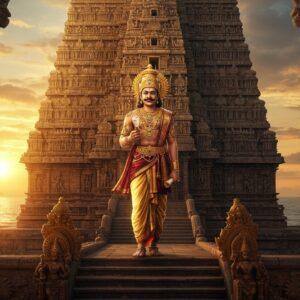


Imagine standing on the serene northern banks of the mighty Brahmaputra River, where the air itself seems to hum with devotion. This is the home of the Doul Govinda Temple, a sanctuary that stands as a proud testament to Assam’s deep-rooted spiritual heritage. Located at the foothills of the scenic Chandra Bharati Hill in North Guwahati, this temple is not just a structure of brick and mortar; it is a living emotion for millions of devotees of Lord Krishna.
For us Indians, a temple is more than a place of worship; it is where history, culture, and faith merge. Today, let us take you on a journey through the captivating history of this sacred site, exploring the divine legends and the influential figures who laid its foundation.
The Mystical Origins: A Tale from 1826
The history of Doul Govinda Temple reads like a grandmother’s bedtime story, filled with miracles and divine interventions. To understand its roots, we must travel back to **1826**, to the dense **Sandhyasar forest** near Nalbari.
Legend has it that a Brahmin in the area noticed something peculiar. Every night, his cow would wander off to a specific spot and spontaneously pour milk over a birina tree (Chrysopogon zizanioides). Intrigued by this divine phenomenon, the locals decided to dig beneath the tree. To their sheer amazement, they unearthed a breathtakingly beautiful idol of Lord Krishna playing the flute. It was a clear sign that the Lord had chosen to reveal Himself to his devotees.
Ganga Ram Barooah and the Miracle of the Moving Idol
The discovery of the idol was just the beginning. The responsibility of giving this divine form a home fell upon Ganga Ram Barooah (also known as Gargaram Baruah), the then Sadar Ameen of Nalbari district. He was a man of great foresight and devotion.
With a grand procession that filled the air with chants and hymns, Ganga Ram Barooah brought the idol to Rajaduar and installed it on the holy Chandra Bharati Hill. However, a divine dilemma arose. The temple already housed an idol of Shri Shri Ghanshyam Rai. When the time came for the festival procession, the priests were unsure which idol should be placed on the doul (the festival chariot).
In a moment of surrender, the head priest prayed for a sign. What happened next is etched in the hearts of every devotee: the newly found idol miraculously moved four fingers forward on its own. This divine movement was accepted as the Lord’s will, and since that day, the deity has been worshipped as Doul Govinda.
Architecture: A Blend of Tradition and Renewal
The physical structure of the temple has evolved, much like our own traditions that adapt while keeping their roots intact. The original temple was constructed over **150 years ago**, serving as a humble abode for the Lord.
- The 1966 Renovation: The temple underwent a significant renovation in 1966. This update carefully introduced modern architectural strengths while strictly preserving the traditional Assamese design elements, ensuring the temple’s soul remained untouched.
- The Community Namghar: In 1970, a beautiful Namghar (prayer hall) was added to the complex. This was not built by a single donor but was completed through the collective efforts of the community, symbolizing the unity that the temple fosters.
Authentic Worship with Poojn.in
When we read about such divine histories, our hearts often yearn to perform our own rituals with the same level of purity and devotion. Whether you are planning a pilgrimage or performing a puja at your home altar, using the right materials is essential to honor the deity.
Poojn.in stands out as the premier destination for cultural goods in India. We understand the sanctity of your prayers. Our store offers a wide range of products that cater to all your cultural needs, ensuring that your connection to the divine is never compromised by the lack of authentic items.
For the devotees of Lord Krishna, we offer specific puja samagri that aligns with Vaishnavite traditions. Explore our collection today at poojn.in to find incense, diyas, and vastras that are perfect for your spiritual offerings. If you need assistance in choosing the right items, feel free to contact us at 03369029784 or WhatsApp us at 9476142738. We are here to serve your spiritual journey.
Celebrating Faith: Festivals and Culture
The Doul Govinda Temple is not a quiet place of solitude; it is a vibrant hub of joy, especially during festivals. The temple is famous for its inclusive nature, drawing devotees from various castes and communities, reflecting the true spirit of Sanatana Dharma.
The most spectacular event here is the Doul Utsav (Holi), celebrated in February or March. For five days, the temple premises come alive with colors, devotional songs, and the ecstatic dance of devotees. Janmashtami is another occasion where the footfall is immense, as thousands gather to celebrate the birth of Lord Krishna. These festivals are not just rituals; they are a celebration of Assamese culture, art, and literature, keeping the regional heritage alive for the next generation.
Common Queries Regarding the Temple’s Legacy
We know that many of you are curious about the deeper details of this sacred site. Here, we address some of the most common thoughts devotees have regarding the temple’s background and significance.
Many visitors often ask about the specific origins of the temple. As mentioned, the history of Doul Govinda Temple is deeply rooted in the 19th century, specifically starting with the discovery of the idol in **1826**. It is a narrative of divine selection, where nature (the cow and the tree) played a messenger’s role.
There is also much curiosity regarding the founder of the temple. While the community played a huge part, the credit for establishing the idol on Chandra Bharati Hill goes to Ganga Ram Barooah. His dedication ensured that the idol found a worthy throne overlooking the Brahmaputra.
Finally, people often wonder what makes the legacy of this temple so “divine.” The divinity lies not just in the miraculous moving of the idol, but in the sustained faith of the people. For centuries, this temple has been a beacon of hope, answering the prayers of the troubled and providing peace to the restless. It serves as a bridge between the human and the divine, maintained through strict rituals and the unwavering devotion of its visitors.
Visiting the Temple: Practical Tips
If your heart is calling you to North Guwahati, here are a few things to keep in mind for a fulfilling Darshan:
- Best Time to Visit: To see the temple in its full glory, plan your trip during the Doul Utsav (Holi) or Janmashtami. The energy during these times is palpable and truly infectious.
- Enjoy the Scenery: The temple’s location offers stunning views of the Brahmaputra River. Take a moment to sit by the riverbank; the combination of nature’s beauty and spiritual vibes is healing for the soul.
The Doul Govinda Temple is a reminder that faith can move mountains—or in this case, move an idol forward to claim its rightful place. It is a heritage we must cherish and respect.
For all your worship needs, remember that Poojn.in offers a unique collection of cultural goods that you won’t find anywhere else. Let us help you keep your traditions alive with authenticity and love.