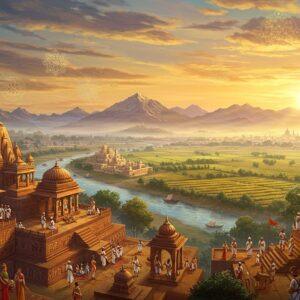



When we speak of love immortalized in stone, the Taj Mahal often comes to mind. But nestled in the heart of Punjab, amidst the lush fields near the Indo-Pak border, lies another poignant symbol of devotion—Pul Kanjri. Often called the “Taj Mahal of Amritsar,” this historical site whispers stories of a powerful king, a captivating dancer, and a romance that defied the societal norms of the 19th century.
For those of us who cherish our cultural heritage and the warmth of old tales, Pul Kanjri is not just a monument; it is a journey back in time. At poojn.in, we believe in keeping these vibrant traditions alive, connecting you to the roots that define our identity.
A Timeless Saga: Maharaja Ranjit Singh and Moran Sarkar
The heartbeat of Pul Kanjri is the love story between the Lion of Punjab, Maharaja Ranjit Singh, and Moran Sarkar, a dancer of unmatched beauty and intellect. As the legends go, this was no ordinary affection; it was a bond that challenged boundaries.
Popular folklore tells a charming anecdote that led to the creation of this site. It is said that Moran was once traveling to the royal court when her silver sandal (jutti) fell into a flowing canal. Distraught, she refused to dance or enter the court until her path was made secure. Moved by her plea and deeply in love, the Maharaja immediately ordered the construction of a bridge over the canal. This bridge was named Pul Kanjri—where “Pul” means bridge and “Kanjri” was the contemporary term for a dancer.
The depth of this relationship was profound. History notes that the Maharaja was even willing to accept punishment from the Akal Takht for wishing to marry Moran, showcasing a devotion that prioritized love above royal protocol. Another version of history suggests the bridge might have been built for Gul Bahar Begum, but the tale of Moran remains the one most deeply etched in the soulful soil of Amritsar.
More Than Just a Love Story: A Hub of History and Harmony
Located roughly 35 km from Amritsar on the Wagah Border road, Pul Kanjri was far more than a romantic gesture. During the glorious reign of the Sikh Empire, it served as a vital trading center and a resting spot (Baradari) for the Maharaja and his troops as they traveled between Amritsar and Lahore.
The architecture here speaks of a time when art and utility blended seamlessly. The site features a unique bathing pool (Sarovar), a temple, a Gurudwara, and a mosque. This convergence of places of worship within a single complex stands as a beautiful testament to the secularism and religious harmony championed by Maharaja Ranjit Singh. It reminds us that our culture has always been one of inclusivity.
From Mughal Roots to Military Outposts
The waters that flow here have their own history. The canal was originally dug in the early 17th century under the orders of Emperor Shah Jahan to irrigate the Shalimar Gardens in Lahore, showing the layers of Mughal influence in the region. Later, due to its strategic location near the border, Pul Kanjri became a significant military outpost.
It has witnessed the tides of time, including the pain of the Partition in 1947 and the conflicts of 1965 and 1971, where it was briefly occupied. Today, thanks to restoration efforts by the Ministry of Tourism and the Government of Punjab, the Nanakshahi bricks and frescoes have been preserved, allowing us to touch the history that shaped us.
How Poojn.in Can Help You Explore The Legend of Pul Kanjri
Pul Kanjri is a place in Amritsar known for its romantic history and cultural significance. If you are interested in exploring this legend, Poojn.in can help enhance your experience with authentic ritual items. We offer traditional products that can connect you with the rich heritage of Amritsar.
Products Available:
- Brass Diyas: Perfect for lighting during your visit, these diyas add a traditional touch to your experience.
- Incense Sticks: Create a serene atmosphere with our natural incense sticks, ideal for immersing yourself in the historical ambiance.
- Prayer Beads: Carry prayer beads to engage spiritually while exploring the love story of Pul Kanjri.
For more information or to purchase these products, contact us at 03369029784 or WhatsApp us at 9476142738. Enjoy the convenience of online shopping while staying connected to tradition with Poojn.in.
Exploring the Spiritual and Historical Landscape of Amritsar
A visit to Pul Kanjri is often part of a broader pilgrimage to the holy city of Amritsar. The city offers a profound spiritual journey that complements the historical intrigue of the Pul.
- The Golden Temple (Harmandir Sahib): The spiritual center of the Sikh faith, offering peace and architectural grandeur that soothes the soul.
- Jallianwala Bagh: A somber reminder of our struggle for freedom and a place to pay respects to the martyrs.
- Partition Museum: A deeply emotional archive that offers insights into the region’s tumultuous past and the resilience of its people.
- Local Bazaars: The vibrant markets reflect the city’s living traditions, perfect for finding phulkari and traditional artifacts.
Frequently Asked Questions About Pul Kanjri
Many travelers and history enthusiasts often have questions before visiting this enchanting site. Here is what you need to know to plan your visit.
What is the story behind the name Pul Kanjri?
The name is derived from the bridge (“Pul”) built by Maharaja Ranjit Singh. It is historically linked to “Kanjari,” a term used for dancers at the time, specifically referring to Moran Sarkar, the dancer beloved by the Maharaja. The bridge was constructed to ensure her comfortable travel across the canal.
Is Pul Kanjri worth visiting for history buffs?
Absolutely. It is a hidden gem that showcases the architectural evolution of the Sikh Empire. From the frescoes to the secular layout of the prayer sites, it offers a quiet, detailed look at history away from the crowds of the main city.
How do I reach the site?
Pul Kanjri is located near the village of Dhanoa Kalan, approximately 35 km from Amritsar city. It is very close to the Wagah Border, making it an excellent stopover if you are heading to see the Beating Retreat ceremony.
What is the best time to visit?
The best time to visit is during the cooler months, from October to March. The weather is pleasant for exploring the open-air ruins and the surrounding sarovar.
We invite you to step into this fascinating chapter of Punjab’s history. Whether you are drawn by the legendary tales of romance or the echoes of military valor, Pul Kanjri welcomes you with open arms. And as you embrace these traditions, remember that poojn.in is here to support your spiritual and cultural journey every step of the way.