
Namaskar! The melodious language of Bengal holds a profoundly sacred space in the hearts of millions across the Indian subcontinent. It carries an incredibly rich heritage and deep cultural significance, lovingly cherished by our vibrant community. Preserving these beautiful linguistic traditions is absolutely essential to maintaining our unique cultural identity and passing it down to our future generations. The traditional writing system, fondly known as the Bangla Borno Mala, is uniquely crafted, carrying the spiritual weight of centuries of literature, devotion, and art. We hope this comprehensive guide helps you and your family appreciate the nuanced phonetics and the majestic script of this deeply rooted language.
Understanding the Historic Bangla Script
Diving into our mother tongue, or Matribhasha, is like taking a soulful walk through our shared history. The script gracefully originates from the ancient Brahmi script and is a proud member of the esteemed Indo-Aryan language family. Today, it remains an integral part of everyday communication, beautifully used in Bangladesh and our very own Indian state of West Bengal.
Structurally, the standard alphabet contains 11 vowels (Swarabarna) and 39 consonants (Byanjanbarna). Interestingly, to highlight the dynamic evolution of the language, some historical sources also state that there are 32 consonants and 12 vowels. These carefully designed vowel signs, known affectionately as ‘matras’, gracefully modify the consonants to create a diverse symphony of sounds. It holds an incredibly significant place in our classic literature, enriching daily cultural expressions from poetry to prayers.
The Power of Visual Learning in Language
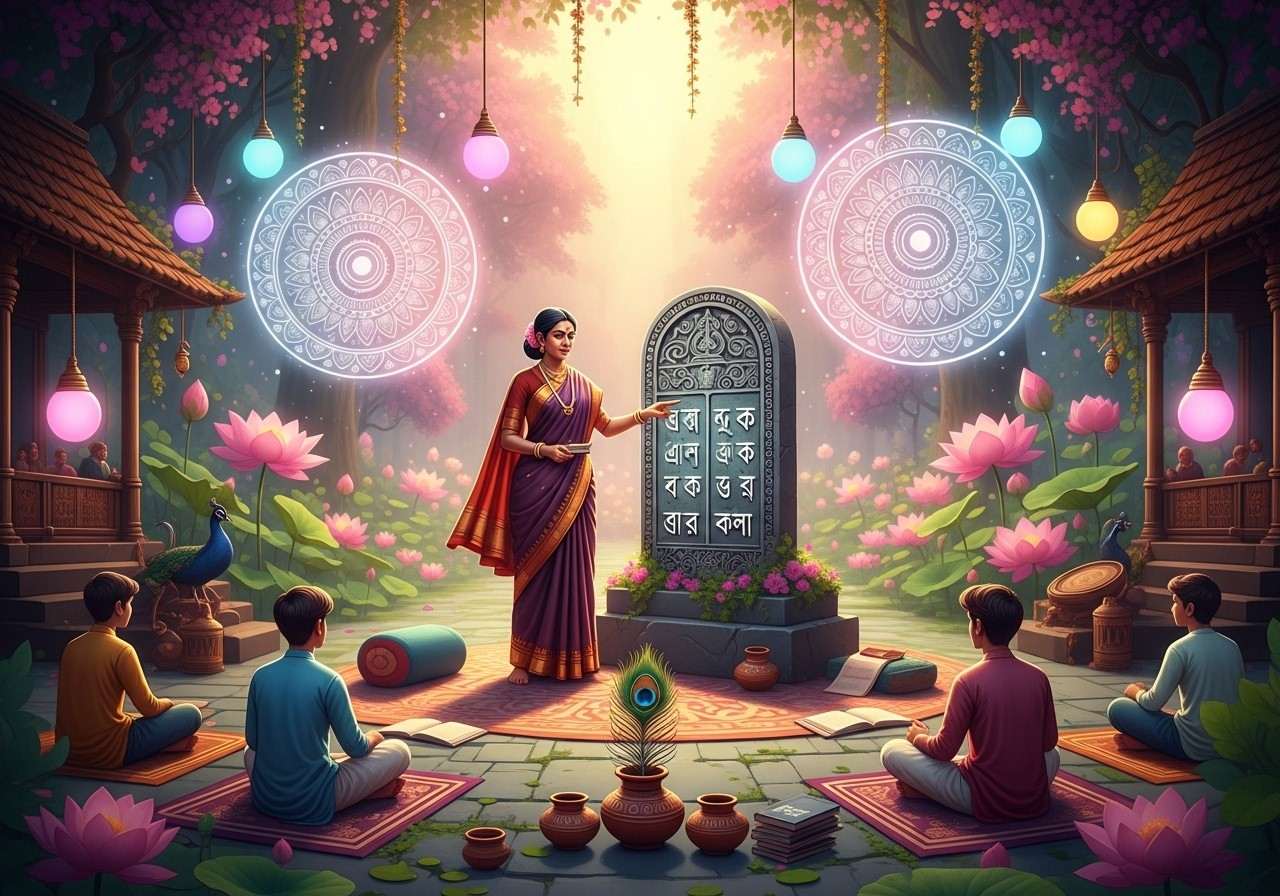
Visual aids can immensely assist in the beautiful journey of learning a new script. A well-designed educational chart, where each character is thoughtfully paired with images of everyday Indian objects or spiritual symbols, deeply aids memory retention. These culturally resonant visuals help eager learners seamlessly connect traditional sounds with real-world items. This mindful approach significantly enhances the understanding of the language, making the learning process far more engaging, effective, and deeply joyful for both young minds and adults.
Comprehensive Vowels (Swarabarna) Guide
The vowels form the lifeblood of our linguistic pronunciation, bringing emotion and tone to every spoken word. Here is a detailed look at the vowels and their respective signs:
| Letter | Pronunciation | Vowel Sign (Matra) |
|---|---|---|
| অ | o (like “on”) or ɔ (like “own”) | none |
| আ | a (like “art”) | া (akar) |
| ই | i (like “ee” in “cheese”) | ি (ikar) |
| ঈ | i (like “ee” in “cheese”) | ী (ekar) |
| উ | u (like “oo” in “hoop”) | ু (ukar) |
| ঊ | u (like “oo” in “hoop”) | ূ (oukar) |
| ঋ | ri (pronounced like র + ই) | ৃ (rikar) |
| এ | e (like “e” in “egg”) or æ (like “a” in “ape”) | ে (a-kar) |
| ঐ | oi (blend of ও and ই) | ৈ (oikar) |
| ও | o (like “o” in “own”) | ো (ukar) |
| ঔ | ou (blend of ও and উ) | ৌ (oukar) |
Comprehensive Consonants (Byanjanbarna) Guide
The consonants provide the strong structural foundation of our beloved language. Below is an easy-to-read chart representing these foundational letters:
| Letter | Pronunciation | Transliteration |
|---|---|---|
| ক | ko | k |
| খ | kho | kh |
| গ | go | g |
| ঘ | gho | gh |
| ঙ | ungo | ngo |
| চ | cho | s |
| ছ | cho | s |
| জ | jo | j |
| ঝ | jho | jh |
| ঞ | niyo | y |
| ট | to | t |
| ঠ | tho | tho |
| ড | do | d |
| ঢ | dho | dh |
| ণ | no | n |
| ত | to | t |
| থ | tho | th |
| দ | do | d |
| ধ | dho | dh |
| ন | no | n |
| প | po | p |
| ফ | po | p |
| ব | bo | b |
| ভ | bho | bh |
| ম | mo | m |
| য | yo | y |
| র | ro | r |
| ল | lo | l |
| শ | sho | sh |
| ষ | sso | ss |
| স | so | s |
| হ | ho | h |
Additionally, there are some beautiful and distinct additional consonant letters that enrich the script: ৎ (ta), ড় (rra), ঢ় (rha), and য় (yya).
Traditional Numbers (Sankhya)
Numbers in our cultural script hold a very special charm, frequently used in reading traditional panjikas and calculating auspicious ritual timings. Here are the numbers from 0 to 10:
- 0 – ০ (sunya): The foundational zero, representing cosmic emptiness. Representing infinity in our spiritual practices, it is a crucial mathematical and philosophical concept.
- 1 – ১ (ek): The absolute beginning of our counting system. It gracefully signifies the singular divine unity present across our traditional philosophies.
- 2 – ২ (dui): A beautiful number representing duality and balance. You will frequently see this during harmonious life events and paired cultural rituals.
- 3 – ৩ (tini): Symbolizing sacred trinities in our vibrant culture. It carries profound significance in numerous age-old religious ceremonies.
- 4 – ৪ (sari): A highly stable and grounded numerical figure. It gracefully marks the four sacred directions honored before beginning traditional pujas.
- 5 – ৫ (pans): The representation of the highly revered five elements (Pancha Mahabhuta). This is beautifully reflected in offerings like the sacred Panchamrit.
- 6 – ৬ (soy): A gentle and beautifully curved digit. It is commonly utilized in various cultural folk tales and traditional accounting.
- 7 – ৭ (sat): An incredibly auspicious digit in our heritage. It symbolizes the sacred seven vows taken during deeply rooted Indian marriages.
- 8 – ৮ (ath): An elegant figure that denotes prosperity. It is frequently associated with the eight majestic forms of wealth and abundance.
- 9 – ৯ (no): An immensely powerful number revered in traditions like Navaratri. It boldly signifies completion and supreme feminine divine energy.
- 10 – ১০ (das): The brilliant culmination of the primary digits. Marking a perfect milestone, it is heavily used in grand cultural festivities like Dussehra.
Mastering Authentic Pronunciation
Proper pronunciation is the vital key to truly mastering the language and honoring its poetic essence. Every single character possesses uniquely distinct phonetics, deeply rooted in the rhythmic flow of our motherland. Non-native speakers or youngsters might initially face minor hurdles, but with love and patience, mastery is highly achievable.
- Immerse Yourself in Auditory Learning: Actively listening to native speakers, soulful devotional songs, and traditional recitations can significantly enhance your grasp of these phonetic nuances. This consistent practice not only perfects your accent but also deepens your pure emotional connection to our shared heritage.
- Pay Close Attention to Aspiration: Many letters in this ancient script heavily rely on the presence or absence of a strong breath of air, beautifully known as aspiration. Mastering the subtle, melodic difference between aspirated and non-aspirated sounds will instantly make your spoken words sound wonderfully natural and authentic.
The Divine Role of the Language in Tradition and Rituals
Our majestic language is inextricably woven into the very fabric of our traditional rituals, sacred ceremonies, and joyous family festivals. It remains prominently featured in reading holy texts, chanting during Saraswati Puja, and reciting heartfelt Anjali. Soulful prayers, devotional songs, and inspiring poems tremendously enrich our daily cultural practices, warmly fostering a deeply rooted connection to the divine. These enduring, beautiful traditions highlight the immense importance of keeping the language alive to confidently maintain our unique cultural identity for generations yet to come.
Learning Tips and Enriching Resources
Embarking on the journey of learning this sweet language is a remarkably rewarding and soul-satisfying endeavor. We encourage you to lovingly embrace this path through various engaging methods:
- Engage with Cultural Media: Immersing yourself and your family in traditional cinema, folk music, and classic literature vastly enhances conversational skills. It effortlessly provides a delightfully entertaining way to pick up colloquial phrases and respectful cultural nuances without feeling overwhelmed.
- Utilize Authentic Educational Tools: Using meticulously crafted physical charts, authentic tracing books, and cultural workshops brilliantly caters to varied learning styles. These invaluable resources remarkably boost cognitive abilities while simultaneously fostering a much deeper appreciation for our glorious Indian heritage.
How Poojn.in Helps with Your Cultural Learning Journey
When you genuinely wish to pass down these golden traditions to the next generation, finding trustworthy and authentic resources is absolutely essential. At poojn.in, India’s most trusted online store for cultural goods, we offer a magnificent variety of authentic items that beautifully complement your family’s heritage learning journey. Our carefully curated collection proudly includes premium educational materials, authentic traditional books, and beautifully illustrated charts featuring the complete script with relatable pictures and accurate phonetic guides. These wonderful resources are thoughtfully designed to help you and your precious children learn the majestic letters effortlessly and effectively.
By thoughtfully choosing to shop for your cultural needs at poojn.in, you are always guaranteed to receive high-quality, authentic materials that lovingly reflect the true essence of Indian tradition. All of our sacred and educational items are readily available for highly convenient online shopping, making it incredibly easy to access these vital tools right from the comfortable sanctuary of your home. For any heartfelt inquiries or personalized assistance in choosing the right cultural products, please feel free to contact us at 03369029784 or reach out conveniently via WhatsApp at 9476142738.
Embracing the Beautiful Linguistic Journey
Learning this glorious language opens a divine door to a vibrant world overflowing with deep tradition, exquisite culture, and soulful expression. The beautifully illustrated alphabet charts serve as a solid, encouraging foundation to thoroughly explore this melodic language. As you deeply delve into the rhythmic sounds and ancient scripts, you seamlessly connect with a lively culture that passionately cherishes its grand heritage. Every single letter and word beautifully tells a resilient story of our community’s rich past and highly spirited present. Celebrate this pure connection, and proudly preserve this magnificent heritage for our future generations. Enjoy the deeply rewarding, spiritual experience of connecting with a language that truly enriches the soul.
Frequently Addressed Curiosities About the Script and Pronunciation
Understanding the Purpose of a Visual Learning Chart
Many beginners and parents often wonder about the core purpose of a visual learning chart. Essentially, this beautifully designed educational tool serves as a vibrant visual representation of the script, proudly showcasing each beautiful letter alongside its corresponding phonetic sound and relatable, everyday cultural imagery.
How Visual Elements Aid the Learning Process
There is a very common curiosity regarding exactly how pictures and visuals gracefully improve language retention. By thoughtfully associating traditional letters with vibrant and familiar objects, learners can easily remember the distinct, flowing shapes and phonetic sounds, deeply embedding the sacred knowledge in their minds.
Finding Comprehensive Educational Materials
If you are actively searching for a completely authentic chart with highly accurate pronunciations, you will be deeply delighted to know that such reliable resources are readily available. They can typically be found in dedicated traditional educational books and specialized cultural online stores like ours, designed to respect and preserve heritage.
The Crucial Role of Accurate Phonetics
The immense importance of precise pronunciation is a widely and passionately discussed topic among cultural enthusiasts. Truly, capturing the authentic sounds is absolutely crucial for highly effective communication, ensuring that the soulful, respectful nuances of our Matribhasha are permanently preserved and never lost in translation.
Mastering Sounds Through Rich Imagery
You might also carefully ponder whether visual charts genuinely help in mastering traditional pronunciation. Indeed, by seamlessly linking vivid cultural images with specific phonetic sounds, these engaging charts create a incredibly powerful mental bridge that makes remembering correct pronunciations a highly rewarding, joyous experience.
Variations in Educational Charts
People frequently and curiously inquire about the existence of different versions of these educational charts. There are, in fact, various thoughtfully tailored versions lovingly available on the market today, each uniquely designed to perfectly cater to different age groups, spanning from young, eager toddlers to deeply curious adults.
Utilizing Charts for Teaching and Gentle Guidance
For loving educators and parents pondering how to best integrate these visual charts into daily cultural teaching, they effortlessly serve as magnificent focal points for heritage lessons. Teachers can wonderfully use them for constant visual reference while gently guiding eager students through rhythmic, traditional reading exercises.
Suitability Across All Age Groups
Finally, one might gently ask if these visual tools are strictly intended for children or if they are highly suitable for all ages. Absolutely, these highly structured and beautifully designed charts provide an engaging, entirely barrier-free pathway for anyone—regardless of age—who deeply wishes to embrace, learn, and passionately celebrate the linguistic heritage of Bengal.