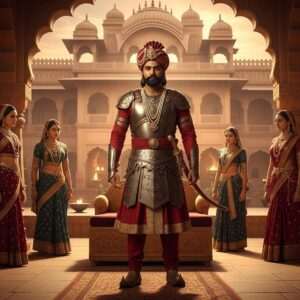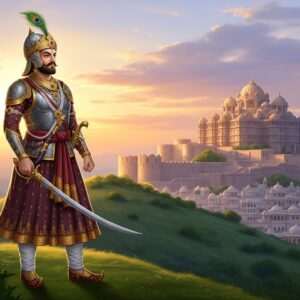


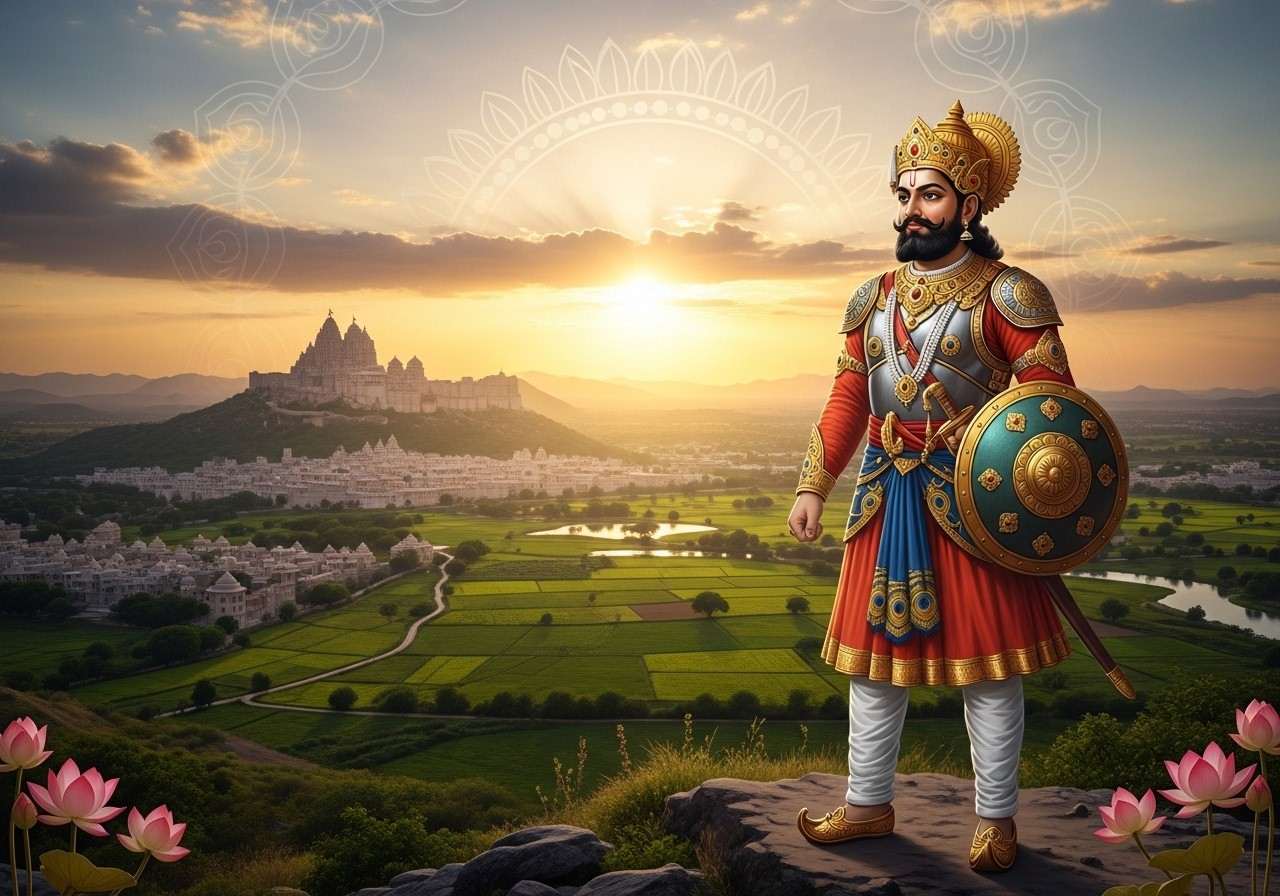
Step into the glorious past of our motherland and discover the extraordinary journey of one of India’s most celebrated protectors. Mewar holds a deeply revered place in Indian history, cherished for its unyielding courage, timeless devotion, and vibrant cultural heritage. At the very heart of this illustrious legacy stands a monumental figure whose life story continues to echo through the sands of Rajasthan. Today, we invite you to explore the fascinating life of the visionary who laid the foundations of a kingdom built on righteousness and dharma.
The Formative Years: From Royal Birth to Humble Beginnings
The dawn of the 8th century witnessed profound socio-political shifts across the Indian subcontinent. Born into the esteemed Atri clan around 713 AD, the boy who would become a legend was originally named Prince Kalbhoj. He was the eighth ruler in the lineage of the Guhilot Rajput Dynasty. However, his early childhood was marked by a devastating tragedy when his father, Rawal Mahendra II, bravely fell in battle against the Bhils of Idar.
To protect the young prince from his enemies, he was whisked away to the serene landscapes near Nagda. In a beautiful testament to the nurturing spirit of our culture, he was raised in disguise by a compassionate Brahmin woman. Far from the luxuries of a royal court, the young prince spent his formative years working humbly as a cowherd, deeply connecting with the sacred soil and the simple, hardworking people he would one day lead.
Divine Grace: The Blessings of Harit Rishi
In our rich Sanatana traditions, true leadership is often awakened by the grace of a spiritual master. Destiny guided the young prince to the great sage of the Mewar region, Guru Harit Rishi. According to cherished legends, Harit Rishi recognized the divine spark within the young cowherd and blessed him with the boon of kingship.
The venerable sage initiated him into the sacred Shaivite order, becoming his ultimate mentor. Under his watchful eye, the young warrior received rigorous training in martial arts, deep meditation, self-discipline, and the nuanced knowledge of politics and dharma. Instructed by his Guru, he lovingly commissioned the construction of the magnificent Eklingji Temple at Nagda, forever intertwining the destiny of Mewar with the supreme devotion to Lord Shiva.
Reclaiming the Motherland: Establishing the Mewar Kingdom
As the Gurjara-Pratihara empire experienced fluctuations in its influence, northern India faced a daunting power vacuum. Armed with his Guru’s blessings and exceptional strategic brilliance, the young warrior rose to the occasion. Around 728 CE, after successfully completing his spiritual and martial training, he bravely defeated his father’s killers and officially established the Mewar Kingdom.
One of his most crowning achievements during this period was reclaiming the formidable Chittor Fort. He successfully captured this strategic stronghold from Arab forces, who had previously defeated the local Mori rulers around 725 CE. Reigning powerfully from 734 to 753 AD, his governance brought much-needed stability, autonomy, and prosperity to the region.
Unparalleled Military Triumphs: Defending the Nation
His story is not just one of regional conquest; it is a monumental saga of defending the very cultural fabric of India. He is historically credited with decisively repelling aggressive Arab invasions that threatened north-western India. Understanding the power of unity, he did not fight alone.
He forged a formidable and historic confederacy of warriors, bringing together Pratihar King Nagbhata I, the courageous Bhils, and the valiant Nagas. Together, this united front completely decimated the invading forces, chasing them far beyond the borders of Ghazni. Historical accounts suggest he led 16 daring military forays into Ghazni, remarkably expanding the influence of the Mewar kingdom all the way up to Iran.
A Lasting Legacy in Folklore and Culture
Beyond his military genius, his socio-cultural contributions have left an indelible mark on Rajasthan. He is universally revered as the founding father of the illustrious Sisodia Rajput clan. By uniting his community and ruling with profound wisdom, he played an instrumental role in saving Indian heritage and Hindu culture during an incredibly turbulent era.
Today, in vibrant Rajasthani folklore, his exploits are celebrated in soul-stirring ballads and tales that elevate him to the status of a demigod. His enduring legend continues to shape the regional pride and cultural identity of the Mewar people, serving as a beacon of strength, traditional values, and unwavering devotion.
Nurturing Your Cultural Roots with Authentic Traditions
Immersing ourselves in these timeless sagas of Rajput pride often awakens a deep, emotional desire to reconnect with our ancestral roots. While delving into this glorious history, you might feel inspired to create a serene, devotional space in your home to honor the enduring spirit of our forefathers. Please remember that while we love sharing our rich history, Poojn does not provide travel packages, heritage tours, or offer guidance for VIP darshan at historical temples. We are exclusively dedicated to bringing the finest cultural goods directly to your family through our online store.
Poojn.in is your trusted companion for authentic spiritual items that beautifully enhance your daily rituals and historical celebrations. Our carefully curated collection includes:
- Premium Brass Diyas: Lighting a traditional brass lamp can beautifully elevate the spiritual ambiance of your home. As you gather with loved ones to share the inspiring stories of Rajput valor, the steady, warm glow of these diyas helps create a profoundly peaceful and reverent environment for everyone.
- Aromatic Incense Sticks: The delicate and soothing fragrance of our meticulously crafted incense sticks works wonderfully to purify your living space. Lighting them transports you to a serene, temple-like atmosphere, making your moments of daily prayer, meditation, or historical reading deeply immersive and calming.
- Sacred Ritual Cloths (Vastra): Whether you are adorning a household altar or setting up a respectful space to honor the enduring legacy of our ancestors, these finely woven cloths add an essential touch of grace. They are an elegant way to maintain the dignity, purity, and profound respect that our ancient Indian traditions rightfully demand.
For more details or to bring these authentic items into your home, simply visit https://www.poojn.in/ or warmly reach out to us at 03369029784. You can also connect with us on WhatsApp at 9476142738. Enjoy the unmatched comfort and reliability of online shopping for all your traditional needs with Poojn.in.
Conclusion
The legendary tale of the founder of Mewar is far more than a chapter in a history book; it is a magnificent tapestry woven with threads of extraordinary valor, profound wisdom, and unconditional devotion. His strategic brilliance and deep-rooted cultural contributions have permanently shaped the identity of Rajasthan, making him an immortal hero cherished by generations. By embracing his life and legacy, we gain a much deeper appreciation for the enduring spirit of our nation. He stands tall as a timeless symbol of strength, reminding us of the beautiful, unbroken connection between our glorious past and our vibrant present.
Frequently Asked Questions
Who was this legendary warrior of Mewar?
Originally known by his birth name, Prince Kalbhoj, he was the visionary eighth ruler of the Guhilot Rajput Dynasty. He is widely celebrated for officially founding the Mewar Dynasty and is deeply revered as a protective hero and warrior-saint in Indian history.
What is the historical timeline of his remarkable life?
Born around the early 8th century, his documented and highly celebrated reign lasted from 734 to 753 AD. During this powerful era, he successfully defended his motherland against multiple foreign invasions and restored honor to his kingdom.
What significant military achievements defined his rule?
He is most famous for reclaiming the Chittor Fort from Arab invaders in 728 CE and repelling their forces from north-western India. By creating a unified confederacy of warriors, he successfully drove the enemy back, even leading strategic forays deep into Ghazni.
How did his early life shape his future as a king?
Tragically losing his father, Rawal Mahendra II, in a battle with the Bhils of Idar, he was raised in disguise by a noble Brahmin woman as a cowherd near Nagda. This humble upbringing, combined with the later spiritual mentorship of Harit Rishi, forged his grounded and fiercely disciplined character.
How did he enrich the cultural and spiritual landscape of the region?
Deeply devoted to dharma, he laid the spiritual foundation of his empire by establishing the revered Eklingji Temple at Nagda. His reign fostered a richly spiritual environment, encouraging art, agriculture, and traditions that families proudly preserve to this very day.
Why does his legacy remain so important in Indian history today?
His legacy represents the ultimate triumph of courage and cultural preservation. As the father of the Sisodia Rajput clan, his efforts to unite communities effectively saved traditional Hindu culture during a highly volatile period, making him a timeless icon of Rajput pride and Indian heritage.