


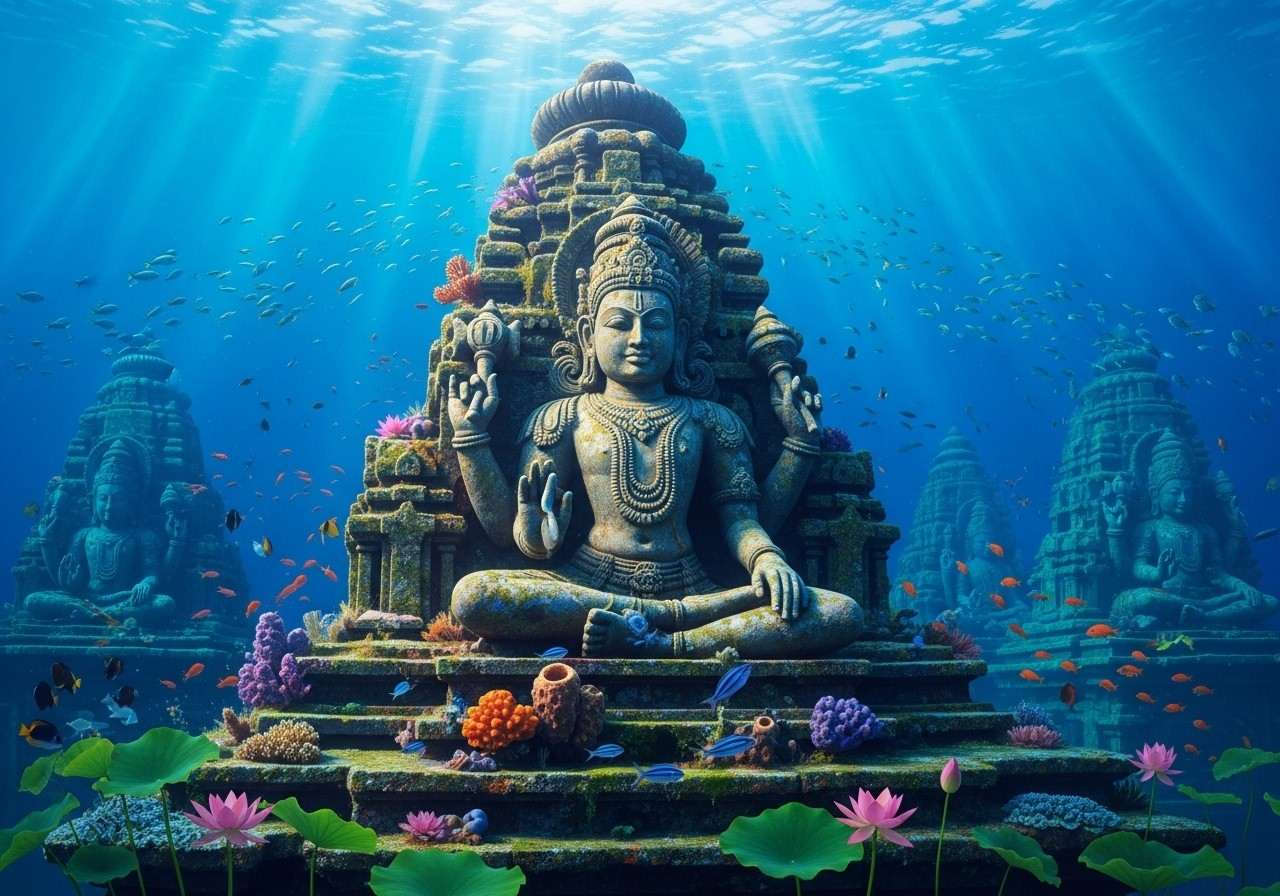
The mystical realms of our ancient scriptures often speak of the deep, unbreakable bond between sacred waters and profound spirituality. For countless generations, the gentle lull of the ocean has held whispers of the divine, capturing the imagination of those who hold our heritage close to their hearts. Among these fascinating marvels are the aquatic shrines dedicated to the Preserver of the Universe. These submerged holy sites do more than just preserve ancient architectural traditions; they beautifully capture the deep-rooted faith of those who cherish cultural authenticity and the timeless rituals of our ancestors.
The Timeless Legend of Anantashayana
At the heart of many oceanic myths is the awe-inspiring form of Anantashayana, where the Supreme Lord is depicted reclining peacefully on the coils of the cosmic serpent, Ananta. This iconic posture is a powerful symbol of eternal rest, cosmic balance, and the divine harmony that sustains all of creation. In our cherished legends, this divine abode is visualized as a vast, boundless cosmic ocean. It serves as a gentle reminder of the Lord’s vital role in maintaining peace and order throughout the universe, deeply connecting the essence of water with supreme consciousness.
Uncovering Ancient Marvels: Truths and Tales Beneath the Waves
The fascinating discovery of deep-sea holy sites, such as those historically noted near Mahabalipuram, offers an incredible glimpse into India’s glorious maritime and spiritual past. However, the intrigue doesn’t stop there. Similar stories of aquatic devotion echo in the historical submerged remains of Dwarka, India, and the visually stunning reefs of Bali, Indonesia. It is essential, however, to gently separate historical facts from modern environmental projects.
- The Submerged City of Dwarka: Located on the picturesque west coast of India, this highly revered ancient city is widely believed to have been reclaimed by the ocean long ago. Dedicated marine archaeological explorations, which have been ongoing since the 1980s, continue to uncover fascinating, fact-based details about its glorious and vibrant past.
- Compelling Archaeological Evidence: Rigorous underwater excavations have brought to light the existence of a sophisticated city-state dating all the way back to 1500 B.C. Among the remarkable historical discoveries are heavy stone anchors, intricately designed pottery fragments, and massive structural remains that point to a highly thriving ancient port city.
- Evidence of Multiple Sacred Settlements: Fascinating excavations within the Dwarkadhish Temple Complex have revealed the ancient remains of several older structures, clearly indicating multiple historical settlements at Dwarka over the millennia. The very first of these sacred settlements dates back to the 15th century B.C., while the majestic current temple standing today is considered to be the fifth in this long and sacred series.
- Detailed Exploration and Findings: Dedicated marine archaeologists have utilized advanced modern techniques like sonar mapping, underwater photography, and systematic excavation methods to carefully document these hidden structures. Their extensive explorations have successfully identified architectural foundations, divine sculptures, and stone anchors, alongside critical artifacts like a Late Indus type seal that help establish the cultural sequence of these ancient people.
- Discovery of a Mythological Defense: Adding to the awe-inspiring finds, diligent archaeologists have also discovered clear evidence of a “VaariDurg,” which translates to a formidable fort specifically designed to stop water. This fascinating type of architectural defense is notably mentioned in the great epic, the Mahabharata, bridging the gap between scripture and science.
- Bali’s Artificial Underwater Temple Garden: Situated near the pristine Pemuteran Beach in Bali, Indonesia, there is a visually striking underwater site commonly referred to as the “Underwater Temple Garden.” It is extremely crucial to note that this site is not an ancient discovery; rather, it was thoughtfully and artificially created in 2005 as part of a dedicated coral reef conservation project.
- A Purpose-Built Modern Structure: This environmentally focused, man-made “temple” consists of various beautiful statues and a temple-like structure purposefully placed on the ocean floor. It was specifically designed and meticulously built to enhance the marine biodiversity of the area, providing a safe and thriving haven for local aquatic life.
- Beware of AI-Generated Misinformation: As technology advances, it is highly advisable to remain cautious of viral videos circulating online that falsely claim to show a 5,000-year-old sanctuary in Bali. The vast majority of these sensationalized, viral videos are entirely AI-generated and do not depict a genuine historical or religious site.
- Addressing the Modern Controversy: While some enthusiastically claim that an ancient underwater shrine dating back over 5,000 years was miraculously found near Bali, these assertions are strictly associated with AI-generated content and modern internet myths. It is always important for us to distinguish between authentic, archaeologically rich wonders like Dwarka and beautiful modern creations meant for environmental conservation.
The Architectural Brilliance of Ancient Builders
Whether standing proudly on land or resting silently beneath the waves, these historical sanctuaries showcase unmatched architectural brilliance. The incredible structures found in places like Dwarka reflect magnificent architectural styles of their era, characterized by breathtakingly intricate carvings and majestic stone layouts. It fills our hearts with immense pride to know that the builders of our past utilized highly advanced techniques to construct these timeless marvels, leaving a legacy so strong that remnants survive even after centuries underwater.
The heavy stone anchors and foundational remains discovered deep within the sea vividly reveal the unparalleled skill and dedication of ancient Indian architects. These precious artifacts illustrate not just a deep-seated religious devotion, but also a remarkable level of technical expertise. Preserving these sacred historical sites is absolutely essential so that our future generations can continue to deeply appreciate and learn from this rich architectural and cultural legacy.
Honoring Tradition from the Comfort of Your Home
The mesmerizing tales of these ocean-bound divine abodes profoundly impact our communities, reminding us of our rich cultural identity and deep spiritual roots. While these breathtaking submerged sites serve as a testament to our ancestral devotion, incorporating that same level of spiritual purity into our modern, fast-paced lives can sometimes feel challenging. Rituals performed with genuine devotion instantly connect us to this grand heritage, no matter where we are.
Poojn.in proudly stands out as the premier destination for cultural goods in India, perfectly bridging the gap between our glorious past and modern convenience. Our extensive online store offers a wide range of products that thoughtfully cater to all your cultural needs, providing the perfect traditional items for your daily home rituals. Whether you are inspired by the cosmic ocean legends or simply wish to perform your daily worship with absolute purity, we have everything you require.
From comprehensive puja kits carefully assembled with pure ingredients to soothing incense sticks that instantly elevate the aura of your home, we ensure you have everything needed for a truly meaningful spiritual experience. For devotees who deeply value tradition and authenticity, Poojn.in is your most trusted source for genuine ritual products.
We believe that holding onto our roots should never be complicated. That is why we make it incredibly easy to shop online and deliver these sacred items directly to your doorstep, ensuring unmatched convenience without ever compromising on quality. To explore our lovingly curated collection or for any specific cultural goods inquiries, please feel free to contact us at 03369029784 or gracefully reach out via WhatsApp at 9476142738.
Technology: A Bridge Between Eras
Just as modern platforms help us access authentic worship essentials, modern technology plays an incredibly crucial role in exploring these underwater marvels. Sophisticated tools like sonar mapping and underwater drones greatly aid dedicated archaeologists in safely documenting these fragile environments. These amazing technological advancements ensure the accurate preservation and deeper understanding of our submerged heritage.
This beautiful collaboration between passionate archaeologists and modern technologists continues to bring awe-inspiring new discoveries to light. It is this perfect harmony of tradition and innovation that uncovers hidden secrets, continuously expanding our knowledge of ancient Indian civilizations while keeping our cultural roots strong and vibrant.
FAQs: Unveiling the Ocean’s Sacred Mysteries
What does the depiction of Anantashayana signify in an oceanic setting?
The breathtaking depiction of the Lord reclining on the celestial serpent Ananta amidst the ocean represents ultimate peace and cosmic stability. This powerful imagery beautifully symbolizes the divine balance that sustains the entire universe, reminding devotees of the eternal calm that exists above worldly chaos.
Where have historical underwater sanctuaries been genuinely discovered?
Authentic historical submerged sites have been found in culturally rich locations like Dwarka off the west coast of India, as well as remnants near Mahabalipuram. These sacred deep-sea sites hold profound archaeological significance, featuring ancient structural remains and artifacts that tell stories of our glorious past.
Why are the submerged findings in Dwarka so historically important?
The findings in Dwarka are incredibly important because they provide concrete archaeological evidence of a thriving ancient port city dating back to 1500 B.C. The discovery of multiple settlements, heavy stone anchors, and the legendary “VaariDurg” fort wonderfully validate the rich descriptions found in our revered ancient texts.
How can we differentiate between ancient ruins and modern underwater creations?
It is crucial to rely on verified archaeological studies rather than internet rumors. For instance, while Dwarka features genuine ancient ruins from centuries ago, the visually stunning underwater site in Bali was purposely built in 2005 specifically for coral reef conservation. Being mindful of AI-generated misinformation helps us truly respect and understand our actual historical heritage.
How do these profound aquatic discoveries inspire our daily spiritual lives?
These magnificent discoveries remind us of the enduring power of faith and the timeless nature of our traditions. They beautifully inspire us to maintain our own spiritual practices at home with devotion and pure, authentic samagri, keeping the eternal flame of our heritage burning bright in the modern world.