

Namaste! When we think of the golden sands of Rajasthan, our hearts naturally swell with deep respect for the brave souls who walked that sacred earth. The ancient Gehlot heritage holds an incredibly special place in our Indian history, with deep cultural roots stretching all the way back to the 8th century. From the visionary foundation laid by early rulers to the fiercely independent spirit of later kings, understanding this noble lineage helps us appreciate the beautiful traditions and unshakable Hindu pride that continue to resonate deeply within our homes today.
Bappa Rawal: The Spiritual and Martial Foundation of Mewar
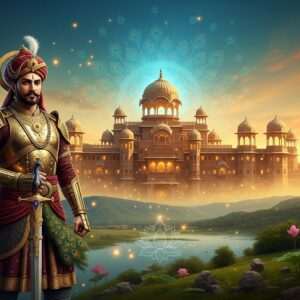
The legendary founder of this kingdom is celebrated for his immense military skill and equally profound diplomatic talent. He successfully united his people and fiercely protected his realm from outside threats through incredibly strategic alliances. More importantly, his devotion added immensely to the region’s spiritual wealth. Let us look at the remarkable facts of his life:
- A Hidden Childhood and Divine Destiny: Born around 712-713 CE and lovingly known as Kalbhoja, he was the ninth descendant of Guhadatta according to the sacred 15th-century text, Ekalinga Mahatmya. His early life was filled with unimaginable hardship after his father, Nagaditya, and other family members valiantly fell in a battle against the Bhils of Idar, leading a compassionate Brahmin woman to secretly raise the young prince in disguise to protect his royal lineage.
- The Blessings of Sage Harit Rashi: Destiny finally called around 734 CE when the revered sage Harit Rashi guided the young warrior to discover his true ancestral roots. With the sage’s blessings, at the tender age of 20, he displayed extraordinary valor by defeating Maan Mori, the Maurya ruler of Chittor, thereby firmly establishing the glorious foundation of the Mewar empire.
- Surrender to the Divine Ruler: Deeply rooted in spirituality and devotion, he constructed the magnificent Eklingji Temple in 734 CE and beautifully declared Lord Shiva (Eklingji) as the supreme, eternal sovereign of Mewar. This historic act established a beautiful, enduring tradition where all subsequent rulers humbly served merely as regents or loyal Diwans of Eklingji, rather than kings.
- A Legacy of National Defense: His military prowess extended far beyond local boundaries, as he successfully repelled aggressive Arab invasions in north-western India, earning him the prestigious title of the “Charles Martel of India” among modern historians. After a highly prosperous and righteous rule of 33 years, he chose the ultimate path of spiritual liberation, gracefully abdicating his throne in 763 CE to become a devout ascetic.
Tracing the Ancestral Roots: The Noble Family Tree
The family tree of this majestic dynasty is a powerful testament to its enduring legacy. Starting from the early medieval era and seamlessly leading up to the 16th century, this royal bloodline showcases a continuous succession of Dharma-abiding rulers who played pivotal roles in shaping our nation’s history. Each king faced unique external challenges but held onto their cultural identity with unmatched stability. This family tree reflects how profound political wisdom and spiritual influences evolved over centuries, offering us a profound insight into the unyielding nature of Rajputana heritage.
Maharana Pratap: The Unyielding Spirit of Indian Patriotism
Centuries later, the same royal bloodline gave birth to another immortal hero. While the founding fathers focused on establishing and uniting the realm, this later descendant is universally worshipped for his fierce, lifelong resistance against foreign domination. Here are the defining aspects of his majestic life:
- Birth of a Legend: Born on the highly auspicious day of May 9, 1540, this illustrious son of Maharana Udai Singh II proudly belonged to the renowned Sisodia clan. He bravely assumed the thorny throne of Mewar in 1572 and devoted every single breath of his life to safeguarding his kingdom’s sovereignty and spiritual dignity until his eventual passing in 1597.
- The Ultimate Symbol of Resistance: His unshakable courage and absolute refusal to bow down to the Mughal emperor Akbar made him a legendary figure of resistance and an icon of Hindu pride. He stands as a timeless, towering beacon of bravery, chivalry, and patriotism, consistently teaching future generations the true meaning of self-respect and unconditional love for the motherland.
- The Epic Battle of Haldighati: In the historic and fierce Battle of Haldighati in 1576, his strategic brilliance was on full, glorious display as he personally led a modest, highly dedicated force of 20,000 valiant Rajput warriors. Together, they fearlessly faced Raja Mansingh’s massive opposing army of 80,000, leaving an unforgettable, inspiring mark on the vast annals of Indian warfare.
- An Unbroken Vow Till the End: Tragedy eventually struck during a severe hunting accident, leading to his heavenly departure on January 19, 1597. Yet, even in his agonizing final moments, his patriotic heart beat only for Mewar, as he sternly instructed his brave son, Amar Singh I, to never ever submit to the Mughals and to continually strive to reclaim their beloved ancestral fort of Chittor.
The Sacred Connection: An Unbroken Chain of Dharma
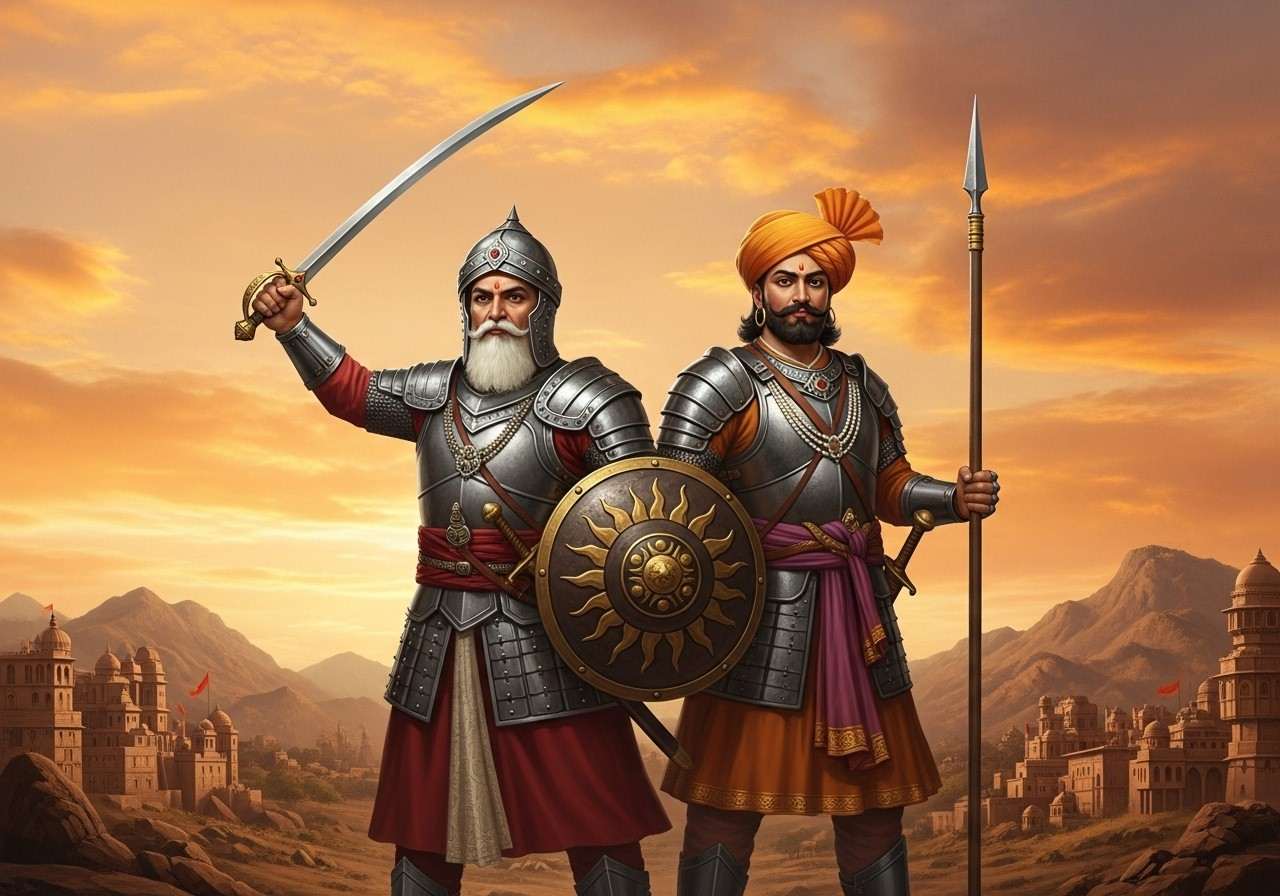
When we do a comparative analysis of these two colossal figures, we see an unbroken chain of Dharma and cultural pride. The 16th-century warrior was a direct descendant of the 8th-century founder, transitioning gracefully from the original Guhila clan to the later evolved Sisodia branch. Together, their relationship beautifully represents an unyielding wall of resistance against foreign incursions. Both leaders faced massive adversaries of their respective eras, yet they consistently upheld Indian self-respect, walking firmly in the righteous footsteps of their ancestors.
Cultural and Religious Echoes of the Rajput Era
Beyond the brutal battlefields, this noble dynasty significantly enriched the cultural and religious fabric of Rajasthan. Under their benevolent patronage, breathtaking temples and impenetrable forts were constructed, perfectly showcasing the unmatched architectural excellence of ancient India. The traditional arts, profound literature, and regional culture absolutely flourished under their guidance. Most importantly, devotion to the divine remained the absolute center of their universe, heavily influencing the local customs and spiritual practices that many of our families still cherish today.
Bringing Devotion Home with Poojn.in
At our core, we understand the deep reverence you hold for our glorious ancestors and the timeless spiritual rituals they practiced. We are purely dedicated to helping you maintain these beautiful traditions at home. Please note that we do not offer travel packages, nor do we arrange VIP temple darshans. Instead, we passionately focus on providing you with the highest quality cultural goods through our trusted online platform.
If you are inspired by the profound devotion shown to deities like Eklingji, you can recreate that very spiritual purity in your own daily prayers. We offer carefully curated, authentic traditional puja kits, sacred historical texts, and beautifully crafted cultural artifacts. By choosing to bring these sacred items into your home, you are actively preserving the essence of our magnificent heritage.
To explore our genuine collection of spiritual samagri that supports your authentic rituals, please visit us at https://www.poojn.in. Should you need any assistance in finding the right traditional items for your home temple, you can easily reach our knowledgeable team via phone at 03369029784, or send us a quick message on WhatsApp at 9476142738.
Common Queries About Our Majestic Rajput Heritage
Who was the highly revered founding father of this noble lineage?
The visionary leader affectionately known as Kalbhoja is revered as the supreme founding father of the Mewar empire. He is eternally celebrated across the country for his extraordinary bravery, spiritual devotion, and the visionary leadership that successfully united and protected the region from early foreign invasions.
How are these two legendary warriors historically connected?
The courageous 16th-century king is a direct, proud descendant of the 8th-century founder. Both of these iconic figures belong to the exact same continuous royal bloodline, seamlessly passing the torch of Rajput honor, Dharma, and cultural preservation down through multiple generations.
Why is this specific royal dynasty so culturally significant today?
This remarkable lineage is incredibly significant because of its massive, ongoing contribution to preserving classical Indian history and our sacred cultural traditions. They produced countless brave men and women who selflessly dedicated their entire lives to defending their motherland and upholding religious righteousness against all odds.
How do historians accurately trace this ancient ancestral family tree?
The glorious lineage of these ancient kings is meticulously traced through highly respected historical texts and sacred genealogical records. Crucial documents, such as the venerable 15th-century Ekalinga Mahatmya, thoroughly document the noble succession and help us understand the deep roots of this unbroken royal family.
What were the most defining life achievements of the great Sisodia ruler?
He is primarily immortalized for his breathtaking valor in the legendary Battle of Haldighati and his absolute, unwavering resistance against the powerful Mughal empire. By dedicating his entire existence to maintaining the pure independence of Mewar, he successfully cemented his legacy as the ultimate symbol of Indian patriotism.
What lasting architectural legacy did these benevolent rulers leave behind?
Yes, these devoted kings left behind a truly breathtaking architectural legacy that continues to inspire awe today. They generously funded and constructed numerous magnificent hilltop forts, sprawling divine palaces, and intricately carved temples across Mewar, flawlessly preserving the classical beauty of traditional Rajput architecture for future generations to admire.
By embracing the rich, inspiring history of these legendary rulers, we actively celebrate a majestic lineage that perfectly embodies the timeless spirit of courage, unwavering faith, and deep cultural pride. Let us continuously draw inspiration from their sacrifices as we proudly carry forward the sacred Hindu values they so fiercely protected.