
In almost every Indian home, there is a sacred space where the golden hue of brass and the warm, earthy glow of copper shine brightly. These metals are not merely functional; they are considered pure and deeply auspicious for our daily rituals and festive ceremonies. Behind the creation of these sacred vessels lies the incredible dedication of a traditional artisan community. This ancestral craft of shaping brass, copper, and kansa (bronze) into magnificent utensils is a beautiful blend of deep-rooted Indian culture and exceptional skill. Let us explore the rich legacy of these metalworkers and understand how their artistry continues to illuminate our spiritual lives.
Getting the Pronunciation Right: A Mark of Respect
When we speak of indigenous traditions, honoring their linguistic origins is the first step towards cultural appreciation. To correctly refer to these master craftsmen, the term is pronounced as “Tha-ther-aa”. Originating from Punjabi roots, it consists of three syllables with a gentle emphasis on the second and an elongated final sound. Recognizing and using the authentic pronunciation is a wonderful way to show deep respect for the regional heritage and the dedicated families who have kept this craft alive for centuries.
The Royal History and Cultural Roots of the Metal Craft
The story of this exquisite metalwork takes us back to the glorious 19th-century reign of Maharaja Ranjit Singh in Punjab. He graciously invited skilled metalworkers from the valleys of Kashmir to settle in the region, thereby establishing vibrant craft colonies. The most renowned hub for this heritage craft remains Jandiala Guru in Punjab, while another vibrant center thrives in Jaipur, Rajasthan, along the famous, kilometer-long stretch known affectionately as “Thatheron Ka Raasta”.
The cultural significance of this artisanal practice is so profound that it was proudly inscribed on UNESCO’s List of Intangible Cultural Heritage of Humanity in 2014. This prestigious recognition highlights not only the beauty of the handcrafted vessels but also the urgent need to protect these traditional methods from fading away.
The Hammer’s Song: Techniques, Motifs, and Metal Drawings
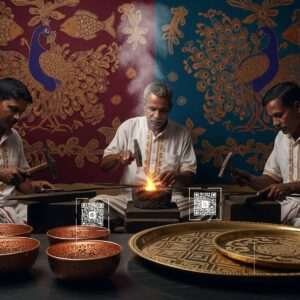
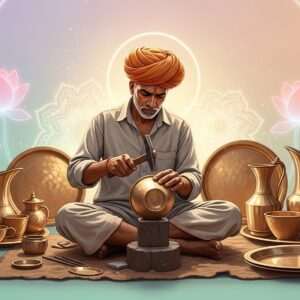
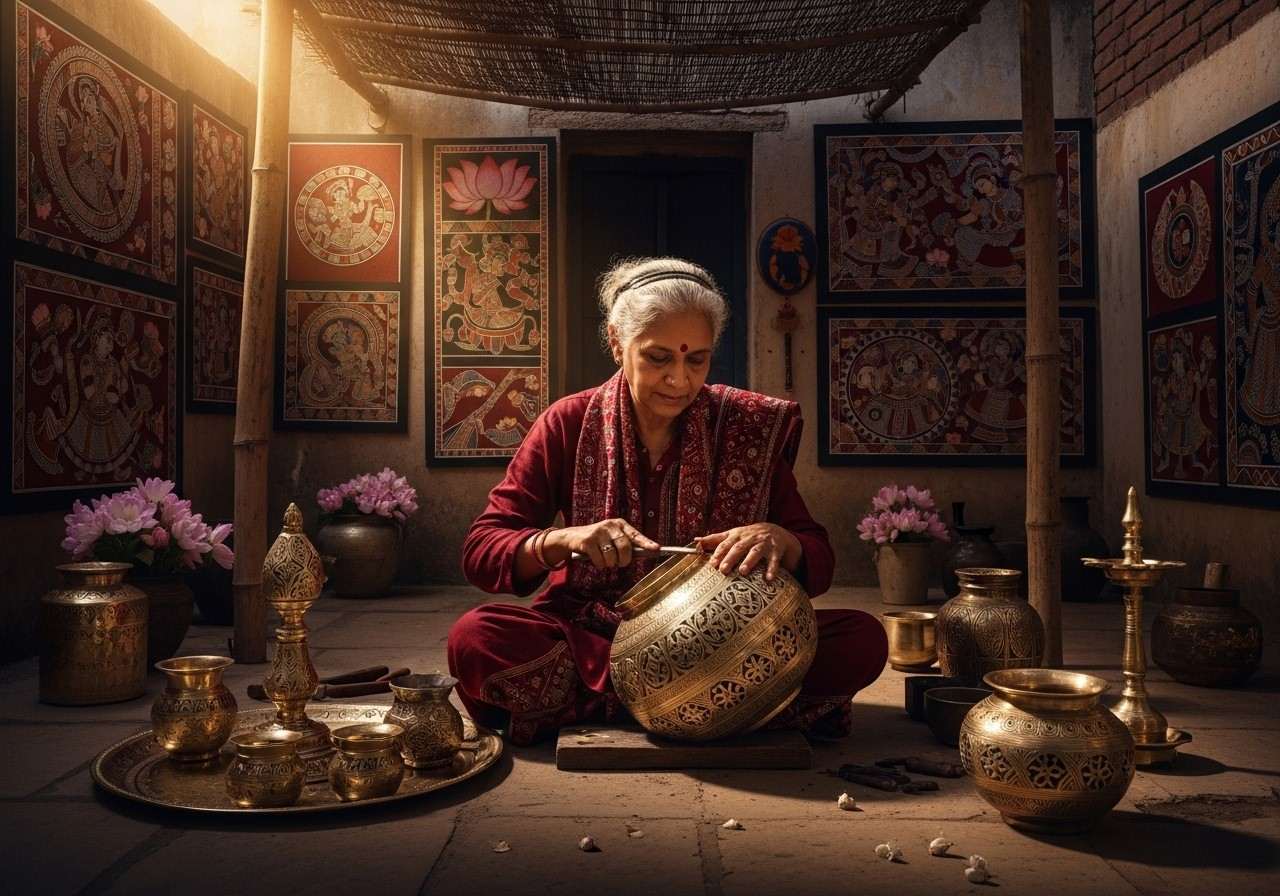
Creating these divine utensils is a labor of love that demands immense patience and precision. The artisans traditionally work with brass, copper, bronze, and occasionally aluminum. The fascinating process involves carefully cutting and rhythmically hammering metal plates into their desired shapes. The metal is meticulously heated to maintain malleability, allowing the artisans to form everything from everyday plates to elaborate ceremonial temple vessels.
One of the most remarkable aspects of this art form is the intricate detailing, often referred to as metal drawing. The surfaces are adorned with breathtaking floral and geometric motifs inspired by Punjabi folk traditions. These beautiful patterns are more than just decorations; they often carry historical stories and cultural beliefs. To finish the pieces, the craftsmen use an age-old, natural polishing technique utilizing sand and tamarind juice, which not only provides a brilliant shine but also imparts beneficial antibacterial properties to the vessels.
Exploring Simplified Metal Design Techniques
For those who deeply admire this heritage and wish to understand the design process, exploring basic drawing techniques inspired by the craft is a wonderful starting point. Beginners can easily start by sketching foundational geometric shapes and simple floral vines on paper using standard pencils. Practicing these traditional motifs on accessible mediums helps art enthusiasts gradually grasp the complexity of authentic metal engraving. Over time, mastering these foundational strokes builds a profound appreciation for the flawless symmetry achieved by the master artisans.
Overcoming Challenges and Embracing the Modern Revival
Despite its glorious past, this heritage craft faces modern challenges. The influx of cheaper, machine-made alternatives, globalization, and younger generations moving toward urban careers have threatened its survival. However, there is a beautiful silver lining. Driven by initiatives from organizations like UNESCO and a growing appreciation among Indians for authentic, culturally rooted items, there is a strong contemporary revival. E-commerce has played a massive role in this resurgence, bridging the gap between traditional craft clusters and modern households seeking pure, handcrafted goods.
How Poojn.in Brings Sacred Artistry to Your Doorstep
At Poojn.in, we understand the emotional and spiritual value of incorporating authentic, handcrafted items into your sacred spaces. We are dedicated to providing you with the finest cultural goods, directly supporting the survival of traditional artistry. You can now effortlessly browse and purchase high-quality ceremonial items from the comfort of your home, ensuring your pooja rituals are performed with the purest materials available. Visit our traditional cultural store today to bring these sacred items into your daily life.
Our thoughtfully curated collection includes items that are essential for every devout household:
- Sacred Copper Plates: These beautifully hammered plates are absolutely essential for your daily puja rituals, offering a pure and traditional base for placing your idols, flowers, and holy offerings. Their natural reddish hue deepens over time, adding an antique charm to your mandir.
- Auspicious Brass Bowls: Perfectly crafted for holding prasad, pure water, or sacred ash during religious ceremonies, these bowls bring a touch of golden elegance to your spiritual practices. They are polished to perfection, ensuring they gleam brightly during your aarti.
- Traditional Oil Lamps: Illuminate your spiritual space with our handcrafted lamps that represent the dispelling of darkness and the welcoming of divine grace into your home. The intricate designs reflect generations of artistic mastery, creating a deeply calming ambiance.
We are always here to assist you in finding the perfect cultural items for your family’s needs. Feel free to explore our offerings at Poojn.in, and should you have any questions, you can warmly reach out to us by calling 03369029784 or dropping a message on WhatsApp at 9476142738. Embrace the convenience of online shopping while staying deeply connected to your Indian roots.
Frequently Asked Questions About the Craft
How to Pronounce the Name of these Artisans?
The correct way to address this artisan community is by saying “Tha-ther-aa.” It consists of three syllables, with a soft emphasis on the second syllable and a slightly stretched “aa” at the end, honoring its regional linguistic roots.
What are the primary origins of this traditional craft?
The craft traces its most prominent roots back to the artisans of Jandiala Guru in Punjab. The tradition truly flourished during the 19th-century reign of Maharaja Ranjit Singh, who invited skilled Kashmiri metalworkers to settle and practice their art in the region.
How can a beginner start learning the drawing patterns of this art?
If you are a beginner, it is best to start by sketching the basic silhouettes of traditional pots, pans, and ceremonial bowls on paper. Focus primarily on getting the symmetry and proportions right before you move on to adding the intricate floral and geometric details.
Are there any helpful tips for creating these heritage-inspired drawings?
A great approach is to use simple, flowing lines and gentle curves to outline the desired shape. Always start with very light pencil strokes so you can easily make corrections, and then gradually layer in the more complex, traditional motifs.
Why is preserving this ancestral metalwork so crucial?
Protecting this art form is vital because it is a living representation of our rich Indian cultural heritage, so much so that it earned a spot on UNESCO’s intangible heritage list. Preserving it ensures that traditional artisans can sustain their livelihoods and pass their invaluable skills to the next generation.
What are the main materials utilized by the craftsmen?
These skilled workers primarily shape pure brass, copper, and kansa (bronze) to create their masterpieces. Occasionally, they also work with aluminum, always employing traditional techniques to ensure the final product is both beautiful and spiritually pure.
Is it possible to purchase these authentic ceremonial items online?
Absolutely. Modern online platforms have made it incredibly easy to support these artisans. You can browse and order beautifully handcrafted, authentic ritual vessels directly through dedicated cultural stores like Poojn.in, ensuring that tradition seamlessly meets modern convenience.