

Namaskaram! The vibrant tapestry of Indian history is beautifully woven with tales of unmatched bravery, profound devotion, and rich cultural heritage. Deeply embedded within this magnificent past is the legacy of the Rajput rulers, who have left an indelible mark on the soul of our nation. Among these historical giants, Bappa Rawal stands tall as a pivotal figure of the medieval era. As the revered founder of the Mewar Kingdom, his life story is not just a chapter in history, but an enduring narrative of Rajput valor and tradition that continues to fill our hearts with immense cultural pride.
The Mystical Origins of Bappa Rawal
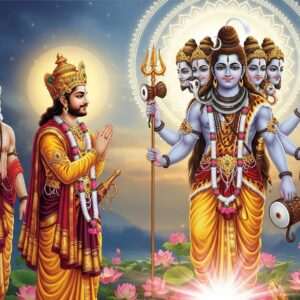
To truly understand the essence of Rajasthan’s heritage, we must delve into the ancestry of this legendary ruler. Born in the 8th century, Bappa Rawal, who is also widely recognized by the name Kalbhoj, emerged as a remarkably prominent leader. According to the revered 15th-century text, the Ekalinga Mahatmya, he was the ninth descendant of Guhadatta, the original founder of the Guhila dynasty. The esteemed Guhilot-Sisodia clan proudly traced their roots back to the glorious Ikshvaku Kshatriya clan, firmly believing they were the direct descendants of Lord Rama and King Dasharatha.
His early years were shaped by profound adversity and resilience. His father, Nagaditya, was tragically killed in a fierce battle against the Bhils of Idar. Yet, from this sorrow, Bappa Rawal rose with strategic brilliance and an unwavering spirit. His spiritual devotion and martial conquests laid the unshakeable foundation for a formidable kingdom, forever cementing his stature as the first major ruler of the Mewar region.
Tracing the Lineage: Bappa Rawal’s Family Tree
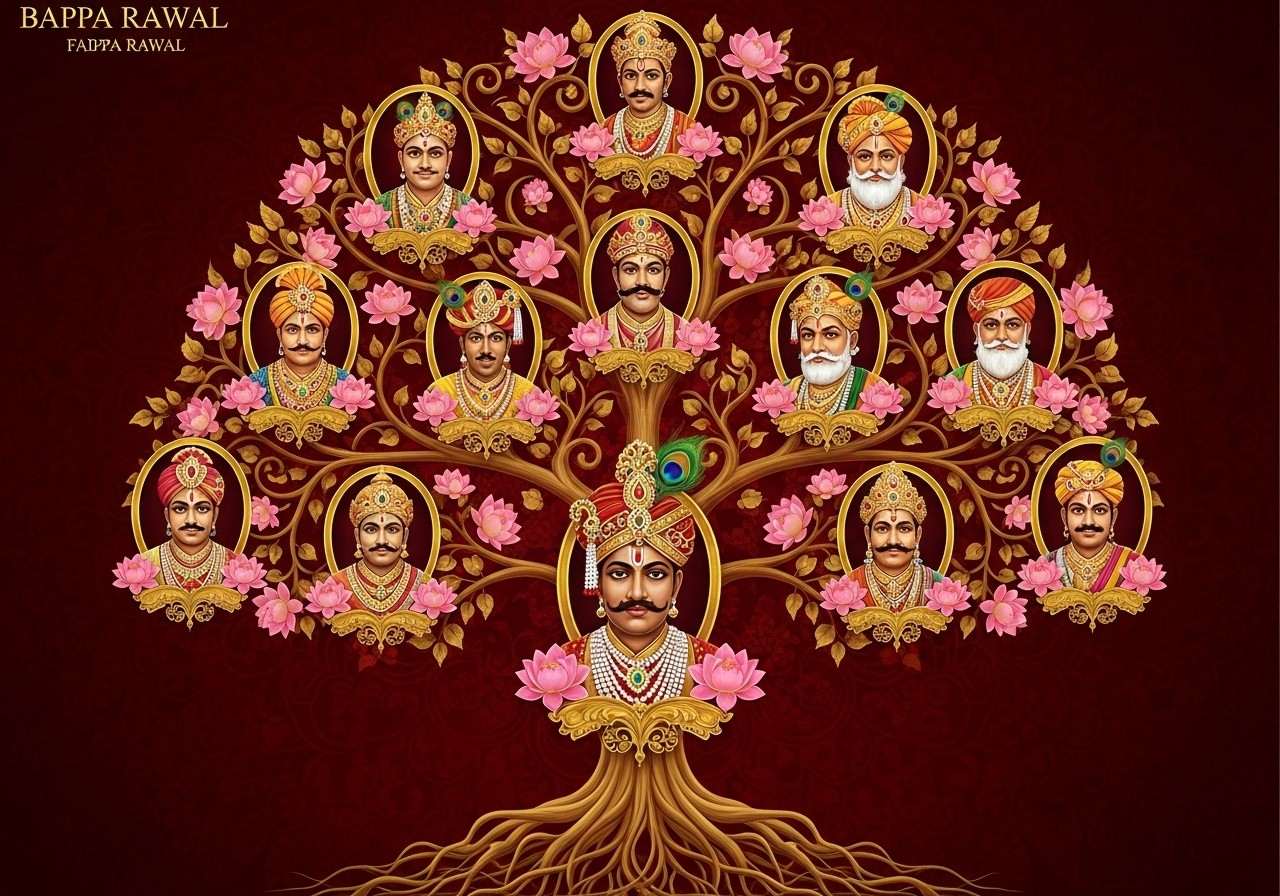
The bloodline of this great king is a fascinating and intricate network, showcasing generations of warriors who fiercely protected their homeland. Below is a detailed look at the prominent figures who carried forward this legacy of valor:
- Guhadatta (The Ancestral Founder): He is recognized in ancient chronicles as the original architect of the Guhila dynasty. Guhadatta’s early efforts to establish governance and unity in the region set a crucial precedent for centuries of Rajput rule, making him an irreplaceable pillar in the grand narrative of Indian history.
- Nagaditya (The Valiant Father): Serving as a vital link in this regal lineage, Nagaditya was a courageous leader whose life was tragically cut short on the battlefield. Historical accounts confirm that his sacrifice during a bitter conflict with the Bhils of Idar profoundly shaped the destiny and the iron will of his young son.
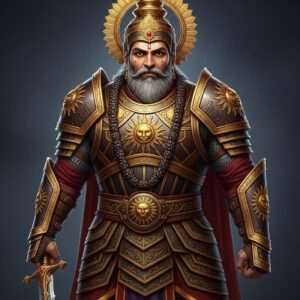
- Bappa Rawal / Kalbhoj (728-764 CE): The central luminary of this lineage, he fiercely protected his motherland against foreign invasions and established a spiritually rooted kingdom. His devotion to the deity Lord Eklingji became the guiding light for all future Maharanas, intertwining divine duty with royal responsibilities.
- Rawal Khuman I (753-773 CE): Taking up his father’s majestic mantle, Khuman I proved to be an exceptionally capable and fierce successor. During his illustrious reign, he famously defeated King Kukuteshwar in 755 CE at the iconic Chittor, further solidifying the absolute dominance of his dynasty in the region.
- Rawal Jaitra Singh (1213–1252 CE) to Rawal Samar Singh (1273–1302 CE): This succession of dedicated rulers skillfully navigated the complex and treacherous regional politics of their times. Their continuous reigns were absolutely vital in maintaining the cultural integrity and defending the Mewar kingdom against numerous external threats during the highly turbulent medieval period.
- Rawal Ratan Singh (1302-1303 CE): His brief yet deeply poignant reign is permanently etched into our cultural memory, primarily due to the legendary and tragic siege of Chittorgarh. The heart-wrenching events of his rule marked a dramatic historical turning point, which eventually led to the rise of the renowned Sisodia branch.
- Maharana Hameer Singh I (1326–1364 CE): A true visionary and a relentless warrior, he successfully reclaimed the lost glory of Mewar after a period of immense struggle and hardship. By firmly establishing the Sisodia branch as the new Maharanas, he breathed new life into the kingdom’s grand and glorious narrative.
- Maharana Pratap (1572-1597 CE): Perhaps one of the most universally worshipped figures in Indian history, this legendary king drew immense spiritual and martial inspiration directly from Bappa Rawal’s legacy. His unwavering resistance against overwhelming imperial forces remains a shining beacon of courage and unyielding patriotism for every generation.
The Enduring Cultural Impact on Modern India
The profound influence of the Mewar family extends far beyond old historical records; it is visibly etched into the very architecture and traditions of Rajasthan. Over time, the family branched into two distinct lineages: the Guhils and the Sisodias. It was the Sisodia branch that ultimately produced the great Maharanas who built iconic forts, magnificent palaces, and breathtaking temples. These structural marvels stand today as proud testaments to Rajput artistry, resilience, and their deep-rooted faith.
Today, the awe-inspiring story of Kalbhoj and his descendants continues to inspire extensive efforts in cultural preservation. The enduring Rajput values of honor, devotion, and bravery remain highly influential in our modern Indian society, constantly reminding us to cherish our roots and celebrate our rich historical identity.
Honoring Our Traditions with Poojn.in
Understanding and honoring the sacrifices of our great ancestors is a beautiful way to stay connected to our cultural roots. Whether you are performing a daily puja to seek ancestral blessings or celebrating a traditional festival, having the right spiritual items is essential. Poojn.in is dedicated to supporting your spiritual journey by providing the finest authentic cultural goods.
As India’s most trusted online cultural store, we bring the sanctity of tradition right to your doorstep. From exquisitely crafted pooja thalis that add elegance to your shrine, to soothing incense sticks and beautifully designed diyas, we ensure you have everything you need for a respectful and authentic prayer experience. Please note, while we celebrate our rich heritage, we strictly focus on offering premium cultural products and do not provide travel packages or VIP temple darshans. To explore our wide range of authentic ritual items and bring a touch of divine tradition to your home, contact us at 03369029784 or WhatsApp us at 9476142738.
Frequently Asked Questions About the Mewar Lineage
People frequently wonder, who was Bappa Rawal? He was a legendary king and the foundational figure of the Mewar dynasty in Rajasthan, deeply revered across the nation for his exceptional bravery, strategic brilliance, and devoted leadership during the 8th century.
Another common curiosity surrounds his family tree and origins. His profound lineage traces back to the ancient Guhila dynasty, and it is widely believed that his clan descended from the noble Ikshvaku Kshatriya line, sharing ancestry with the revered Lord Rama.
Many readers are keen to know about his immediate descendants, specifically who his son was. His valiant son was Rawal Khuman I, who seamlessly took over the reins of the kingdom and became a highly victorious ruler, notably defeating rival kings to protect his lands.
It is natural to ask who succeeded the great founder over the centuries. He was followed by an impressive line of descendants, including the illustrious Guhils and the mighty Sisodias. Great kings like Maharana Hameer Singh I and Maharana Pratap diligently upheld his powerful legacy of independence.
Historians often discuss the lasting impact this ruler had on the region of Mewar. By establishing a deeply rooted dynasty, he laid a rock-solid foundation for a lineage of strong, culturally devoted rulers, bringing lasting prosperity and architectural marvels to Rajasthan.
You might ask how this historical icon is remembered today in our modern society. He is worshipped as a heroic figure in Indian culture, celebrated extensively in folk tales, historical chronicles, and art for his immense contributions to the Rajput identity.
For those eager to learn more, finding information on his successors is quite accessible today. Numerous ancient texts like the Ekalinga Mahatmya, historical books, and verified cultural resources provide extensive, detailed insights into his royal bloodline.
Finally, people often question if there is any broader historical significance to his lineage. Absolutely, his bloodline profoundly shaped the cultural, spiritual, and political landscape of Mewar, leaving a lasting and inspiring imprint on the broader canvas of Indian history.