

In the rich and vibrant tapestry of Indian mythology, every element of nature resonates with a profound spiritual vibration. Beyond being an everyday agricultural yield, the humble Ganna (sugarcane) carries deep cultural and divine significance. For generations, this sweet stalk has gracefully moved from our lush harvest fields into our sacred mandirs, reflecting a beautiful intersection of earthly abundance and spiritual awakening. This journey explores how this magnificent plant is celebrated with deep bhakti across various Indian customs, rituals, and epic tales.
The Divine Nectar in Ancient Lore and Symbolism
Our ancient scriptures, including epic sagas like the Ramayana and Mahabharata, frequently use this sweet harvest as a powerful metaphor for vitality and pure joy. It stands as a timeless testament to prosperity and the compassionate nature of the divine. As one of the most vital yields of the season, it is traditionally perceived as a bringer of holistic well-being, effectively symbolizing the nurturing love that our cherished goddesses bestow upon devoted hearts. In its very essence, the inherent sweetness of the crop mirrors a kind, spiritual disposition and an open heart.
Unpacking the Symbolism: Growth, Discipline, and Life’s Balancing Act
Understanding this sacred stalk goes far beyond its physical taste; it delves into the profound life lessons it graciously offers to spiritual seekers and everyday devotees alike:
- Embracing Fertility and Natural Growth: Because of its rapid maturation and incredibly rich yield, this plant beautifully embodies the creative and sustaining forces of the universe. It serves as a natural reminder of how life constantly renews itself, nurturing the profound essence of creation with divine grace. In our ancient agrarian society, such an abundant crop has always been revered as a direct blessing of Mother Earth’s endless fertility and power.
- Reflecting Life’s Inevitable Dualities: In our traditional philosophies, this crop perfectly symbolizes the delicate balance between suffering and pure sweetness, illustrating the full, vibrant spectrum of life’s daily experiences. It gracefully teaches us that true self-actualization comes from accepting both the bitter and the sweet, the agony and the ecstasy, with a calm, steadfast mind. This ancestral wisdom continues to help devotees navigate modern life with grounded resilience.
- Cultivating Spiritual Discipline: For those walking the path of serious spiritual practice, the firm, resilient stalk represents the necessary discipline required to carefully control worldly desires. By consciously managing our five senses, we can successfully transform raw, earthly cravings into elevated, divine energy, fostering profound spiritual growth. It stands as a beautiful metaphor illustrating how a strict yet balanced mind ultimately yields the sweetest spiritual rewards.
Divine Deities Gracing the Sacred Stalk
Throughout our mythological narratives, several highly revered deities are intimately connected with this sacred harvest. Goddess Parvati is often beautifully depicted holding it, symbolizing her eternal role as the supreme provider of sustenance and the embodiment of nurturing femininity. Similarly, the compassionate Goddess Kamakshi, who presides over love, motherhood, and peaceful homes, graces us with this sweet offering in her divine hands. The god of love, Kamadeva, is vividly described as carrying a magnificent bow fashioned from this sturdy stalk, complete with a divine string of buzzing honeybees.
In the sacred Sri Vidya tradition, the resplendent Goddess Lalita Tripura Sundari wields this bow as a powerful representation of a stern yet perfectly balanced mind. Her divine grip on it signifies absolute control over the senses, encouraging all devotees to cultivate positive thoughts and inner peace. Moreover, in the realm of Vaishnavism, it is cherished as a pure, unwavering symbol of life’s sweetness and the Supreme Lord’s endless, joyful blessings.
The Sacred Significance in Harvest Celebrations and Ritual Offerings
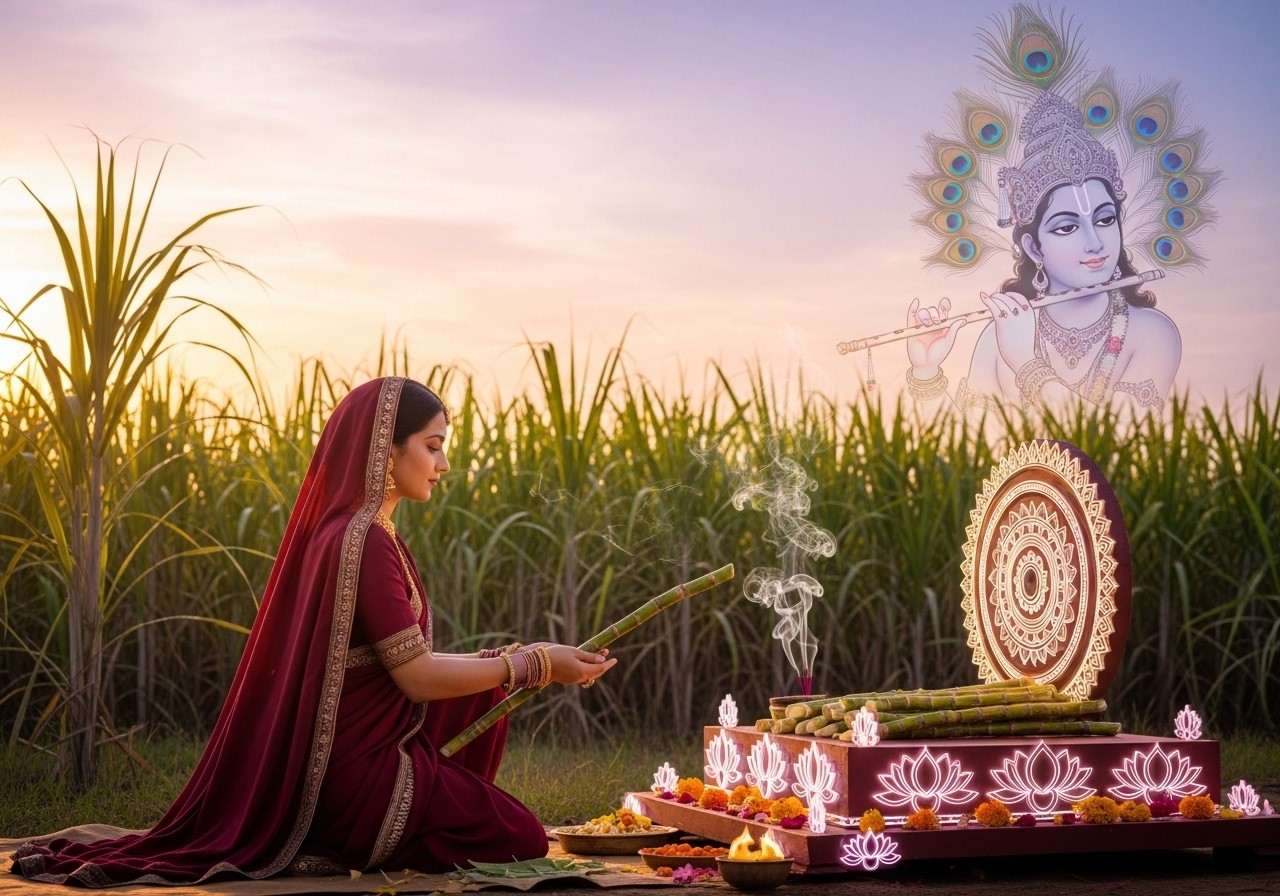
Whether in times of grand festive celebration or quiet, daily prayer, this sacred plant remains central to our expressions of gratitude. During joyous harvest celebrations such as Makar Sankranti, Pongal, and Lohri, it proudly takes center stage, embodying communal prosperity and heartfelt thankfulness. It is lovingly distributed alongside jaggery and other traditional sweets, signifying a collective prayer for the well-being and health of the entire family.
Furthermore, it is an essential part of traditional wedding ceremonies, where it blesses the newlyweds with a promise of enduring sweetness in their marital journey. Beyond our mandir rituals, traditional Ayurvedic texts and ancestral wisdom recognize its fresh juice for its cooling medicinal properties, emphasizing how our ancient Indian practices beautifully merged dietary recommendations with deep, spiritual devotion.
Interpreting Sacred Visions: The Meaning of Dreams
In the fascinating realm of traditional dream interpretation, experiencing a vision of this lush crop is considered incredibly auspicious. Such dreams are widely seen as positive omens, signaling the imminent arrival of flourishing prosperity, boundless joy, and sweet outcomes in both personal and professional endeavors. For spiritual practitioners, these night-time visions reassure the seeking soul that divine forces are actively weaving moments of happiness and material stability into the fabric of their everyday lives.
Enhance Your Spiritual Journey with Poojn.in
At our core, we believe in honoring these timeless traditions with the utmost authenticity and reverence they deserve. Poojn.in proudly stands as your most trusted online destination for premium cultural goods and authentic puja samagri in India. Our carefully curated collections are specifically designed to meet all your devotional needs, ensuring that your daily rituals remain pure and deeply connected to our ancestral roots.
Whether you are preparing for a festive harvest offering or a daily home puja, our authentic products help you fully embrace the profound spiritual essence of these age-old customs. Please note that we exclusively sell cultural goods through our online store; we do not provide travel packages, offer guidance, or arrange VIP darshan of temples. To explore our exquisite collection of genuine devotional items, visit poojn.in today. For any assistance in selecting the perfect ritual goods, feel free to contact our dedicated support team at 03369029784 or simply reach out to us via WhatsApp at 9476142738.
Addressing Your Sacred Curiosities
Many devoted individuals frequently seek to understand the deeper meanings behind our cherished cultural symbols. The underlying significance of this sweet harvest in Indian mythology primarily revolves around themes of immense prosperity, divine sweetness, and the joyous celebration of nature’s abundant gifts. It naturally bridges our everyday earthly struggles with the reassuring promise of divine grace and spiritual fulfillment.
When inquiring about which divine figures are directly associated with this auspicious crop, one will often find Goddess Parvati gracefully depicted with it, alongside radiant deities like Goddess Kamakshi and Goddess Lalita Tripura Sundari. These supreme divine mothers wield it to symbolize holistic spiritual growth, the nurturing aspects of mother nature, and the masterful, conscious control of human desires.
For those curious about the hidden meaning of seeing this lush crop in their dreams, ancient spiritual wisdom suggests it is a highly favorable sign. It generally indicates that a wonderful period of happiness, sweet experiences, and financial or emotional flourishing is gracefully approaching the dreamer’s waking life.
As for its practical application in our vibrant Indian rituals, it is most prominently featured during grand harvest celebrations like Makar Sankranti and Pongal. Families joyously offer it to the divine as a humble, heartfelt gesture of gratitude, asking for continued blessings and an unbroken streak of sweetness in their households.
The reason it is so strongly associated with wealth and prosperity stems from its historical role as a crucial, economically enriching harvest. It has always been a reliable source of sustenance and economic stability for our agricultural communities, making it the perfect earthly symbol for divine abundance and well-being.
Ultimately, when we include this magnificent plant in our Hindu worship, it acts as far more than a mere offering. It symbolizes a deeply emotional prayer for fertility, steady spiritual growth, and the divine sweetness that makes the human experience truly beautiful and worthwhile.