

The history of our written word is deeply intertwined with the cultural soul of India. For countless generations, the sacred letters of our regional vernacular have served as a beautiful bridge between divine wisdom and our everyday lives. Understanding how this writing system blossomed over a thousand years gives us a profound glimpse into the rich, spiritual traditions that our ancestors lovingly preserved for us.
Ancient Foundations and Divine Beginnings
Every stroke and graceful curve of our beloved script finds its origin in the ancient Brahmi writing system, recognized as one of the most revered and historically significant scripts of India. As the golden age of the Gupta era dawned, this ancient alphabet naturally began to evolve, giving birth to what historians call the Eastern Nagari or Proto-Bengali script. By the time the 11th and 12th centuries arrived, our traditional letters started taking their distinctive, rounded form, deeply rooting themselves in our eastern soil and forming a unique cultural identity.
The Intertwining of Spirituality and Letters
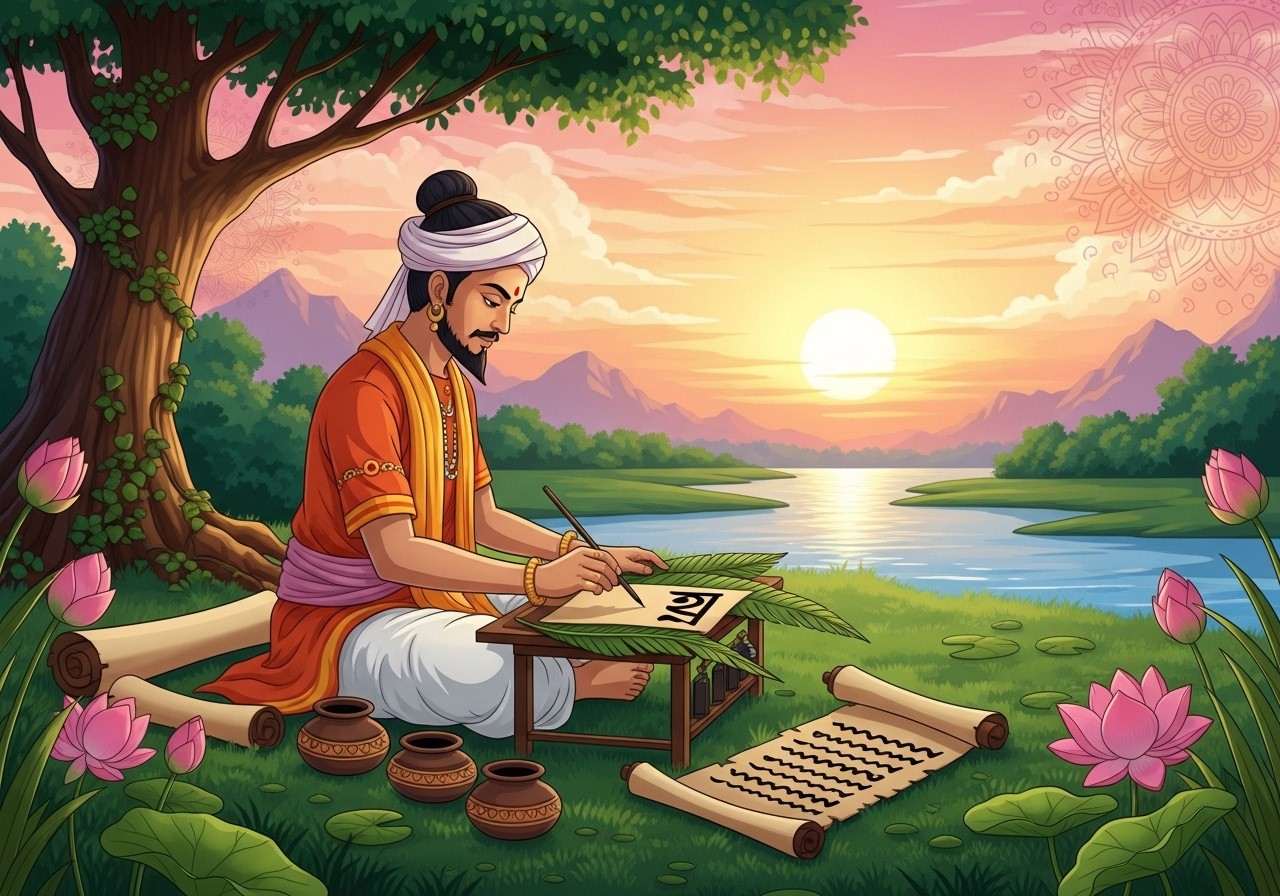
Our ancestors always believed that language was a divine blessing, meant to connect the human spirit with the divine. The spread of Buddhism and Hinduism played a magnificent role in nurturing these early letterforms. Early Buddhist mantras and sacred Hindu Sanskrit verses were patiently inscribed on palm-leaf manuscripts using these very regional letters. These dedicated spiritual practices fostered a deep bond, proving that language and faith have always walked hand in hand across our beautiful cultural landscape.
Royal Patronage by the Pala and Sena Dynasties
The journey of our writing system flourished magnificently under the warm patronage of mighty dynasties. During the 8th century, the illustrious Pala dynasty ushered in a magnificent wave of cultural reawakening. Their unwavering support for scholarly and religious pursuits meant that countless manuscripts were meticulously penned to preserve knowledge. Following them, the Sena dynasty continued this noble tradition, ensuring that the transcription of our sacred texts became a highly respected art form in itself.
Key Milestones in the Evolution of Our Heritage Script
- The Ancient Brahmi Foundations: Recognized universally as the oldest and most widespread writing system in early India, the Brahmi script laid the essential groundwork for our linguistic heritage. Although some scholars thoughtfully look toward the Indus Valley for its earliest sparks, it remains the undisputed ancestor of numerous beautiful writing styles across South and Southeast Asia.
- The Era of the Gupta Script: As India entered the culturally rich golden age of the Gupta empire, early writing forms began to experience significant and beautiful stylistic shifts. This defining historical period acts as a crucial bridge, setting the definitive starting point for the regional letters that millions of us hold so dear to our hearts today.
- The Emergence of Proto-Bengali: Often referred to lovingly as the Eastern Nagari script, this transitional phase serves as the direct predecessor to our modern everyday letters. It seamlessly evolved from earlier structured styles to cater specifically to the linguistic and spiritual needs of the eastern region before blooming entirely into its final form.
- Standardization and the Printing Press: The modern visual identity of these timeless letters was firmly established in the year 1778, largely thanks to Charles Wilkins who crafted the very first printed typographic forms. Decades later, ongoing structural spelling reforms initiated by the University of Calcutta in 1936 helped standardize our beloved language, ensuring it was protected for future generations.
The Colonial Shift and the Journey to Standardization
The arrival of the British brought structural changes to the way our heritage was documented and shared. The growing need for standardized education and administration led to the absolute formalization of our writing system. This vibrant era also witnessed a magnificent cultural renaissance, where our newly standardized script beautifully became the powerful voice of our revered poets, passionate freedom fighters, and visionary thinkers.
Embracing the Legacy with Authentic Cultural Resources
As we reflect on this thousand-year journey, it becomes incredibly clear how essential it is to keep our traditions warmly alive in our homes. Connecting with our roots brings a deep sense of peace and belonging to our fast-paced modern lives. At Poojn.in, we are whole-heartedly dedicated to helping you and your family preserve this beautiful heritage. We proudly offer a wide range of authentic cultural goods, traditional books, and meaningful ritual items through our online store. Please remember that we focus purely on delivering these tangible cultural goods right to your doorstep and do not offer travel packages, pilgrimage guidance, or VIP darshan services at temples. By choosing our trusted online store, you can conveniently bring home authentic materials that honor our rich history without stepping out. For more information or to explore our carefully curated collections, please contact us at 03369029784 or simply WhatsApp us at 9476142738. We are always here to serve your cultural needs.
Frequently Asked Questions About Our Sacred Script’s History
Many people lovingly wonder about who actually created this beautiful script that we use today. There is no single inventor to credit; instead, it is the magnificent result of a collective, centuries-long evolution deeply rooted in the ancient Brahmi writing system.
If you are curious about the exact historical timeline of these letters, you should know that they evolved very organically. Tracing their proud lineage back over a thousand years, they transitioned gracefully through the Gupta and Proto-Bengali phases before finally taking their current, culturally rich shape.
It is quite common to ask how this beloved regional writing system originally came to be. It was beautifully born out of profound necessity and spiritual expression, naturally developing from the Eastern Nagari script as local communities sought a unique voice for their daily prayers and literature.
Readers frequently question whether our writing system shares familial traits with other regional languages. Indeed, it shares a very deep, brotherly bond with scripts like Assamese and Odia, as they all proudly blossomed from the very same ancient Brahmi family tree.
Families also want to deeply understand the cultural significance behind these letters. They are so much more than just ink on paper; they are the sacred vessels that safely hold our religious texts, our timeless poetry, and the everyday wisdom that keeps our rich Indian traditions so vibrantly alive.
Another common inquiry revolves around the basic structure and the total number of characters it holds. Rooted in a highly logical and scientific phonetic system, it traditionally features 11 vowels and 39 consonants, beautifully creating a comprehensive set of 50 letters that lovingly capture every nuance of our spoken word.
For those curious about its modern everyday application, you will be very glad to know that the script has seamlessly transitioned into our digital space. Today, it is widely and proudly used across digital platforms worldwide, ensuring that our ancestral wisdom continues to thrive effortlessly in the modern digital age.
Finally, regarding its vital role in nurturing our young minds, this script remains the absolute foundation of early cultural education. It is the primary, essential medium through which our next generation learns to read, write, and proudly connect with their historical and literary roots, keeping the flame of our culture burning bright.