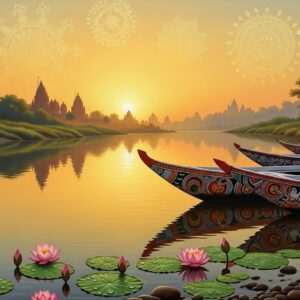

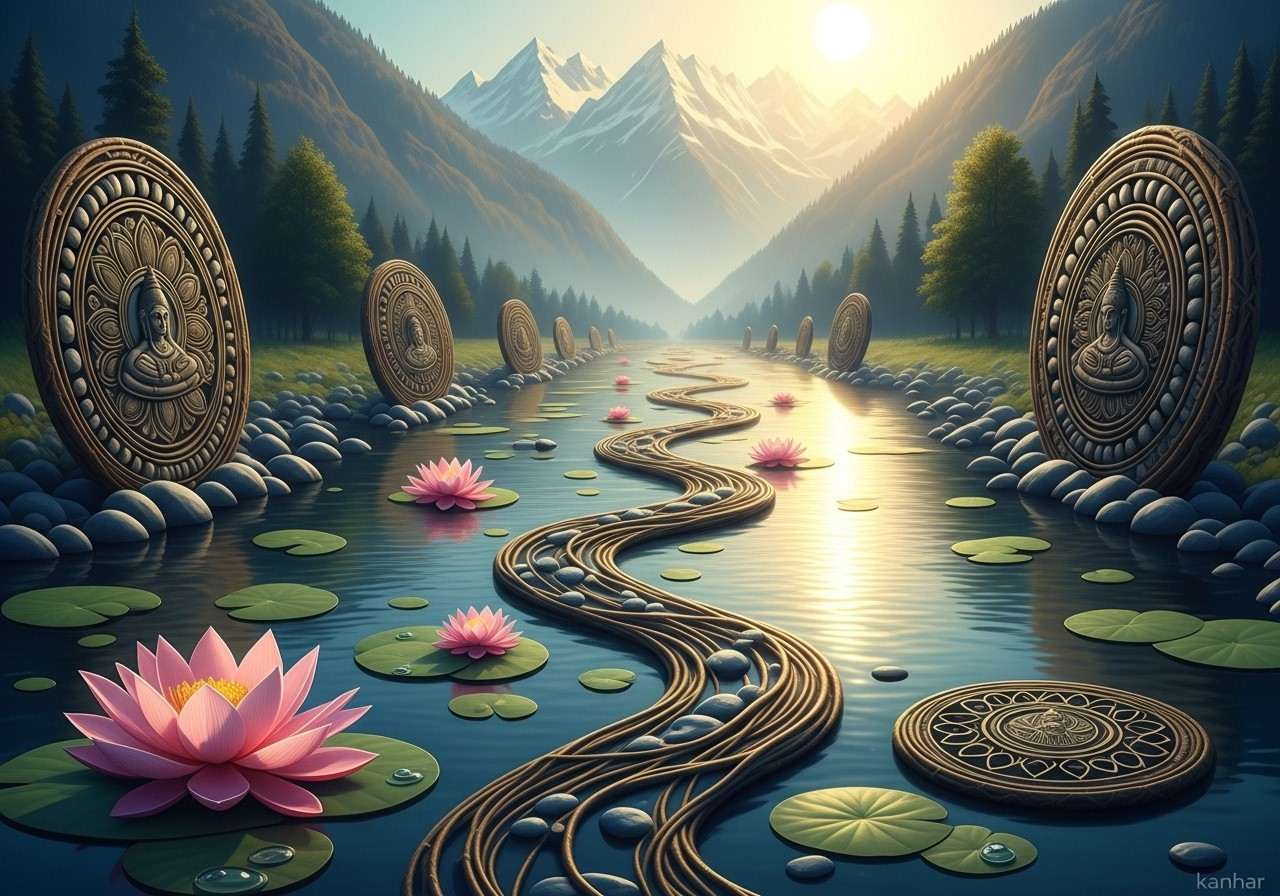
In our rich Indian heritage, rivers are never merely bodies of water; they are revered as nurturing mothers and living deities. Tracing the path of a sacred waterway like the Kanhar River offers a profound glimpse into the harmonious blend of nature, spirituality, and everyday life. From its serene origins to the bustling communities along its banks, this holy river shapes the cultural identity, agricultural prosperity, and spiritual practices of countless families.
The Divine Origin and Flowing Course
The gentle yet resilient journey of this sacred river begins at Gidha-Dhodha on the breathtaking Khudia plateau, beautifully nestled within the Jashpur district of Chhattisgarh. Emerging at an impressive elevation of 1012 meters above sea level, the river’s birthplace is a natural marvel fed by pure rainfall and surrounded by pristine, lush green landscapes that evoke an immediate sense of peace.
As it gathers strength, the waterway flows northward, serving as a natural, life-giving boundary with the Garhwa district in Jharkhand. The river gracefully travels for roughly 100 kilometers through Chhattisgarh’s Surguja district, weaving through deeply forested terrains and resting on a rocky, ancient bed. After running parallel to the Son River in Garhwa, it takes a deliberate turn northwest, gracing the Sonbhadra district in Uttar Pradesh. Ultimately, after traversing a total length of approximately 218 kilometers, it peacefully converges with the mighty Son River just northeast of Kota village. A true spectacle along this magnificent route is the breathtaking 61-meter Pavai Fall near Kothali village in the Balrampur district, a spot where nature’s power and beauty are on full display.
Vital Tributaries: The Veins of the Ecosystem
To truly understand the volume and mighty flow of this sacred waterway, we must acknowledge the numerous tributaries that feed into its basin. Key contributors include the Thema, Lanva, Pandu, Goita, Hathinala, Suria, Chana, Sendur, Kursa, Galphulla, Semarkhar, Riger, and Cherna Nallah. Each of these streams carries its own unique geographical blessings, continually enriching the main river’s biodiversity.
Notably, the Pagan River serves as a prominent left-bank tributary, joining the holy waters near Sugawaman village in Uttar Pradesh. Meanwhile, the Goita converges just a kilometer below potential dam sites near Amwar village, adding vital strength to the river’s continuous flow. Together, these interconnected streams maintain the ecological balance and sustain the rich flora and fauna of the surrounding heartland.
Spiritual Resonance and Everyday Devotion
For the local communities residing along its verdant banks, this river is a profound symbol of life and purity. The water is deeply intertwined with daily religious practices, ancient folklore, and vibrant village festivals. Whether it is offering morning prayers to the rising sun or performing sacred rituals for departed ancestors, the river provides a holy sanctuary for devotees to connect with the divine. It is a constant, reassuring presence that bridges the past with the present, ensuring that our beautiful traditions remain alive and flowing.
Upholding Tradition with Poojn.in
When families gather by the riverside or at their home altars to perform auspicious pujas, having access to pure, authentic ritual items is absolutely essential. We understand that finding the right materials can sometimes be a challenge in our busy modern lives. This is where Poojn.in, India’s most trusted online store for cultural goods, steps in to support your devotion. While we do not offer travel packages or VIP darshan services, we take immense pride in delivering the finest physical goods straight to your doorstep, ensuring your ceremonies are conducted with the utmost sanctity.
Explore our carefully curated offerings:
- Authentic Dashakarma Kits: Perfect for performing elaborate riverside rituals, these comprehensive kits contain everything you could possibly need, from pure camphor to handcrafted incense. Every single item is thoughtfully sourced to ensure your traditional river worship is complete, respectful, and completely unhindered by missing supplies.
- Elegant Traditional Attire: Wearing the appropriate, culturally aligned clothing during a puja is deeply symbolic and adds to the purity of the occasion. Our beautifully crafted traditional garments allow you to fully immerse yourself in your spiritual journey, providing both grace and essential comfort during long, sacred ceremonies.
- Sacred Holy Books and Guides: To truly comprehend the profound spiritual essence of Indian rivers, one must dive into the timeless wisdom of our ancestors. Our extensive collection of sacred texts and ritual guides will deeply enrich your soul, helping you and your family understand the intricate meanings behind every mantra and offering.
By choosing Poojn.in, you ensure that your sacred practices are upheld with uncompromising quality and authenticity. Visit our online store today to browse our cultural catalog, or reach out to us at 03369029784 (WhatsApp: 9476142738) for personal assistance with your spiritual needs.
The Eternal Flow of Faith and Nature
The journey of this remarkable river is a beautiful testament to the harmonious relationship between Mother Nature and Indian culture. It stands as a silent guardian of our ancient traditions and a generous nurturer of life. Embracing the legacy of this holy watercourse means actively respecting the environment and honoring the timeless customs that flourish along its banks. Let the steady, peaceful flow of the river inspire us all to cherish, protect, and proudly pass on the rich traditions that define who we are.
Addressing Common Curiosities About the River’s Path
Where does this sacred waterway originate?
Many devotees and geography enthusiasts wonder about the exact birthplace of this holy river. It proudly begins its course at Gidha-Dhodha on the Khudia plateau, nestled within the lush, culturally rich landscapes of Chhattisgarh’s Jashpur district.
Which major river network does it join?
As it journeys onward, it eventually becomes a crucial tributary itself, merging gracefully into the mighty Son River. This significant convergence takes place just northeast of Kota village in Uttar Pradesh, integrating it into central India’s larger hydrological family.
What is the total length of its flowing course?
Spanning across diverse topographies, the waterway covers a total length of approximately 218 kilometers. Along this extensive route, it breathes life into dense forests, rocky terrains, and countless agricultural fields.
Through which Indian states does its journey pass?
The river is a beautiful unifying force, flowing seamlessly across the borders of three distinct states. It begins in Chhattisgarh, acts as a boundary for Jharkhand, and finally winds its way through Uttar Pradesh.
How does the river impact the lives of local villagers?
For the communities residing nearby, this river is an absolute lifeline that ensures fertile lands and bountiful harvests. It provides vital irrigation for agriculture, safe drinking water, and supports the daily livelihoods of thousands of hardworking families.
Are there specific cultural rituals performed in its waters?
Absolutely. Life around its banks is characterized by a deep, unwavering devotion. Communities regularly gather to perform ancestral rites, joyous local festivals, and sacred baths, continually paying homage to the river’s spiritual purity and life-giving blessings.