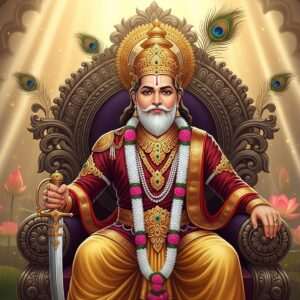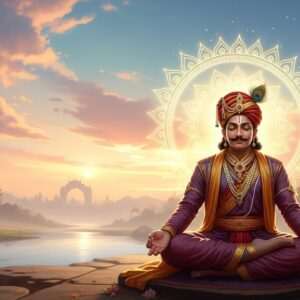


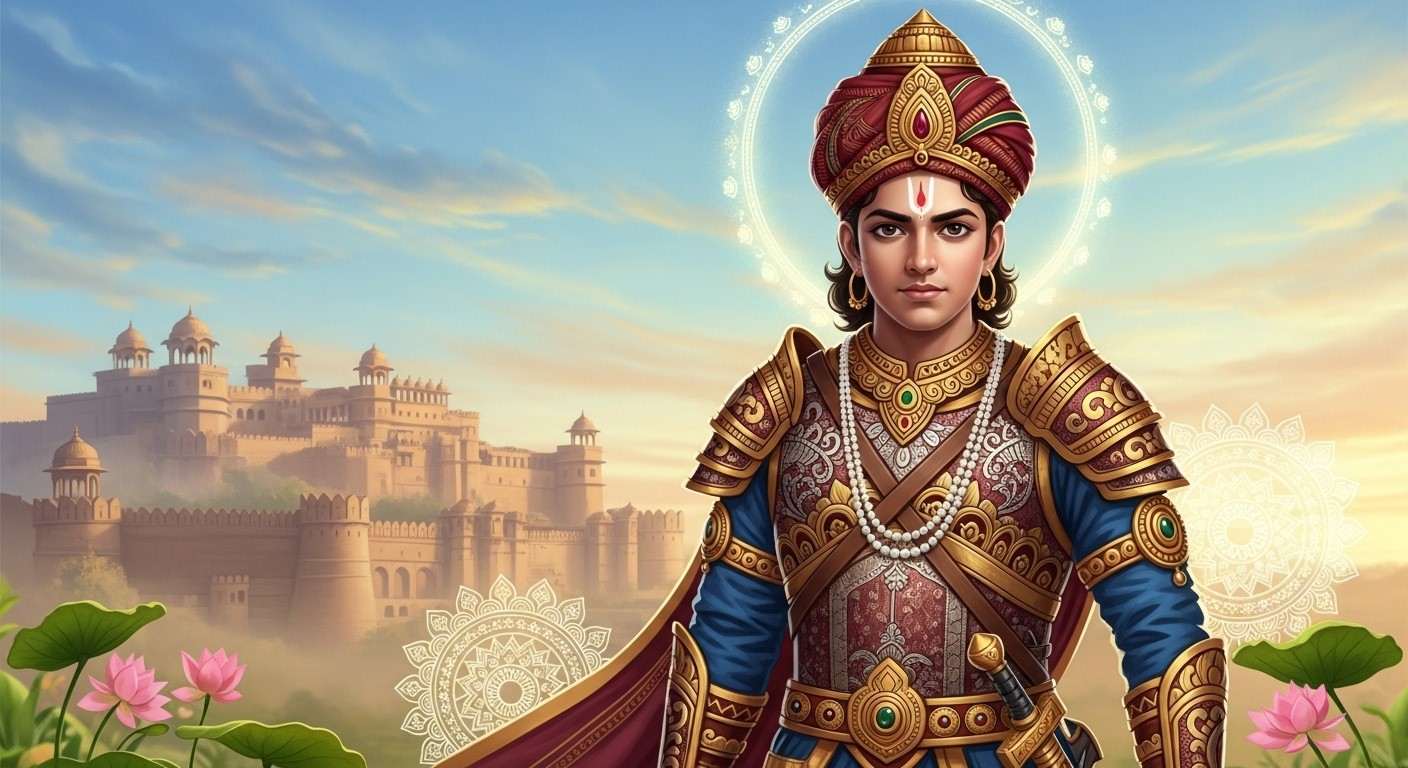
Bappa Rawal, a name that reverberates with immense pride across the pages of Indian history, stands as the illustrious founder of the Mewar Dynasty. For those of us who deeply value our rich cultural heritage and ancestral traditions, understanding the foundational years of this legendary figure, originally known as Kalbhoj, brings us closer to our roots. His extraordinary journey from a young boy in disguise to a mighty ruler shaped the socio-political destiny of Rajasthan and continues to inspire culturally rooted Indians today.
The Formative Years and Ancestry of a Legendary King
Born around 713 AD, Kalbhoj, who would later be immortalized as Bappa Rawal, faced a childhood marked by both divine grace and profound adversity. While historians sometimes debate the exact timelines due to the scarcity of ancient records, it is widely accepted that he first saw the light of day in Anandapura, Rajasthan. He belonged to the illustrious Guhila Rajput dynasty, recognized as the ninth descendant of Guhadatta, its founding patriarch.
Tragedy struck early in his life when his father, Rawal Mahendra II, was tragically assassinated around 716 AD. To protect the young prince from his enemies, he was raised in disguise by a compassionate Brahmin woman in Nagda. During these hidden years, Bappa spent his days tending to sacred cattle, absorbing the humility and grounding that would later define his kingship. It was during this period of exile that the local Bhil tribe stepped in to safeguard him and his mother. They not only offered a safe haven but also mentored him in the fierce arts of warfare, forging a deep and lasting bond between the young royal and the tribal warriors.
Beyond his martial prowess, Bappa was a deeply spiritual soul. His unwavering devotion to Lord Shiva led him to cross paths with the revered sage, Harit Rishi, who recognized the young boy’s divine destiny. The sage bestowed upon him the profound blessing of kingship, intertwining divine sanction with his earthly ambitions and grounding his future rule in dharma.
The Ascent to Power and the Birth of a Kingdom
As he matured, Bappa Rawal’s rise to power was nothing short of miraculous, driven by strategic brilliance and sheer courage. At the young age of 21, in 728 CE, he achieved a monumental victory by capturing the formidable Chittor fort, defeating Man Mori. Breaking away from the conventions of his ancestors, he chose not to continue the family name of seven generations; instead, he laid the cornerstone of the glorious Mewar Dynasty.
His military achievements soon echoed well beyond the borders of Rajasthan. In the historic Battle of Rajasthan, Bappa Rawal played a pivotal role in uniting smaller regional states to form a formidable front against the invading Arab forces. He decisively defeated the Arab armies, relentlessly pursuing Muhammad Bin Qasim’s forces through Saurashtra and all the way back to the western banks of the Sindhu river. This resounding victory not only secured the region but also cemented his legacy as a fierce protector of the Indian subcontinent’s cultural and spiritual identity.
After ruling with immense wisdom and strength for nearly two decades, establishing peace, cultural prosperity, and grand temple structures, he chose the path of renunciation. He gracefully passed the throne to his son and spent his remaining years as an ascetic, fully immersed in the devotion of Lord Shiva, leaving behind a legacy of over one hundred children and an empire built on righteousness.
Enriching Your Spiritual Journey with Authentic Traditions
Learning about the devout life and towering achievements of figures like Bappa Rawal often fills our hearts with a deep yearning to connect with our spiritual roots. Maintaining the purity of our daily worship and honoring our ancestral practices becomes a vital part of our everyday lives. At poojn.in, we understand the emotional and cultural value of these timeless traditions, and we are dedicated to bringing you the finest cultural goods to elevate your spiritual practices.
- Authentic Ritual Items: Transform your daily prayers into a profound spiritual experience with our meticulously sourced pooja items. From sacred incense sticks that purify the air to traditional diyas that bring divine light into your home, we provide everything you need for an authentic homage. We believe that your rituals should be performed with the utmost sanctity, just as our ancestors did. Explore our extensive collection at https://www.poojn.in to find items that resonate beautifully with your devotion.
- Historical Books and Scriptures: Delve deeper into the glorious past of India by reading texts that capture the essence of our ancient kingdoms and legendary heroes. Our curated selection of cultural literature provides deep insights into the timeless values, traditions, and socio-cultural fabric of bygone eras. This allows you and your family to stay connected to your roots and pass down these incredible stories to the next generation. Visit https://www.poojn.in to enrich your home library with wisdom.
- Traditional Attire and Accessories: Embrace the cultural elegance of our ancestors by donning ethnic wear that reflects the rich, vibrant heritage of India. Whether it is for a special household pooja, a family festival, or a cultural gathering in your community, our store offers high-quality traditional clothing that makes you feel deeply connected to the legacy of those who walked this land before us. Check out our beautiful cultural selections at https://www.poojn.in to find your perfect festive look.
For any assistance in choosing the right items for your cultural needs, please do not hesitate to reach out to our dedicated team at 03369029784 or send us a quick WhatsApp message at 9476142738.
Embracing the Timeless Heritage of Mewar
The remarkable narrative of this legendary warrior king is a beautiful tapestry woven with threads of resilience, spiritual devotion, and unmatched bravery. His transformation from an orphaned prince living in hiding to the founder of the Mewar Kingdom serves as a powerful reminder of what true determination and divine faith can achieve. For us, his story is not just a chapter in a history book; it is a profound testament to the strength of our Indian heritage. As we reflect on his monumental contributions, we carry forward his legacy of courage and devotion in our hearts, ensuring his spirit lives on in our daily lives.
Frequently Asked Questions About the Historic Ruler of Mewar
Curious about when this great king was born?
Historical accounts and ancient texts estimate that this revered leader was born around 713 AD, placing his formative years right at the beginning of the 8th century, a time of immense socio-political shift in India.
Many wonder about his ancestral roots and birthplace.
He was born into the esteemed Guhila Rajput dynasty. While the exact location is shrouded in the mists of time, many records suggest he was born in Anandapura, Rajasthan, before being moved to Nagda by his caretakers for his safety.
People often ask about the identity of his father.
His father was Rawal Mahendra II, who was tragically assassinated when the prince was just a small child. This unfortunate event prompted his mother and loyal followers to raise him in disguise among the common folk.
What were his greatest historical achievements?
He is most celebrated for capturing the Chittor fort at the young age of 21, defeating Man Mori, and establishing the glorious Mewar Dynasty in 728 CE. Furthermore, his successful military campaigns against invading Arab forces solidified his enduring reputation as a great protector of the land.
Did he have siblings or a large extended family?
Detailed historical documentation regarding his siblings remains quite limited. However, it is a widely known historical note that later in life, he married many women and had over one hundred children, ensuring a massive and enduring lineage.
Are there monuments honoring his legacy today?
Indeed, his enduring legacy is honored through various majestic historical monuments and temples across Rajasthan. These architectural marvels stand as silent yet powerful witnesses to his monumental contributions to Indian culture and history.