

Deep in the heart of Rajasthan’s vibrant history beats the indomitable spirit of a true hero—a man whose life story shaped our cultural heritage in ways that still resonate in our homes today. This is the tale of an extraordinary leader who stood tall for Dharma and motherland. Understanding his profound journey is not just about reading history; it is a heartfelt path to reconnecting with our roots. His courage offers a timeless reminder of the strength and resilience cherished by every culturally grounded Indian.
Bappa Rawal’s Real Name: The Story of Kalbhoj
Many of us have grown up hearing awe-inspiring tales of his bravery, but a lesser-known fact is that Bappa Rawal’s original name was Kalbhoj (काल भोज), and he was born in the year 713 AD. While “Bappa” later became a term of immense reverence and endearment, Kalbhoj is a name that carries the true weight of ancient prestige. Historical chronicles gently unveil this truth, pulling us closer to his human side. Knowing him as Kalbhoj adds a deeply personal layer to the respect he earned, reminding us that behind the larger-than-life legend was a real person deeply devoted to his people and traditions.
The Guhilot Rajput Dynasty and the Birth of Mewar
Born into a proud and noble lineage, he gracefully served as the eighth ruler of the Guhilot Rajput dynasty. Yet, his destiny was to create something entirely revolutionary. When he ascended to power, he made the bold choice not to continue the family name that had been used by the previous seven generations. Instead, his visionary leadership led him to establish the iconic Mewar Kingdom in 728 CE. This monumental step in the 8th century forever transformed the landscape of our regional history, laying a foundation of unyielding Rajput pride that we still celebrate through our vibrant festivals today.
Legends of Valor: Early Life and the Bheel Tribe
His path to greatness was paved with unimaginable early hardships. Lore tells us that his father, Rawal Mahendra, along with other male family members, tragically lost their lives in a fierce battle with the Bheels of Idar. Fleeing for safety, young Kalbhoj was raised by his brave mother with the selfless support of loyal Bheel attendants. Living amidst the wild Aravalli ranges, the Bheel tribe taught him invaluable military skills and the rugged art of survival. This deep, respectful bond with the tribal communities highlights a beautiful social harmony that remains a core part of our inclusive cultural ethos.
The Conquest of Chittor and Defending the Motherland
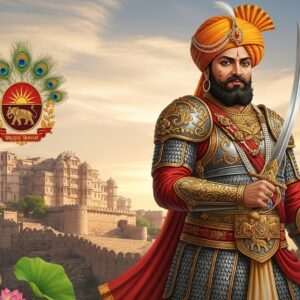
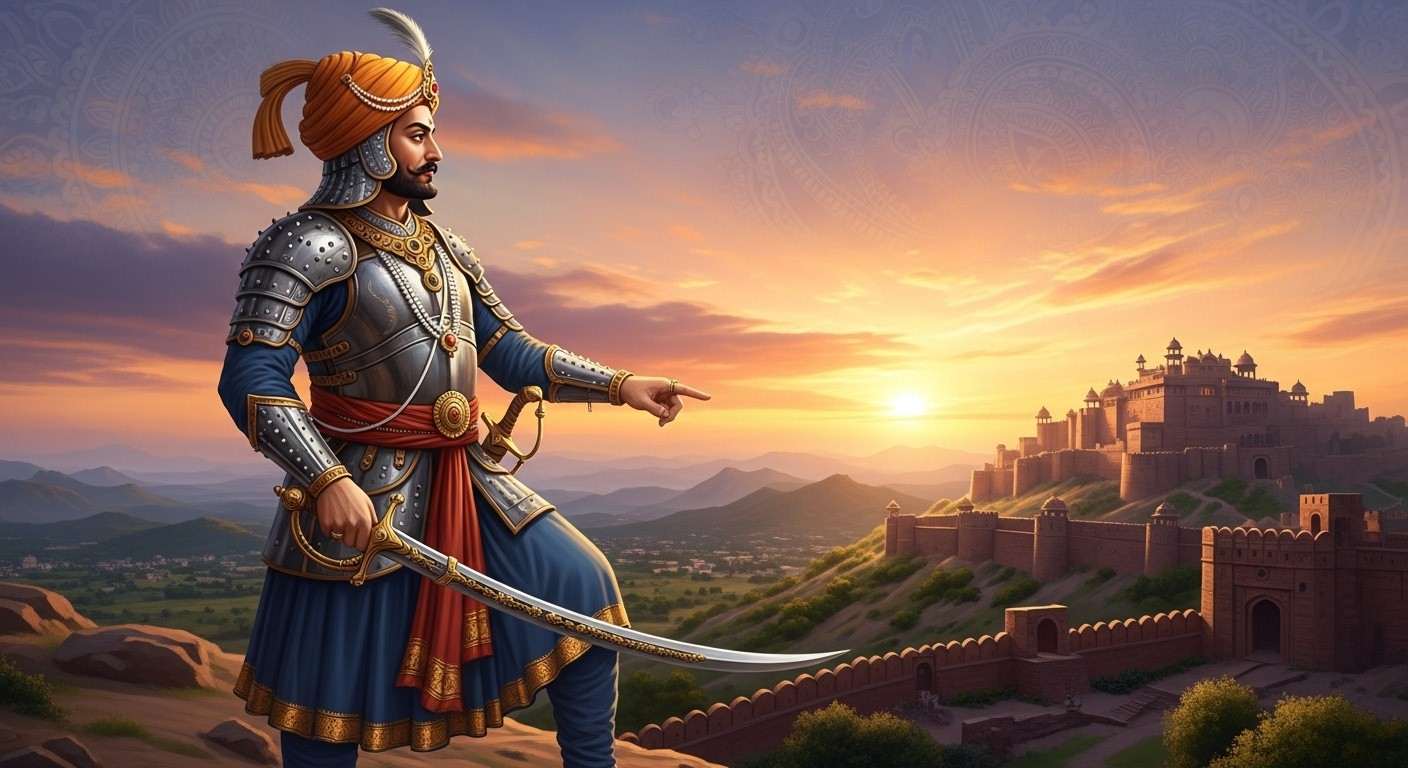
His military genius blossomed early. At the young age of 21 in 734 AD, he boldly challenged Man Mori, who ruled Chittor, and successfully conquered the formidable Chittor fort. However, his greatest test emerged when foreign invaders threatened the very sanctity of the land. Rising to the occasion, he formed a powerful confederacy of warriors alongside Pratihar King Nagbhata I, the Bhils, and the Nagas to defeat the Malechha Arabs and securely capture the Chittor Fort. In a breathtaking display of martial prowess, he chased the Arab army of Mohammad bin Qasim far beyond the distant lands of Ghazni. He ultimately inflicted a resounding and historic defeat on the invading Arabs in the battle of Rajasthan in 738 AD, forever securing the borders of our rich cultural heritage.
Spiritual Roots and Enduring Cultural Legacy
Beyond his sword, his life was deeply rooted in spirituality and devotion to the divine. It is warmly remembered in our oral traditions that he was blessed with kingship by Harit Rishi, a highly revered sage of the Mewar region. Acting on this divine grace, he is credited with building the magnificent Eklingji Temple, completely dedicating his worldly victories to the Almighty. The cultural lore surrounding him is vast and fascinating—it is even said that he married many women and was blessed with over one hundred children, a testament to the larger-than-life aura he commanded. Today, his patronage of the arts and unshakeable devotion continue to inspire modern Indians to remain grounded in traditional values.
Honoring Our Heritage with Poojn.in
When we light a diya at home or offer our daily prayers, we echo the same timeless traditions that great historical figures once observed. Understanding our glorious past naturally deepens our connection to these everyday rituals. At Poojn.in, India’s biggest cultural goods store, we strive to bring you closer to this vibrant heritage. Please remember that we do not provide travel packages, nor do we offer VIP darshan for temples; we strictly focus on providing an exquisite range of authentic cultural goods that help you honor your spiritual roots right from the comfort of your home.
- Copper and Brass Items: Metals like copper and brass hold profound spiritual purity in our timeless traditions. Incorporating these elegant utensils in your daily rituals creates a sacred atmosphere that connects you directly to the ancient practices of our ancestors. Experience this deep spiritual resonance by exploring our exquisite collection at .
- Puja Samagri: Every authentic ritual requires pure, traditionally sourced ingredients to properly invoke the divine blessings of the almighty. We provide meticulously selected, high-quality puja essentials that ensure your daily prayers are performed with the utmost devotion, purity, and respect. Find all your essential ritual needs effortlessly at .
- Books on Indian History: Our glorious past is wonderfully filled with awe-inspiring lessons of valor, spirituality, and timeless wisdom waiting to be rediscovered. Dive deep into the legends of our greatest dynasties, leaders, and cultural milestones through our thoughtfully curated selection of literature. Enrich your cultural knowledge and inspire the next generation today by visiting .
Embrace the convenience of online shopping without ever compromising on your faith. For any inquiries about our authentic products, feel free to contact us warmly at 03369029784 or WhatsApp us at 9476142738.
Frequently Asked Questions About the Legendary Ruler
Curious about his actual identity? Historical records lovingly state that his real name is Kalbhoj Singh, an identity deeply respected by historians. The legendary title we all know today was bestowed upon him later, honoring his phenomenal achievements and towering standing in society.
Many wonder which royal lineage he belonged to. He proudly represented the Guhila lineage, which is affectionately recognized as the Gahlot or Sisodia dynasty, governing vast, vibrant parts of present-day Rajasthan.
Regarding the timeline of his rule, he governed during the crucial 8th century. This era is considered a golden milestone in our regional history, characterized by immense bravery, strategic brilliance, and profound cultural flourishing.
When exploring what he is most famous for, it becomes wonderfully clear that his establishment of the Mewar kingdom, his unmatched valor, and his legendary defense of the motherland against foreign threats cement his place as an iconic Rajput leader.
People often ask how he ascended to the throne amidst such chaos. He achieved this incredible feat through his sharp strategic acumen and unparalleled bravery, defeating local chieftains to carve out his own sovereign kingdom and destiny.
As for the geographical reach of his domain, his rule predominantly covered the culturally rich regions of present-day Rajasthan. The areas surrounding Chittorgarh were especially significant, as it blossomed into the proud capital of Mewar.
The core reason he is universally considered a legend lies in his exceptional military strategies and visionary governance. His foundational role in creating a kingdom that fiercely protected its independence profoundly shaped the course of Indian history.
Finally, those interested in architectural heritage often look for famous monuments associated with him. The majestic Chittorgarh Fort stands tall as one of the most prominent monuments, serving as a breathtaking, stone-carved testament to his lasting legacy and the rich heritage of his descendants.