

In the vibrant heart of ancient Indian scriptures lies a treasure trove of wisdom, waiting to guide us through the complexities of modern life. Among these profound narratives is the story of King Yayati, beautifully preserved within the texts of the Mahabharata, the Bhagavata Purana, and the Matsya Purana. For families across India, sharing this journey of virtue, worldly desire, and ultimate spiritual awakening with the younger generation is a beautiful way to keep our roots alive. Especially for Class 9 students, this narrative serves as an invaluable window into traditional values and the essence of ethical living, making it a cornerstone of their cultural education.
The Complete Story of King Yayati: A Lesson in Desire and Duty
According to our revered mythological texts, Yayati was an exceptionally mighty and virtuous ruler. His life took a dramatic turn when he married Devayani, the beloved daughter of Shukracharya, who served as the esteemed guru of the demons. As part of the marriage customs of the time, Devayani was accompanied by her maidservant, Sharmishtha, who herself was the proud daughter of a demon king. Before the union, Yayati made a solemn promise to Devayani that he would maintain no romantic relations with Sharmishtha.
However, fate had its own plans. One day, while wandering through a dense forest, Devayani and Sharmishtha engaged in a bitter argument. The confrontation escalated, leading Sharmishtha to push Devayani into a dry well. Fortunately, King Yayati was passing by; he rescued Devayani from the well, which eventually led to their marriage. But as time went on, the king faltered and broke his sacred vow, secretly having children with Sharmishtha. When Devayani discovered this betrayal, she was consumed by anger and immediately sought the intervention of her powerful father, Shukracharya.
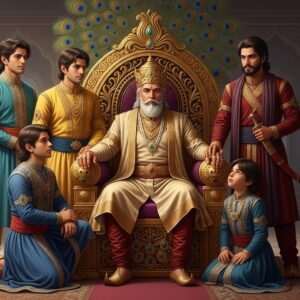
Furious at the king’s deceit, Shukracharya cursed Yayati with premature and debilitating old age. Devastated, the king pleaded for mercy. Moved by his desperate apologies, Shukracharya modified the severe curse, allowing the king to transfer his old age to anyone willing to exchange their youthful vigor with him. Desperate to continue enjoying life’s pleasures, the king approached his sons. All of them flatly refused, unable to part with their prime years, except for his youngest son, Puru—born of Sharmishtha. Puru willingly accepted his father’s old age, demonstrating unparalleled devotion and familial duty.
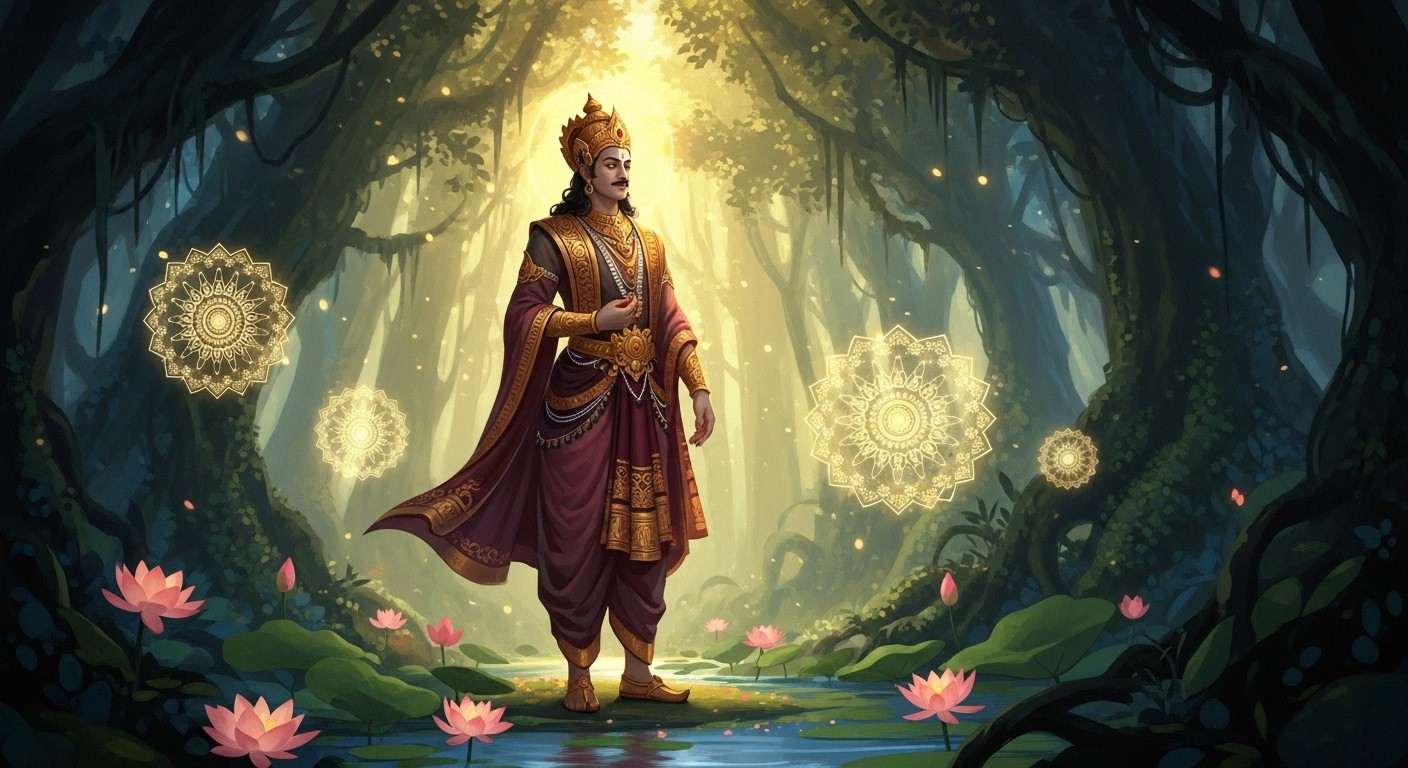
With his youth restored, the king immersed himself in worldly pleasures for a thousand long years. Yet, after a millennium of indulgence, a profound realization dawned upon him: desires are like a fire that only grows stronger with every offering of indulgence. He finally understood that true, lasting happiness resides purely in spiritual detachment. Feeling a deep sense of remorse and enlightenment, he gratefully returned Puru’s youth, crowned him as the new rightful king, and retired to the tranquil forests to seek ultimate spiritual liberation.
राजा ययाति की कहानी का सारांश (Hindi Summary for Better Understanding)
हमारे भारतीय महाकाव्यों में राजा ययाति की कहानी बहुत ही महत्वपूर्ण है। यह कथा हमें इच्छाओं के मोहजाल और उसके गंभीर परिणामों के बारे में गहराई से सोचने पर मजबूर करती है। ययाति एक अत्यंत शक्तिशाली और न्यायप्रिय राजा थे, जिन्हें अपनी भूल के कारण महर्षि शुक्राचार्य से समय से पहले वृद्ध होने का कठोर शाप मिला था। अपनी खोई हुई जवानी और सुखों को वापस पाने की चाह में, उन्होंने अपने पुत्रों से उनकी युवावस्था मांगी।
उनके सभी पुत्रों ने मना कर दिया, लेकिन उनके सबसे छोटे बेटे पुरु ने खुशी-खुशी अपनी जवानी अपने पिता को सौंप दी। पुरु का यह कदम परिवार के प्रति निस्वार्थ बलिदान और कर्तव्यनिष्ठा का एक अद्भुत उदाहरण प्रस्तुत करता है। वर्षों तक सांसारिक सुखों का भोग करने के बाद, अंततः राजा को यह बोध हुआ कि इच्छाएं कभी पूरी नहीं होतीं; वे भोगने से और अधिक उग्र हो जाती हैं। सच्ची शांति केवल वैराग्य और अपनी जिम्मेदारियों को स्वीकारने में ही है।
Important Themes and Life Lessons for Students
When young minds delve into this ancient narrative, they are not just reading a story; they are absorbing life-shaping principles. The character of the king perfectly symbolizes the delicate balance every human must strike between personal wants and societal obligations.
- Understanding the True Nature of Desire (इच्छा): The concept of desire goes far beyond a simple everyday want; it represents an incredibly powerful driving force that can completely alter the course of our lives and bring about unintended consequences. Grasping this deeper meaning helps students appreciate the absolute necessity of self-control and mindfulness in their daily decisions.
- The Profound Value of Sacrifice (बलिदान): This powerful word embodies the ultimate selflessness required for the greater good of a family or community, a recurring and deeply revered theme throughout ancient Indian scriptures. Recognizing this timeless value encourages the younger generation to consistently place familial duty, love, and collective well-being well above their own fleeting personal gains.
- Embracing Responsibility (जिम्मेदारी): Taking ownership of one’s actions is a fundamental pillar of character building that prepares teenagers for the practical challenges of adult life. By observing the consequences of avoiding duty in our mythologies, young learners are inspired to face their academic and personal commitments with unwavering integrity and courage.
Enhance Your Cultural Connections with Poojn.in
We understand that reading about our glorious heritage often inspires a desire to bring those traditional vibrations into our modern homes. Creating a spiritually uplifting environment is essential for passing down these profound values to our children. If you are looking to enrich your living space with authentic cultural artifacts, we are here to help.
At Poojn.in, India’s most trusted cultural goods store, we take immense pride in offering a carefully curated collection of authentic ritual items, religious texts, and traditional home decor. Whether you are setting up a peaceful reading corner for your children to study the Mahabharata or gathering sacred items for your daily family prayers, our online store provides everything you need to foster a deeply rooted cultural atmosphere.
We focus exclusively on delivering high-quality physical goods that resonate with your faith and values right to your doorstep. For any questions regarding our beautiful collection of authentic cultural products, please feel free to reach out directly. You can lovingly connect with us by calling 03369029784, or simply drop us a message on WhatsApp at 9476142738.
Frequently Asked Questions About the Yayati Narrative
What is the primary message behind this ancient Mahabharata narrative?
The central message revolves around the severe consequences of unchecked human desires and the immense value of fulfilling our responsibilities. It beautifully illustrates how the mighty ruler eventually learns that chasing endless worldly pleasures only leads to deeper dissatisfaction, and that true peace comes from detachment.
Who exactly is the central figure in this mythological tale?
The central figure is a powerful and virtuous monarch from our ancient Puranas who remarkably becomes young again by exchanging his premature old age with his youngest son. His character deeply represents the eternal human struggle with material desires and the constant, often misguided search for ultimate satisfaction.
For what reason did the monarch exchange his old age with his youngest son?
He exchanged his curse of old age with his devoted son, Puru, because he was desperately clinging to the desire to enjoy physical life and worldly pleasures for a little longer. This pivotal, selfish decision ultimately paves the way for his spiritual awakening and teaches us all profound lessons about true contentment.
What ultimate realization does the ruler achieve by the end of his journey?
After a thousand years of indulgence, he profoundly learns that worldly desires are completely insatiable and can actually lead to misery if left uncontrolled. He realizes that genuine, lasting happiness comes solely from accepting one’s natural limitations, embracing one’s duties, and seeking spiritual detachment.
How does this compelling story reach its conclusion?
The narrative concludes on a highly spiritually uplifting note, with the enlightened king voluntarily returning the gift of youth to his son Puru and gracefully accepting his old age. Having understood that fulfilling sensory desires does not equate to true joy, he crowns his son and retires to the forest to seek divine liberation.
Why is this specific Puranic story considered crucial for school students?
This narrative is considered incredibly important for young learners because it effectively imparts highly valuable moral lessons regarding family duty, the dangers of greed, and the supreme importance of inner contentment. It helps build a strong, culturally rooted ethical foundation for teenagers navigating today’s fast-paced world.
What are some significant vocabulary terms students should learn from this text?
Some of the most significant vocabulary terms include “desire” (इच्छा), which denotes worldly cravings; “responsibility” (जिम्मेदारी), highlighting one’s duties; and “youth” (युवावस्था). Deeply understanding these specific words in their traditional context greatly helps students grasp the profound philosophical meanings woven throughout the story.
Conclusion: Bridging the Ancient and the Modern
The timeless saga of this great king serves as a magnificent bridge connecting the profound wisdom of our ancient scriptures with the everyday challenges of the present day. It offers enduring lessons about self-control, familial duty, and ultimate sacrifice that remain just as vital today as they were thousands of years ago. For Class 9 students, comprehending this emotional journey helps construct a rock-solid foundation in both cultural pride and ethical education.
This narrative is far more than just a historical account of a ruler’s quest for eternal youth; it is a spiritual mirror reflecting the supreme importance of balancing our personal ambitions with our duties toward society and family. By deeply exploring this cherished text, students gain invaluable insights into the noble values beautifully embedded within Indian mythology. Armed with these ancient truths, the younger generation is exceptionally well-prepared to face life’s modern challenges with wisdom, integrity, and grace. As they move forward in their educational and personal journeys, the sacred lessons from our ancestors will undoubtedly guide them in making righteous decisions that honor both their own dreams and their rich cultural heritage.