

Our ancient Indian scriptures hold profound wisdom, beautifully wrapped in narratives that have guided generations. Among these, the legendary account of a noble sovereign, intricately detailed in revered texts like the Mahabharata, Shrimad Bhagavatam, and the Matsya Purana [1], stands out as a deeply moving exploration of human longing, familial duty, and ultimate liberation. This narrative perfectly captures the eternal tussle between our earthly cravings and our spiritual dharma. It offers gentle, reassuring guidance that resonates deeply with those of us who cherish our cultural roots and seek a balanced, meaningful life amidst today’s fast-paced world.
A Noble Lineage and the Weight of Destiny
This remarkable monarch was an illustrious scholar and a noble ruler of ancient times, born to the great King Nahusha [1]. Interestingly, his journey to the throne was quite unconventional. His elder brother, Yati, gracefully refused the kingdom in order to pursue the higher path of self-realization, thereby making his younger brother the rightful king [1]. As the ruler of a significant empire, his reign was heavily influenced by the spiritual and moral values passed down by his ancestors.
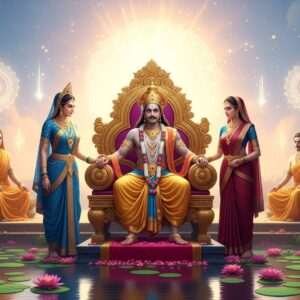
His marital life, however, was woven with profound complexities. He married Devayani, the esteemed daughter of the great sage Shukracharya, who was known as the revered Guru of the Asuras [1]. Later, he also accepted Sharmishtha, the daughter of the demon king Vrishparva, as his queen[1]. Due to a twist of fate and certain unforeseen circumstances, Sharmishtha had become Devayani’s maidservant, setting the stage for a dramatic shift in his household dynamics [1].
A Guru’s Wrath and a Heavy Burden
The peace of the royal household took a severe turn when a secret alliance between the king and Sharmishtha eventually led to the birth of children [1]. Upon discovering this hidden truth, Devayani was deeply heartbroken and infuriated. Feeling profoundly betrayed, she left the palace and sought refuge with her father, presenting her grievances [1].
In a fit of immense anger over the king’s transgressions, Shukracharya cast a severe curse upon him, stripping him of his youthful vigor and afflicting him with premature old age and frailty [1]. Devastated by the sudden loss of his vitality and his inability to enjoy the blessings of life, the king pleaded earnestly for mercy and forgiveness [1]. Softening slightly but unable to completely revoke his powerful words, the sage offered a unique remedy: the cursed monarch could swap his aged state with someone willing to willingly part with their youth [1].
The Exchange of Time and the Illusion of Satisfaction
Desperate to savor the physical world and its bounties, the king approached his sons, requesting them to lend him their youth. He promised to return it safely after a thousand years [1]. While his elder sons declined the immense sacrifice, his youngest son, Puru, selflessly agreed to the exchange [1]. This profound act of filial devotion beautifully highlighted Puru’s deep-rooted respect for his father and his mature understanding of righteous duty, or pitru-dharma.
Endowed with renewed vigor, the monarch immersed himself fully in sensory delights and material joys for an entire millennium [1]. He governed his vast empire and experienced unparalleled happiness, all while ensuring he did not transgress religious principles [1]. Yet, despite endless years of gratification, a powerful realization gradually dawned upon his soul. He discovered that human cravings are like a sacred fire that only grows hungrier with every offering of ghee. After a thousand years, his desires remained unsatisfied, teaching him that lasting peace cannot be found in endless worldly consumption [1].
Renunciation, Legacy, and True Spiritual Liberation
Awakened to the absolute futility of chasing endless satisfaction, the wise king gracefully returned the borrowed youth to his devoted son, Puru, and proudly made him the heir to the throne [1]. Embracing his true age and reflecting on the profound lessons of his life’s journey, he chose the path of complete renunciation [1].
He retreated to the tranquil forests to dedicate his remaining days to intense spiritual practices, ultimately achieving a divine and heavenly abode [1]. His majestic lineage flourished through Puru, who later became the revered ancestor of both the Pandavas and Kauravas. This monumental saga serves as a timeless moral lesson. It gently highlights the absolute necessity of virtue, righteousness, and the eventual letting go of worldly attachments to attain true spiritual liberation and moksha [1].
Nurturing Your Spiritual Journey with Poojn.in
As we reflect on these profound spiritual journeys from our sacred texts, many of us feel a warm inspiration to deepen our own connection to Bhagwan and our heritage. Nurturing this spiritual growth requires the right environment, pure intentions, and authentic elements. This is precisely where poojn.in, India’s premier online destination for cultural and spiritual goods, steps in to lovingly support your daily devotion.
Our online store is thoughtfully curated to provide authentic ritual items that honor our traditional Indian values, making it incredibly simple for you to bring the sanctity of ancient practices directly into your modern home.
Meaningful Additions for Your Daily Puja
- Complete Puja Kits: Whether you are observing a daily morning ritual, a festive celebration, or organizing a special ceremony at home, these comprehensive kits contain absolutely everything you need. From fragrant incense sticks to pure sacred powders like kumkum and haldi, each element is carefully sourced to ensure your heartfelt prayers are offered with the utmost purity and devotion.
- Traditional Attire: Embrace the spiritual ambiance by adorning yourself in beautifully crafted, authentic clothing such as elegant dhotis and graceful cotton sarees. Wearing these pure garments during your prayers not only deepens your emotional connection to our rich cultural roots but also brings a profound sense of sacredness and discipline to your daily spiritual practices.
- Spiritual Literature: Dive deeper into the timeless wisdom of our ancient scriptures with our extensive collection of thoughtfully selected books on Indian epics. These culturally significant texts provide invaluable insights into the lives of legendary figures, helping you and your family extract meaningful, life-changing lessons for navigating modern living with grace.
Shopping with us is designed to be a seamless, peaceful experience that respects your time. Enjoy the immense convenience of having authentic ritual items delivered right to your doorstep, ensuring your spiritual practices are never interrupted by the hassle of finding pure ingredients. For any gentle guidance regarding our cultural goods or for order inquiries, please feel free to contact us at 03369029784 or simply WhatsApp us at 9476142738.
Common Reflections and Inquiries About This Ancient Narrative
Many readers often wonder about the sacred origins of this fascinating narrative. The profound tale of this noble ruler is drawn from deeply revered ancient texts, primarily finding its roots in the great epic Mahabharata, the spiritually uplifting Shrimad Bhagavatam, and the Matsya Purana [1].
Another common curiosity revolves around the true identity of this great sovereign within these epics. He was a highly respected monarch of ancient India, renowned for his vast scriptural wisdom but equally remembered for a powerful curse that prematurely aged him and fundamentally changed the course of his life[1].
When exploring the central themes of this epic story, it becomes beautifully clear that it fundamentally addresses the heavy consequences of unchecked earthly cravings. It underscores the vital, timeless importance of self-control, familial sacrifice, and unwavering spiritual discipline [1].
People frequently ask why this particular historical account remains so incredibly significant for us today. Its enduring importance lies in the timeless, relatable lessons it imparts regarding our daily life choices, the sensible boundaries of our material wants, and the heavy weight of our moral responsibilities to our families and society.
Regarding how his complex journey initially began, the pivotal events were set into motion by his dual marriages to Devayani and Sharmishtha. These complex unions intertwined divine and demonic alliances and sparked unforeseen, deeply emotional household conflicts that challenged his dharma [1].
Curiosity also surrounds the specific nature of his sudden punishment. Due to his secret actions and the resulting heartbreak of his first wife, a furious Shukracharya condemned the king to suffer from sudden, debilitating old age and complete invalidity [1].
Naturally, one might ask how he ever managed to regain his lost vitality. He achieved this miraculous feat by pleading with his own sons to swap their youth for his frail state, a monumental sacrifice that his devoted youngest son, Puru, graciously accepted out of profound respect and duty [1].
Ultimately, the core lesson we can extract from his long life is quite clear and deeply moving: blindly chasing sensory gratification leads only to emptiness, whereas genuine, lasting happiness is discovered through inner contentment, simplicity, and fulfilling our righteous duties [1].