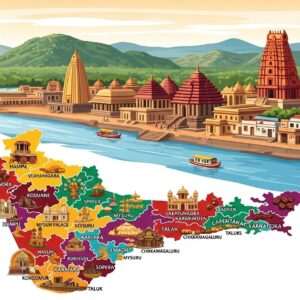


Nestled in the eastern stretches of Maharashtra lies a region whose very soil whispers stories of forgotten empires, epic sagas, and timeless devotion. Vidarbha is an incredibly layered and culturally vibrant land that has played a foundational role in shaping the historical narrative of the Indian subcontinent. As we embark on this journey through time, we uncover the profound ways in which these ancient echoes continue to mold the spiritual and socio-economic fabric of the region today.
The Ancient Tapestry of Sacred Origins
The deepest roots of this historic land stretch far back into the venerable Vedic period, beautifully immortalized in our greatest epics. Within the sacred verses of the Mahabharata, it is lovingly described as the magnificent kingdom of Bhishmaka, the father of Devi Rukmini. The region’s ancient capital, Kundinapuri, is widely identified with present-day Kundapur, serving as a powerful reminder of our enduring mythological heritage. Historians also note that the original inhabitants were descended from the revered Ṛgvedic Yadu tribe, seamlessly blending mythology with documented ancestral lineage.
Archaeological treasures scattered across the landscape provide a tangible, awe-inspiring connection to this majestic past. The strategic geographical placement of this region turned it into a bustling crossroads for both ancient commerce and the joyful exchange of spiritual ideologies. It became a nurturing ground for diverse faiths, providing a welcoming environment where cultural philosophies, including Buddhism, could deeply root themselves alongside age-old traditions.
Chronicles of Golden Empires
The historical landscape of this majestic region has been meticulously carved by a succession of formidable and visionary ruling families. The governance, artistry, and spiritual patronage of these empires have left an enduring legacy that we continue to celebrate.
- The Mauryan and Satavahana Ascendancy: By the third century BCE, this region was seamlessly integrated into the sprawling Mauryan Empire, as clearly documented by Emperor Ashoka’s edicts which respectfully mention the local Bhoja community. Following the Mauryan decline, the illustrious Satavahanas rose to prominence in the Deccan, ruling from the late second century BCE to the early third century CE. Their visionary leadership brought remarkable economic prosperity to the masses, a fact beautifully corroborated by the discovery of ancient coins minted by King Vijaya Satakarni.
- The Artistic Zenith under the Vakatakas: Dominating the socio-political sphere from approximately 250 to 525 CE, the Vakataka dynasty operated from their magnificent dual capitals at Nandivardhana, near modern-day Ramtek, and Vatsagulma, now known as Washim. They are universally celebrated for their unparalleled patronage of arts, most notably funding the creation of the breathtaking Ajanta Caves. Their enlightened rule actively fostered a harmonious synthesis of profound Buddhist teachings and traditional Brahmanical rituals.
- Medieval Transitions and Power Shifts: As centuries turned, the region witnessed the influence of the Kalachuri and Chalukya Rajput dynasties, followed by medieval power shifts. With the decline of the Yadavas, the Bahmani Sultanate gracefully assumed control over the Berar province in 1347, operating from Gulbarga. Later eras were characterized by intense power struggles among the Mughals, Marathas, and foreign powers, culminating in notable events such as the courageous Sambhaji, son of Chhatrapati Shivaji Maharaj, capturing the region in 1680.
- The Era of British Governance: Following the heartbreaking defeat of the Marathas in 1803, the region gradually slipped under the administrative control of the British East India Company. By the monumental year of 1857, the British Empire fully absorbed the area, restructuring it as an integral part of Berar and the sprawling Central Provinces, deeply impacting its socio-political trajectory for decades.
Navigating the Modern Horizon: Challenges and Growth
Following India’s glorious independence in 1947, this historic belt initially formed part of the Central Provinces and Berar before proudly integrating into the newly formed state of Maharashtra in 1960. Today, the socio-economic landscape is a complex tapestry of rich natural resources and systemic challenges. The local economy remains deeply rooted in agriculture, with hardworking farmers yielding abundant harvests of cotton and world-renowned oranges.
Despite being blessed with extensive forest cover and contributing a massive percentage of Maharashtra’s mineral output, particularly from the Chandrapur district, the region faces poignant developmental hurdles. The heavy reliance on unpredictable monsoons has frequently led to severe droughts, contributing to concerning levels of poverty and distressing agrarian challenges. However, the resilient spirit of the local communities remains unbroken.
- Pioneering Infrastructural Hubs: The landscape is rapidly transforming with monumental initiatives like MIHAN in Nagpur, which is steadfastly developing into a premier cargo hub and specialized IT Special Economic Zone. These monumental projects are designed to attract global investments and generate substantial local employment.
- Industrial and Agricultural Revitalization: With strategic foresight, the region is beautifully poised to emerge as a dominant steel and logistics powerhouse in central India. Concurrently, passionate efforts are underway to cultivate a robust ‘Orange Economy,’ leveraging the region’s famous citrus yields to uplift local farming communities and stabilize agricultural incomes.
- Driving the State’s Economic Vision: As Maharashtra aggressively pursues its ambitious goal of transforming into a one trillion dollar economy, this resource-rich eastern belt is expected to play an absolutely pivotal role. Ongoing socio-political discourses, including historical debates around regional statehood, reflect the deeply passionate aspirations of its people for equitable growth and administrative focus.
Preserving Our Vibrant Cultural Heritage
The timeless legacy of ancient rulers continues to breathe life into the region’s everyday existence. Our cultural heritage is lovingly preserved through generational rituals, magnificent monuments, and vibrant local festivals. The intricate strokes of Gond tribal art and the rhythmic, soul-stirring beats of traditional Lavani dance trace their proud origins back to this very soil.
While modern conservationists face significant challenges in protecting aging historical structures, deeply committed local organizations and passionate communities are working tirelessly to keep these ancestral memories alive. By promoting sustainable, culturally sensitive tourism, they ensure that visitors can respectfully experience the architectural and spiritual grandeur of our forefathers.
Embracing Timeless Traditions in Your Home
Exploring the monumental legacies of ancient ruling families is a profoundly moving experience that naturally inspires a desire to reconnect with one’s own spiritual roots. At Poojn.in, we understand that deeply emotional connection. We are dedicated to helping you honor and preserve these sacred Indian traditions from the comfort of your own home.
While we do not arrange travel packages or provide temple visitation guidance, we take immense pride in bringing the purity of Indian heritage directly to your doorstep. Our meticulously curated online store features an exquisite array of authentic cultural goods that perfectly capture the spiritual essence of our historical legacy. Whether you are searching for traditionally assembled puja kits, deeply aromatic incense, or beautifully crafted ritual accessories, Poojn.in is your trusted companion in daily devotion.
By choosing our authentic cultural products, you seamlessly integrate the profound reverence of ancient traditions into your everyday life. To explore our extensive collection of sacred goods and ritual items, please visit our online store or lovingly reach out to our customer care family at 03369029784. For your utmost convenience, we also welcome your messages via WhatsApp at 9476142738.
Addressing Common Curiosities About Our Historic Heartland
Tracing the Dynastic Roots
History enthusiasts often inquire about the foundational empires that shaped eastern Maharashtra. The region flourished magnificently under the protective umbrella of several prominent powers, most notably the Satavahanas, Vakatakas, and Rashtrakutas. Each of these visionary dynasties contributed uniquely to the area’s rich architectural landscape and spiritual depth, leaving behind monuments that continue to inspire awe.
The Pioneering Rulers of the Land
When discussing the earliest governance of this territory, ancient texts affectionately point to legendary figures like King Bhishmak, the revered father of Devi Rukmini. In terms of historically documented empires, the mighty Satavahanas are widely acknowledged as the first major ruling family to establish organized, prosperous governance here, profoundly elevating local trade and cultural exchange.
The Golden Era of the Vakatakas
The historical significance of the Vakataka dynasty frequently captures the imagination of cultural scholars. Their enlightened rule is primarily celebrated for an extraordinary dedication to artistic and spiritual advancement. Their most globally recognized contribution remains the magnificent Ajanta Caves, a UNESCO World Heritage site that beautifully illustrates their deep patronage of both Buddhist artistry and traditional Brahmanical values.
Enduring Heritage Landmarks
Travelers and devotees regularly wonder if the tangible remnants of these great empires can still be witnessed today. Fortunately, the region is beautifully dotted with well-preserved historical and spiritual landmarks. From the intricately carved ancient temples nestled in the serene hills of Ramtek to various archaeological excavations, the physical echoes of these ancient kingdoms remain standing as proud testaments to our glorious past.
The Modern Impact of Ancient Legacies
Many people reflect on how these ancient epochs influence our contemporary way of life. The impact is woven intricately into our daily existence—from the distinct dialects spoken in the region to the deeply rooted artistic traditions, culinary practices, and ancestral rituals passed down seamlessly from generation to generation. Understanding this layered history is absolutely essential for anyone wishing to truly appreciate the profound cultural pride and spiritual resilience that defines the people of this historically blessed land today.