

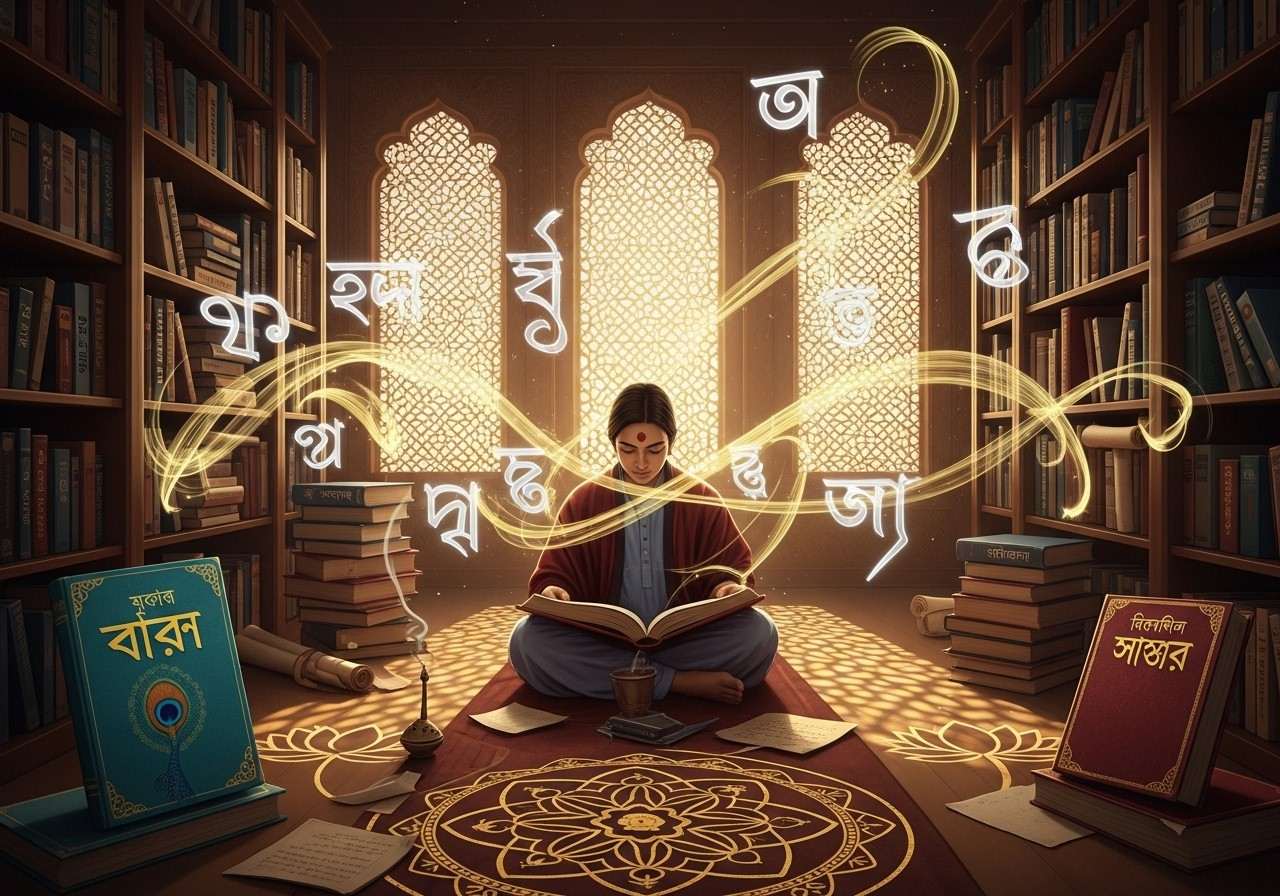
The rich literary and cultural traditions of Eastern India are beautifully preserved within the delicate curves of its regional lettering. The script used to write the Bengali language is an integral part of South Asia’s magnificent linguistic heritage, serving as the very heartbeat of millions who cherish this sweet language. Understanding its historical roots takes us back to the ancient Brahmi script, reminding us of the timeless nature of our traditions and the depth of our ancestral wisdom.
The Essence of the Bangla Character Set
To truly appreciate this beautiful language, one must understand its foundation as an abugida writing system. In its standard modern form, the Bangla alphabet is composed of 43 primary letters, gracefully divided into vowel and consonant families. Each character is not just a mere symbol; it is a phonetic entity that breathes life into words, allowing us to express deep emotions, heartfelt prayers, and everyday thoughts with absolute precision and clarity.
The Melodious Vowels (Swarabarna)
The vowel letters form the very core of this linguistic structure, providing the melodious flow that the language is famous for. There are 11 distinct vowels in the Bangla alphabet, each offering unique tonal qualities that give the spoken word its characteristic sweetness and rhythmic balance.
- Independent and Dependent Forms: Vowels can stand independently at the beginning of a syllable to establish a strong, clear sound. Alternatively, they transform into dependent vowel signs when following a consonant, seamlessly blending into the spoken word to create a harmonious tone.
- The Inherent Vowel Sound: The very first vowel, ‘অ’ (ô), is incredibly special because it naturally resides within every single consonant letter. When a consonant lacks any specific diacritical mark, it is automatically pronounced with this built-in, rounded ‘ô’ sound.
- Modern Pronunciation Nuances: Over time, the spoken language has naturally evolved, meaning that the phonetic distinctions between short and long ‘i’ (ই and ঈ), as well as short and long ‘u’ (উ and ঊ), have merged and are now pronounced identically in modern everyday speech.
The Foundation: Consonants (Byanjanbarna)
Working in perfect harmony with the vowels, the consonant letters provide the necessary structure and grounding rhythm to the spoken word. The alphabet features 32 primary consonants, each naturally carrying the inherent ‘ɔ’ vowel sound unless specifically modified by another sign or combined with another letter.
- Scientific Phonetic Groupings: The consonants are logically classified based on exactly where the sound is produced in the human mouth. These sophisticated groupings include guttural sounds emerging from the throat, palatal sounds from the roof of the mouth, along with retroflex, dental, and labial categories.
- Conjunct Consonants (Juktakhyar): When two or more consonants merge together, they form beautiful, interconnected conjuncts. In these special combinations, the inherent vowel sound is muted for the initial letters and is only applied to the final consonant in the cluster, creating a smooth and uninterrupted linguistic flow.
The Magic of Vowel Signs and Diacritics
To modify the natural sounds of consonants, specific diacritical marks are lovingly employed in daily writing. These vowel signs, commonly known as Matras, interact with consonant characters to form specific, highly meaningful sound combinations that alter both tone and context.
- Flexible Vowel Sign Placement: Depending on the specific vowel being used, these modifying marks can elegantly appear before, after, above, or even below the host consonant. This visual flexibility is precisely what gives the written language its intricate, highly artistic, and flowing appearance.
- The Connecting Horizontal Line: Interestingly, the word ‘Matra’ also refers to the continuous, guiding horizontal line drawn across the top of the characters. This defining stroke beautifully connects individual letters together, binding them into a single, cohesive word.
- Special Phonetic Modifiers: Other essential grammatical marks include the Virama (Hasantô), which silences a consonant’s inherent vowel sound, and the Chandrabindu, which elegantly indicates nasalization to add a traditional and authentic twang to the pronunciation.
A Cultural Journey of Learning and Discovery
Mastering these classic letterforms is far more than a simple academic exercise; it is a deeply rewarding cultural journey that reconnects you with your roots. While understanding the precise pronunciations of various character combinations can take a little time, consistent phonetic practice and daily immersion in the spoken language will gently guide you toward complete fluency. By embracing this learning process with an open heart, you unlock access to profound spiritual texts, classic Eastern literature, and the vibrant heritage of Bengal.
How Poojn.in Supports Your Cultural Endeavors
As India’s largest and most trusted destination for authentic cultural goods, we deeply understand the importance of staying connected to your ancestral roots. Whether you are beautifully setting up your home altar or patiently teaching your children their mother tongue, we are here to support your journey with the utmost reverence, care, and convenience. Our carefully curated selection of cultural items brings the warmth, authenticity, and devotion of traditional practices right to your doorstep, making online shopping a truly blessed experience.
- Authentic Learning Resources: We offer a thoughtfully selected range of vernacular literature and foundational educational books. These materials provide detailed, easy-to-understand guidance on mastering the regional character sets, ensuring your cultural education is both completely authentic and deeply rooted in tradition. Explore our comprehensive Bengali learning books.
- Traditional Writing Practice Kits: To help you or your little ones perfect the beautiful, sweeping curves of the alphabet, our comprehensive practice kits include premium quality practice sheets and specialized pens. Repetitive daily practice using these traditional writing tools fosters a deep, tactile, and spiritual connection with the language. View our traditional writing practice kits.
- Spiritual and Cultural Texts: Deepen your understanding of Eastern India’s profound spiritual heritage with our exclusive collection of sacred books. These texts beautifully illustrate how the local language has historically been utilized in sacred rituals, devotional songs, and daily household prayers for generations. Discover our wide collection of cultural texts.
Shopping for your traditional needs has never been more convenient, reliable, or reassuring. You can easily browse our sacred offerings online at poojn.in and have everything respectfully packed and delivered directly to your home. Should you need any guidance or personalized assistance in selecting the perfect items for your family, please feel warmly welcomed to contact our knowledgeable team at 03369029784 or simply WhatsApp us at 9476142738.
Addressing Your Curiosities
What is the total number of letters in the standard Bangla writing system?
The primary character set is beautifully composed of 43 letters in total. This carefully structured system includes both the vowel and consonant families that work together seamlessly to form the language’s foundation.
How many vowel letters are present in this historical language?
The script proudly features 11 distinct vowel characters, known traditionally as Swarabarna. These elements are absolutely vital for shaping syllables and bringing a melodic, emotive quality to all spoken words.
What is the exact count of consonant letters used today?
There are exactly 32 primary consonants within the standard alphabet. When elegantly combined with various vowel sounds, these consonants create the vast, expressive, and deeply nuanced vocabulary of the language.
What exactly is a vowel sign or Matra?
A vowel sign represents a dependent diacritical mark that is lovingly added to a consonant to modify its inherent sound. Additionally, the term historically refers to the elegant horizontal line that binds individual letters together into a single, meaningful word.
In what way do these diacritics alter daily pronunciation?
By changing the inherent vowel sound of a given consonant, these marks unlock an extensive and beautiful spectrum of phonetic expressions. This transformation is absolutely crucial for speaking with correct emotion, respectful tone, and precise grammatical accuracy.
Can these modifiers be actively used with all consonants?
Absolutely, these vowel signs are purposefully designed to be used with consonants to form complete, articulate syllables. This ingenious system makes it significantly easier to smoothly read and correctly pronounce words during daily reading or prayer.
Are there additional special symbols used in daily writing?
Yes, the writing system masterfully utilizes special modifiers such as the Chandrabindu for beautiful nasal sounds and the Hasantô to respectfully mute a consonant’s built-in vowel. These marks add intricate, cultural layers to the language’s overall phonetic beauty.
Is mastering this regional lettering a difficult task for beginners?
Like any meaningful cultural endeavor, it requires a bit of patience and sincere dedication at the very beginning. However, with consistent daily practice and a genuine love for your heritage, recognizing and writing these beautiful characters soon becomes effortless and deeply rewarding.