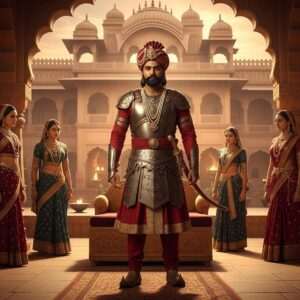


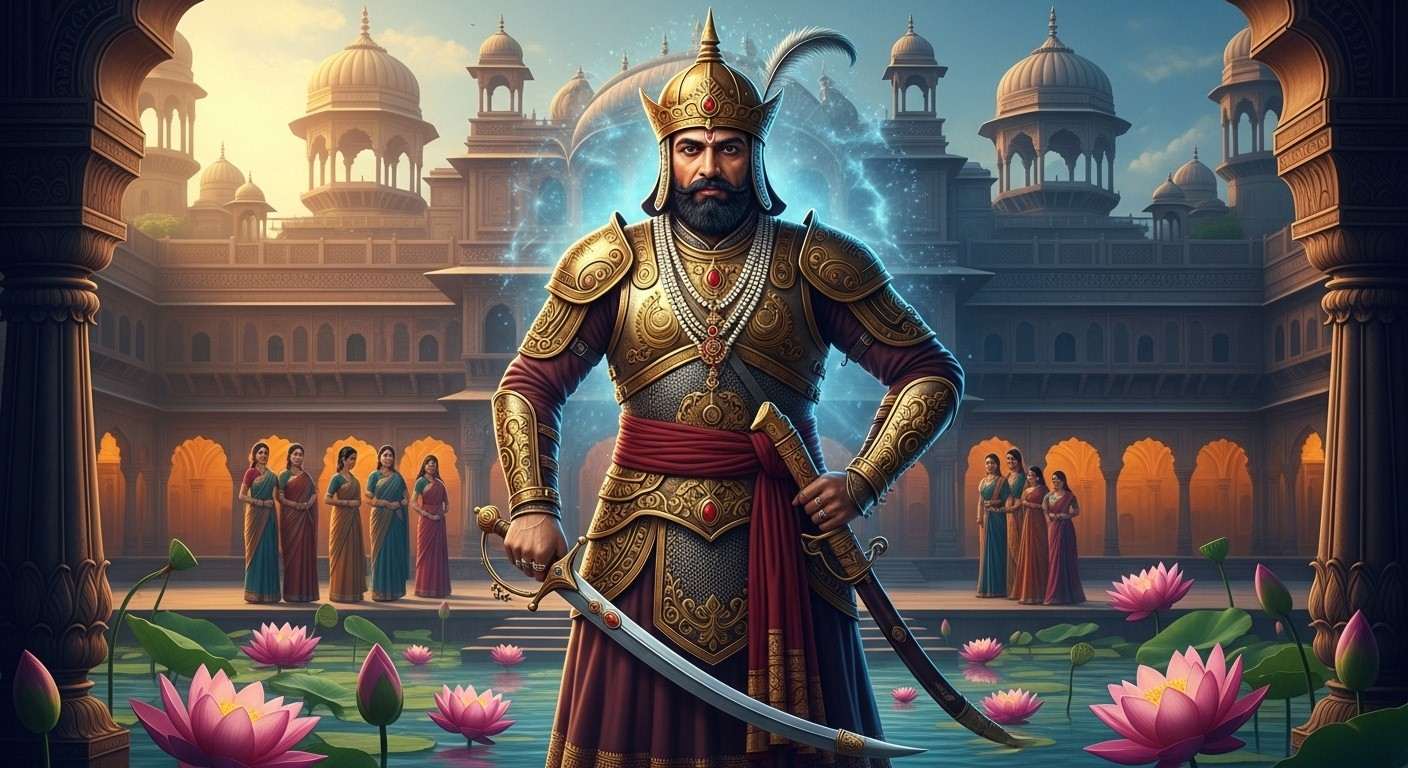
When we speak of valor, deeply rooted traditions, and the unyielding spirit of Bharatvarsh, few names evoke as much reverence as the legendary founder of the Mewar dynasty. Bappa Rawal, affectionately known in his early days as Prince Kalbhoj, remains a towering figure in the vibrant, golden sands of Rajasthan. His extraordinary journey—from a forest-dwelling prince to a formidable king and, ultimately, a devout ascetic—offers an awe-inspiring glimpse into the true essence of Indian heritage. Today, as we navigate our modern lives, understanding his profound legacy brings us closer to the courageous heartbeat of our ancestors.
The Humble Beginnings of Prince Kalbhoj
Born around the year 713 AD, the life of Prince Kalbhoj began amidst sudden turmoil, demanding immense resilience from a very young age. His father, Rawal Mahendra II of the Guhilot dynasty, was tragically assassinated during a fierce conflict with the Bhils of Idar. Following this heartbreaking loss, his mother—a noblewoman from the Paramara Rajput clan of Mount Abu and sister to Maan Mori—sought safety for her young son. Raised by his devoted mother and fiercely loyal Bhil attendants, his childhood took root near the serene landscapes of Nagda.
It was here, amidst the deep forests, that the young prince learned the intricate arts of military warfare directly from the Bhil tribe. Yet, his life was not merely about combat; it was deeply steeped in dharma. He spent his formative years tending to the sacred cattle of local Brahmans, grounding his spirit in humility and devotion before he ever wore a crown.
A Divine Ascension to the Throne
Destiny called upon the young warrior in 734 AD. At the tender yet capable age of 21, he achieved a monumental victory by defeating Man Mori, conquering the impenetrable Chittor fort. It was this singular, breathtaking triumph that led to the establishment of the glorious Mewar Dynasty, a kingdom he named after the very region he had valiantly reclaimed.
However, true kingship in India has always been a blend of martial prowess and spiritual grace. His ascension was magnificently guided by his revered Guru, Harit Rashi. This enlightened sage not only initiated the young ruler into a sacred Shaivite order but also prophesied his destiny. He blessed him to rule Mewar not as a sovereign owner, but as the humble Diwan (prime minister) of Eklingji—the presiding deity of the land.
The Shield of the Nation: Unparalleled Military Triumphs
While his devotion was boundless, his sword was equally fearsome. Bappa Rawal played a deeply crucial role in the historic Battle of Rajasthan during the 8th century AD. Recognizing the imminent threat of foreign invasions, he masterfully united smaller regional kingdoms, transforming them into an unbreakable wall against the invading Arabs of Sindh.
His military brilliance did not stop at mere defense. He actively pursued the Arab commander, Bin Qasim, driving the invading forces across Saurashtra and pushing them completely back to the western banks of the Sindhu river. To ensure that the motherland remained secure from future threats, he established a strategic military base in the North West Frontier, creating the city that is known to this day as Rawalpindi. He truly was the protective shield of north-western India.
Matrimonial Alliances and a Glorious Lineage
The cultural and political landscape of medieval India often required rulers to weave intricate webs of alliances. Historical texts and oral legends reveal that his personal life was as expansive as his empire. He is celebrated for having married multiple women from various esteemed lineages, using these sacred matrimonial ties to strengthen diplomatic relations and foster unity across kingdoms.
Through these vital unions, he fathered well over one hundred children, firmly planting the roots of a lineage that would echo through eternity. It is from this very illustrious bloodline that Bharatvarsh received some of its greatest patriots and warriors, including the legendary Rana Sanga, Rana Uday Singh, and the immortal Maharana Pratap. His queens were not merely consorts but pillars of strength who significantly contributed to the thriving cultural legacy of Mewar.
Embracing the Divine: A Journey to Asceticism
What truly separates an ordinary king from a legendary soul is the ability to let go of power. After ruling with absolute justice, courage, and wisdom for nearly two decades, Bappa Rawal made a profoundly moving decision. He voluntarily abdicated his golden throne, handing over the reins of the kingdom to his capable son.
Shedding his royal robes, he embraced the simple, austere life of an ascetic. Dedicating his final years entirely to the worship of Lord Shiva, he demonstrated the ultimate spiritual goal of human life. His transition from a fierce battlefield commander to a peaceful, devout yogi beautifully encapsulates the spiritual depth of ancient Indian philosophy.
Connecting with Our Sacred Heritage Today
Reading about the majestic spiritual and cultural journey of such a monumental figure often awakens a deep desire within us to reconnect with our own roots. Cultivating that sacred connection in our modern homes is essential for preserving the peace and traditions our ancestors fought so hard to protect. This is exactly where we at Poojn aim to support your spiritual journey.
We invite you to bring the purity of Indian tradition into your daily life by visiting https://www.poojn.in, India’s most trusted online destination for authentic cultural goods. We do not deal in travel experiences; our sole dedication is to equip your home with the finest ritualistic items. Here is how we can help you celebrate our magnificent heritage:
- Authentic Traditional Pooja Kits: To properly honor the deities and ancestors that shaped our history, our meticulously curated pooja kits provide everything you need. From pure camphor to sacred threads, every single item is chosen to ensure your daily worship is performed with the utmost sanctity, letting you experience the spiritual purity of a bygone era. You can explore our complete collection at .
- Inspiring Literature and Cultural Texts: The stories of great kings and sages must be passed down to our children. We offer a wonderful selection of books that dive deep into Indian rituals, history, and spiritual practices. Reading these texts brings the awe-inspiring stories of our shared heritage right into your living room, ensuring the flame of knowledge burns bright for future generations. Find your next enriching read at .
- Elegant Sacred Space Decor: Transforming your modern apartment into a haven of peace is effortless with our traditional home decor offerings. Crafted by skilled Indian artisans, these beautiful brass idols, incense holders, and wall hangings reflect the grandeur and spiritual ethos of medieval India, making your daily prayer space a true sanctuary of devotion. Browse our beautiful pieces at .
Frequently Asked Questions About the Legendary Ruler of Mewar
What was the original birth name of this legendary Rajput king?
Long before he earned his monumental title, this great ruler was born as Prince Kalbhoj. History remembers him affectionately by his honorary title, which symbolizes his fatherly and protective presence over the region of Mewar.
When did he live and how did his early upbringing shape him?
He was born around the year 713 AD. After the tragic assassination of his father, Rawal Mahendra II, he was raised by his brave mother and fiercely loyal Bhil attendants. The Bhil tribe played an instrumental role in his life, teaching him the critical military warfare skills that would later help him build an empire.
How did he manage to ascend the throne and establish his kingdom?
At the young age of 21, in 734 AD, he displayed remarkable courage by defeating Man Mori and taking over the majestic Chittor fort. His reign was deeply spiritual as well, as he was blessed by the revered sage Harit Rishi, who initiated him into a Shaivite order and guided him to rule on behalf of the deity Eklingji.
What is his most significant military achievement?
His most profound contribution to Indian history was his leadership in the Battle of Rajasthan. He successfully united various regional kingdoms to fiercely repel the Arab invasions led by Bin Qasim. He chased the invaders back to the western banks of the Sindhu and even built a military base that is today known as Rawalpindi, acting as a sturdy shield for the entire subcontinent.
Can you share insights into his family lineage and eventual descendants?
His family tree is incredibly vast and historically significant. To strengthen political alliances, he married numerous women from noble clans and is believed to have fathered well over a hundred children. This powerful bloodline gave birth to some of India’s most celebrated heroes, such as Rana Sanga and Maharana Pratap.
How did this great ruler choose to spend his final years?
In a beautiful testament to Indian spiritual values, after ruling justly for almost 20 years, he gracefully abdicated his throne. He handed the kingdom over to his son and embraced the serene, detached life of an ascetic, spending his remaining days as a deeply devout worshipper of Lord Shiva.