


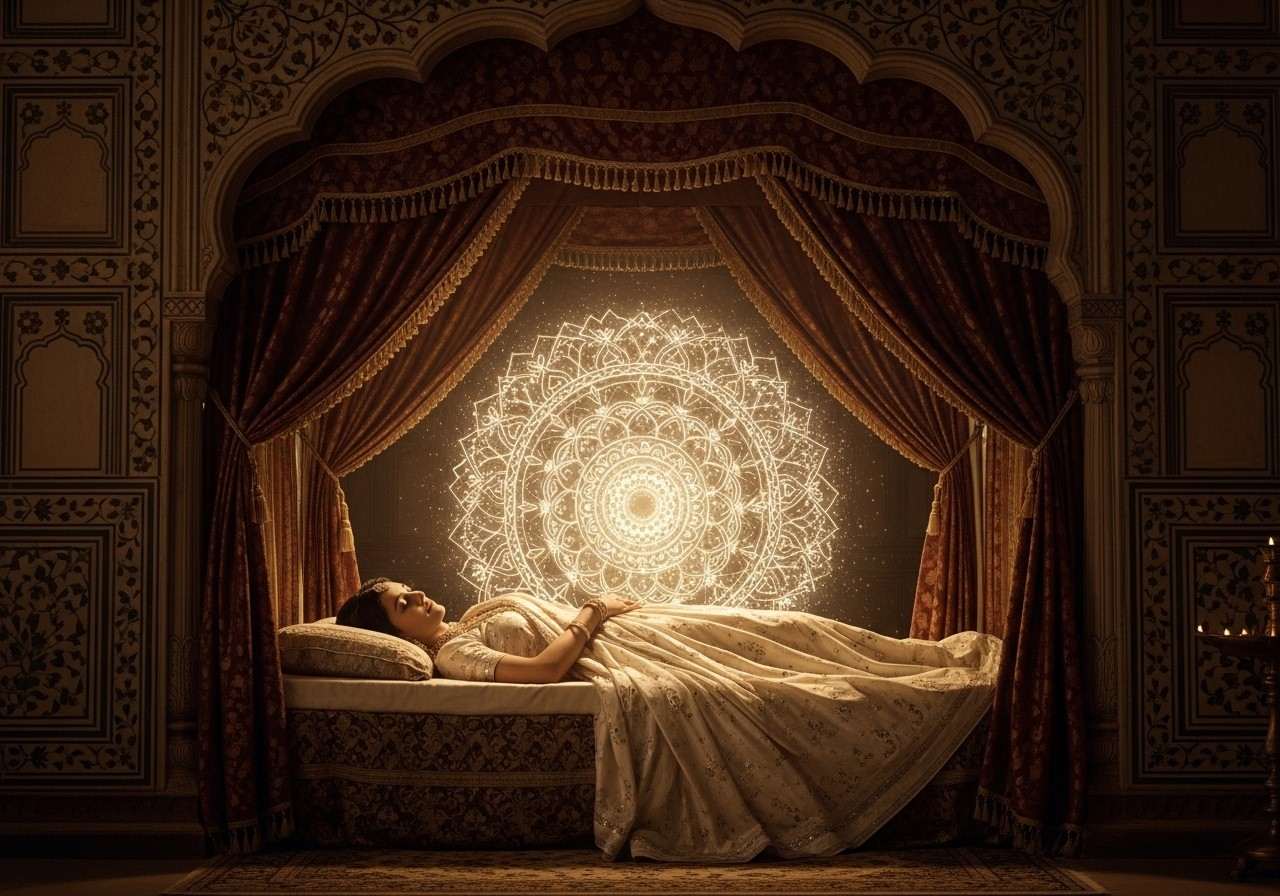
When we look at the breathtaking white marble of the Taj Mahal, we often see a symbol of beauty and grandeur. But for us in India, this monument is more than just architecture; it is the heartbeat of a sorrowful yet eternal love story. The name Mumtaz Mahal evokes images of splendor, but few know the details of her untimely death and the long, emotional journey her mortal remains took before finding peace in Agra. At Poojn.in, where we deeply cherish our cultural roots, we believe in honoring these stories that define our history.
A Love That Defined an Era: Mumtaz Mahal’s Life
Born as Arjumand Banu Begum in 1593, she was not just a queen but the soul of the Mughal court. Her marriage to Prince Khurram, who the world later knew as Emperor Shah Jahan, was a partnership of deep affection and trust. She wasn’t merely a silent figure behind a veil; she was a trusted advisor, a patron of the arts, and a compassionate soul involved in charitable acts. Her grace was such that poets of the time struggled to find words to describe her.
However, fate had a different plan. The love story that inspired the world was cut short by a tragedy that brought an emperor to his knees. It is this depth of emotion—the pain of separation and the longing for remembrance—that resonates so deeply with our Indian ethos of devotion.
The Tragic Night in Burhanpur: June 17, 1631
The year was 1631. Mumtaz Mahal was accompanying her husband on a military campaign in the Deccan Plateau, despite being heavily pregnant. On the fateful day of June 17, 1631, in the city of Burhanpur (present-day Madhya Pradesh), tragedy struck.
She went into labor for her fourteenth child, a daughter named Gauhar Ara Begum. Unlike her previous deliveries, this one was fraught with complications. Historical records tell us that she endured a grueling labor of approximately 30 hours. The cause of her death was postpartum hemorrhage, a condition that medical science of that time could not control. She passed away leaving Shah Jahan shattered, plunging the entire court into a period of profound mourning. It is said that the Emperor’s grief was so intense that his hair turned white almost overnight, and he secluded himself for an entire year.
The Three Burials of Mumtaz Mahal
Many believe Mumtaz Mahal was laid to rest immediately in the Taj Mahal, but her final journey was far more complex. Her body actually traveled across the country and was buried three separate times before finding its eternal home.
1. The Initial Resting Place: Zainabad Garden
Immediately after her passing in Burhanpur, her body was not moved far. She was buried in a walled pleasure garden known as Zainabad, located on the banks of the Tapti River. This garden had been originally constructed by Shah Jahan’s uncle, Daniyal. To ensure her remains were preserved for the journey that would follow later, her body was embalmed using a special Unani technique involving herbs and camphor, preventing decomposition in the heat of the plains.
2. The Long Procession to Agra
The Emperor could not bear to leave his beloved in Burhanpur. In December 1631, her body was disinterred with the utmost respect. A grand procession, led by her grieving son Shah Shuja, began the long trek back to the capital.
- The solemn procession covered a distance of approximately 900 kilometers, moving slowly through the heart of India to bring the Queen home.
This journey was not just a transport of remains but a royal declaration of love, with the casket made of pure gold to reflect her stature. - They reached Agra on January 5, 1632, where the citizens waited to pay their last respects to their beloved Empress.
The atmosphere in Agra was heavy with mourning as the golden casket arrived, marking the return of the Queen to her city.
3. Temporary Burial and the Final Mausoleum
Upon arriving in Agra, she was not immediately placed in the Taj Mahal, as it had not yet been built. Her body was temporarily buried in a garden on the banks of the Yamuna River. Interestingly, this land was owned by Raja Jai Singh of Amber. It was here that she rested while Shah Jahan poured his grief into the design of her final monument.
The construction of the Taj Mahal began shortly after, in 1632. It took over 22 years of labor by thousands of artisans to complete this “teardrop on the cheek of time.” Finally, she was laid to rest in the main mausoleum, and years later, in 1666, Shah Jahan was buried right beside her, reuniting them for eternity.
Keeping Traditions Alive with Poojn.in
At Poojn.in, we understand that rituals and remembrance are the threads that hold our culture together. While we look back at history with respect, we also help you maintain the sanctity of your own home and traditions today. Whether you are seeking peace through fragrance or conducting a small ceremony of remembrance for your ancestors, we are here to support you.
We offer a curated selection of authentic cultural and ritual items that bring the essence of India to your doorstep. From premium incense sticks that evoke the royal aromas of the past to beautifully crafted diyas and puja thalis, our collection is designed for the modern Indian who values their roots. Please note that while we love sharing these historical stories, Poojn.in is strictly an online store for cultural goods; we do not offer travel packages to monuments or VIP darshan services. We exist solely to provide you with the finest spiritual and cultural products.
If you wish to bring a sense of tradition into your home, browse our collection today. For any assistance in choosing the right items, you can reach out to us at 03369029784 or WhatsApp us at 9476142738.
Common Questions About Mumtaz Mahal’s Final Journey
Understanding the Cause of Her Death
Many visitors often ask about the specific cause of her untimely demise. Mumtaz Mahal passed away due to postpartum hemorrhage—excessive bleeding following childbirth. She was giving birth to her 14th child, and the medical limitations of the 17th century made it impossible to save her, despite her being the Empress of India.
The Location of Her Grave
There is often confusion regarding her burial site due to the temporary interments. Today, Mumtaz Mahal is buried in the Taj Mahal in Agra. Her cenotaph is located in the main chamber, but the actual grave lies in a quiet crypt below, at garden level, exactly as per Islamic tradition. This final resting place is a UNESCO World Heritage Site and remains a global symbol of undying love.
The Timeline of the Taj Mahal
People are often surprised by how long it took to create this masterpiece. The construction began in 1632, shortly after her body arrived in Agra, and it took approximately 22 years to complete the entire complex. It was a project born of grief, intended to create a paradise on earth for her spirit.
Her Legacy in Indian Culture
Mumtaz Mahal’s legacy goes beyond the stone monument. She symbolizes the ideal of feminine grace and devotion in Indian culture. Her story continues to inspire art, literature, and the millions of tourists who visit Agra, reminding us all of the power of memory and love.
As we remember Mumtaz Mahal, we are reminded of the beauty of our traditions and the importance of preserving memories. Visit Poojn.in to find the perfect items to keep your own family traditions alive and vibrant.