


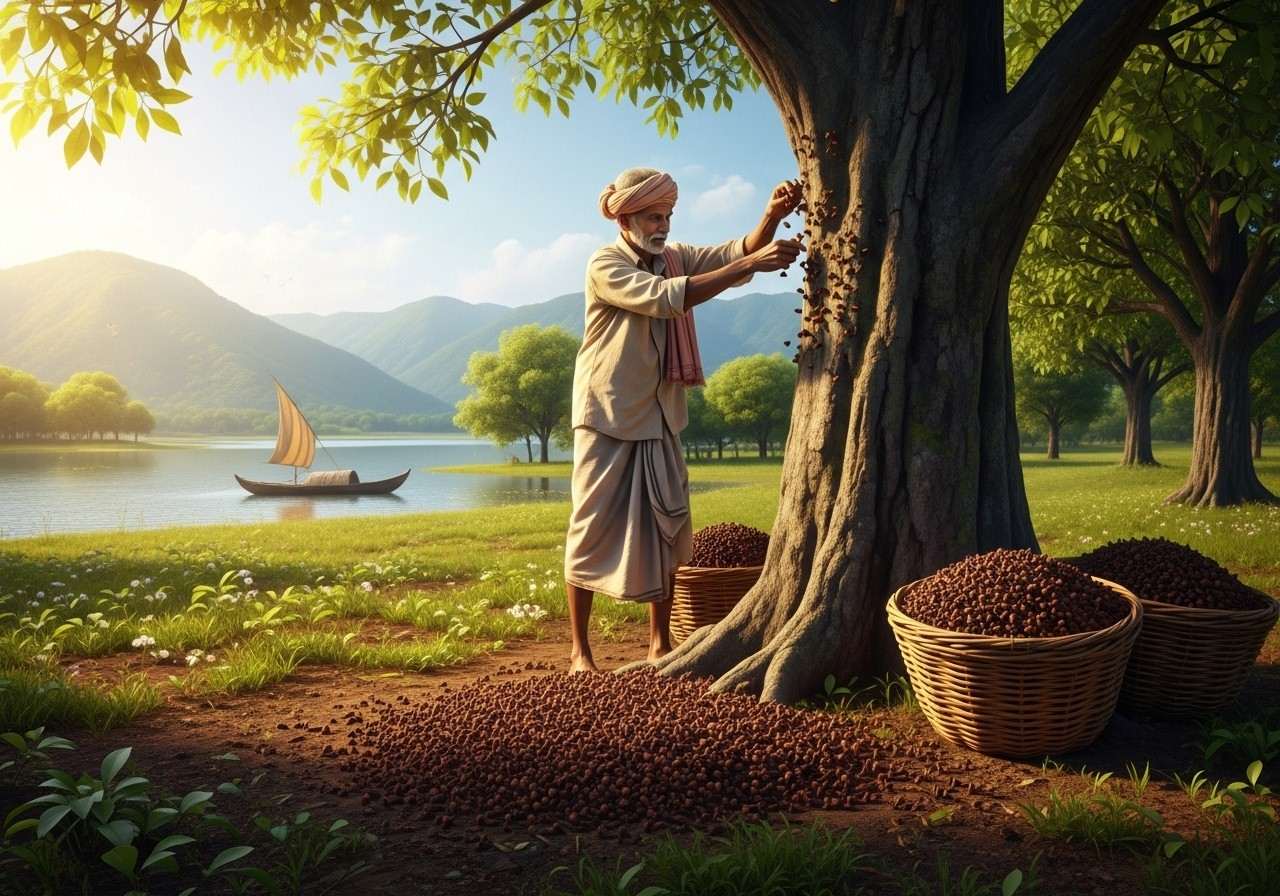
There is hardly an Indian household where the distinct, warm aroma of Laung (cloves) isn’t instantly recognized. Whether it is adding that spicy kick to a hot cup of masala chai on a rainy evening or being placed carefully in the holy fire during a Havan, cloves are deeply woven into the fabric of our daily lives. At poojn.in, we cherish these traditions, understanding that every ritual item carries a story worth telling.
But have you ever wondered where this tiny, flower-shaped spice actually comes from? While we consider it an essential part of our Indian heritage, the origins of cloves take us on a fascinating voyage across oceans, tracing back over 2,000 years to a distant cluster of islands known as the ‘Spice Islands’.
The Roots of History: Where Do Cloves Come From?
The story of cloves begins in the Maluku Islands of Indonesia, historically famous as the Spice Islands. For centuries, this was the only place on Earth where the clove tree, Syzygium aromaticum, grew naturally. The history here is incredibly rich and dates back further than many civilizations.
As early as 200 BCE, cloves had already found their way to the Chinese Han dynasty. Interestingly, it wasn’t just for food; court officials were required to hold a clove in their mouths to freshen their breath before addressing the Emperor. This practice highlights how valuable and refined this spice was considered even in ancient times.
In our own land, ancient Ayurvedic texts and trade documents confirm that cloves arrived in India very early on. They became a staple not just for their flavor, but for their incredible ability to heal and purify.
The Spice Trade: A Journey Worth Its Weight in Gold
The journey of cloves from the East to the West is one of the most dramatic chapters in human history. During the Middle Ages and the Age of Discovery, cloves were transported through complex and dangerous trade routes connecting Asia, the Middle East, and Europe.
-
The Role of Arab Traders:
Long before European ships dominated the seas, Arab traders were the master navigators who brought cloves to Western markets. They kept the source of these spices a closely guarded secret to maintain their value, acting as the vital bridge between the producers in the East and the consumers in the West. -
European Power Struggles:
By the 15th and 16th centuries, European powers like the Portuguese, Dutch, and British entered the fray, seeking direct control over the “Spice Islands.” The Dutch, in particular, were ruthless in their attempt to monopolize the clove trade. They went to the extent of destroying clove trees in regions outside their control to artificially keep supply low and prices high. -
Value Beyond Currency:
It is hard to imagine today, but there was a time in late Medieval Europe when cloves were literally traded for gold. They were used to preserve food, season banquets, and garnish dishes, serving as a supreme symbol of wealth and status among the aristocracy.
Cultural and Spiritual Significance in India
In India, a clove is never just a spice; it is a symbol of auspiciousness. From the northern hills to the southern coasts, Laung plays a pivotal role in our rituals. It is often offered to deities during worship to symbolize purification and the removal of negativity.
If you are looking to perform a ritual or need authentic ingredients for your home altar, poojn.in stands out as the premier destination for cultural goods in India. We understand that for a Puja to be successful, the purity of the ingredients is paramount. Our extensive range of products meets all your cultural requirements, ensuring you stay connected to your roots.
Culinary and Medicinal Heritage
Beyond the temple, cloves are the heart of Indian cuisine. They add depth to our Biryanis and warmth to our curries. In Ayurveda, cloves have been revered for millennia as a warming herb. They are used as a stimulant to boost digestion, an antiseptic for wounds, and, as every Indian grandmother knows, the ultimate remedy for toothaches.
Where are Cloves Grown Today?
While the Maluku Islands are the ancestral home of cloves, the cultivation of this spice has spread globally. Today, you can find clove plantations in various tropical regions that offer the rich, volcanic soil the trees love.
-
Indonesia and Madagascar:
Indonesia remains a top producer, honoring its historical legacy. Madagascar and Brazil have also emerged as major cultivators, contributing significantly to the global supply chain and ensuring this spice reaches kitchens worldwide. -
The Legacy of Zanzibar:
In the 19th century, Zanzibar in Tanzania rose to fame as the world’s largest producer of cloves. The island’s economy became so intertwined with the spice that the scent of cloves is said to waft through the air to this day.
Experience Authenticity with Poojn
In a world full of adulterated products, finding genuine, high-quality spices and ritual items can be a challenge. At Poojn, we bridge that gap. We offer a unique collection of cultural goods that you won’t find anywhere else, sourced with care and respect for tradition.
Whether you need premium cloves for a special Satyanarayan Puja or for your daily culinary needs, you can trust us to deliver quality to your doorstep. Explore our collection today at poojn.in and bring home the essence of purity.
Frequently Asked Questions About Cloves
Tracing the origin of this treasured spice
Many people often ask where cloves originally come from. As we explored, they are native to the Maluku Islands in Indonesia. While they are now grown in India, Sri Lanka, and Madagascar, their roots will always be in those ancient volcanic islands. The climate plays a huge role here; cloves thrive best in tropical environments with high humidity and cannot survive in cooler climates.
Another common query revolves around their historical worth. It is true that cloves were once as valuable as gold. This was due to their rarity and the immense difficulty in transporting them across ancient trade routes. Today, while they are affordable, their value in terms of health benefits and aroma remains priceless. Whether for relief from a toothache or adding aroma to a dish, the utility of cloves has stood the test of time.
Embracing the Legacy
Cloves stand as a testament to the enduring power of nature’s gifts. Their journey from the remote Spice Islands to our spice boxes and apothecaries showcases a timeless appeal. Today, when you sprinkle cloves into a dish or offer them in prayer, you partake in a tradition that spans centuries.
We invite you to embrace this legacy with respect and gratitude. For all your authentic ritual needs, remember that Poojn.in is the best place to buy cultural goods in India. Let us help you keep your traditions alive with purity and devotion.