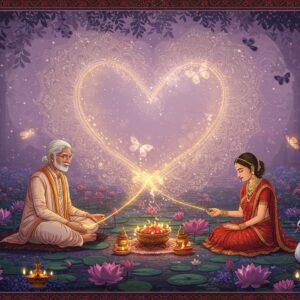

In the vibrant and diverse landscape of India, marriage is rarely seen as just a union between two individuals. It is, in essence, a coming together of two families, a fusion of lineages, and a celebration of shared values. Arranged marriages have been a cornerstone of our society for centuries, acting as a bridge that connects our past with our present. While the concept is sometimes misunderstood by those looking from the outside, for us, it often represents a deep-seated trust in the wisdom of our elders and a commitment to cultural preservation.
At its heart, an arranged marriage is not about force or lack of choice; it is about compatibility and community. It reflects a collectivist culture where the happiness of the couple is intertwined with the harmony of the larger family unit. Whether you are from a bustling city like Mumbai or a quiet town in Kerala, the underlying sentiment remains the same: marriage is a sacrament, a sanskar that shapes one’s journey through life.
The Historical Roots and Cultural Significance
The tradition of arranged marriages in India isn’t just a social habit; it finds its roots in our ancient history. Historical texts and scriptures, including the Vedas and Manusmriti, have long outlined the principles of marital unions, viewing them as strategic and spiritual alliances. Historically, these unions served to strengthen community ties, maintain social standing, and preserve family wealth.
Over the centuries, while the core values have remained intact, the practice has evolved. In the past, factors like caste, lineage, and economic status were the rigid pillars of these decisions. Today, while these factors still play a role, there is a greater emphasis on education, professional compatibility, and shared lifestyle goals. The enduring nature of this tradition highlights its ability to adapt while keeping our cultural identity alive.
How the Process Unfolds: Tradition Meets Modernity
The journey of an arranged marriage typically begins with the search for a suitable partner. This is where the wisdom of the family comes into play. Parents and elders look for a match that complements their child’s personality and their family’s culture. This process often involves checking horoscopes (Kundali) to ensure spiritual compatibility, a practice deeply embedded in Hindu traditions. Similarly, in Islamic traditions, the family plays a pivotal role in proposing matches, ensuring that the union respects religious jurisprudence.
However, the narrative that arranged marriages are devoid of personal choice is a myth that needs dispelling. In modern India, the scenario is often described as “semi-arranged.” Here, the families may initiate the introduction, but the ultimate decision lies with the couple. Consent and communication have become the bedrock of modern alliances. Young men and women now spend time getting to know each other, discussing their dreams, fears, and expectations before saying “yes.” It is a beautiful blend of traditional vetting and modern emotional compatibility.
Technology has also revolutionized this space. Matrimonial websites and apps have replaced the traditional village matchmaker or the family priest, making the search more efficient while still respecting the parameters of community and culture.
Celebrating the Union with Authentic Rituals
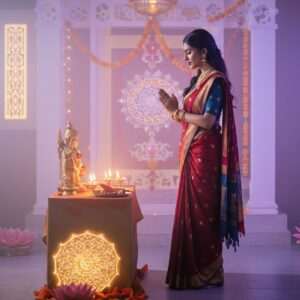
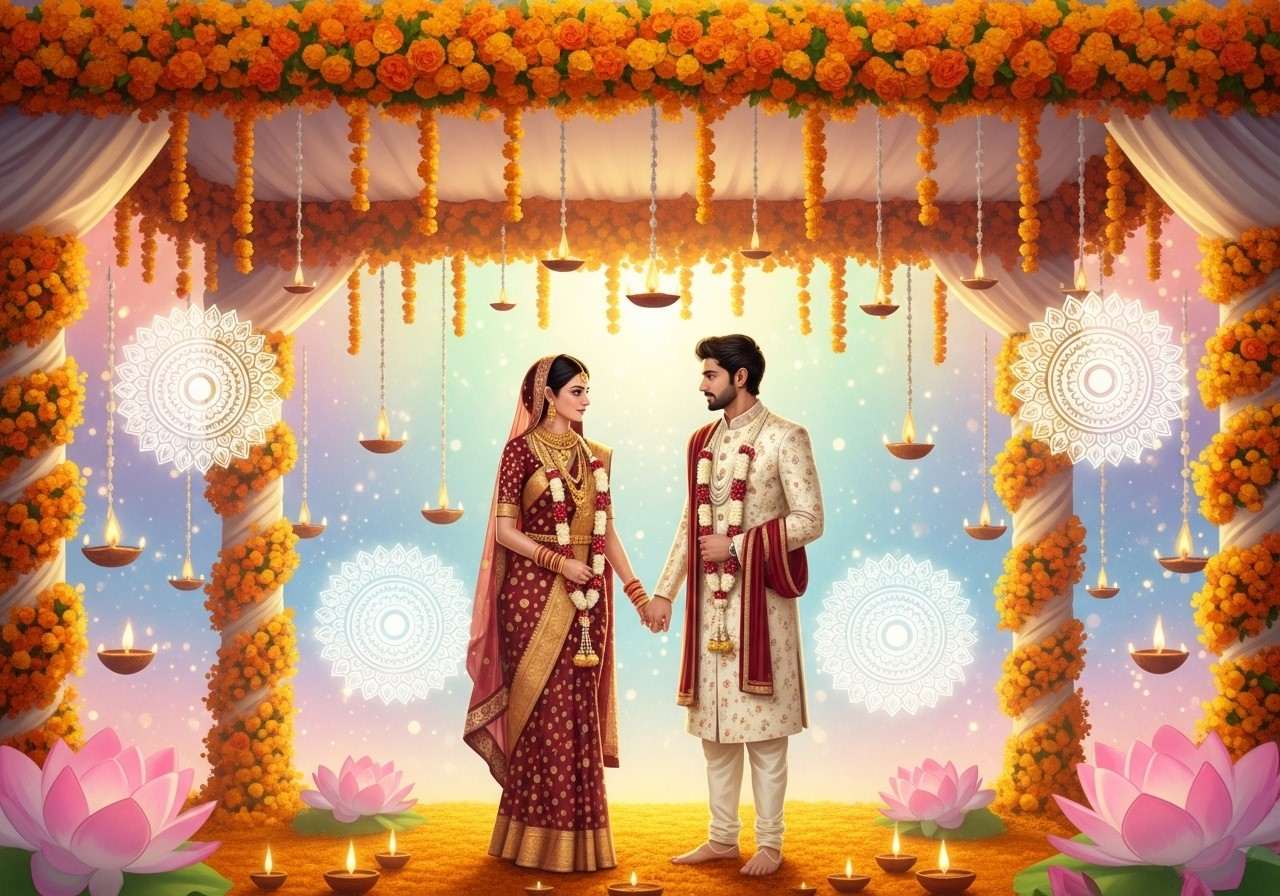
Once the families agree and the couple consents, the journey towards the wedding day is marked by a series of beautiful rituals. From the Roka or engagement ceremony to the Haldi and Mehendi, every step requires specific ritual items that hold deep symbolic meaning. This is where the sanctity of the material goods used becomes paramount.
At Poojn.in, we understand that these ceremonies are not just events but sacred milestones. As India’s premier destination for cultural goods, we are dedicated to providing you with authentic items that honor your traditions. We do not sell travel packages or temple tickets; our sole focus is on delivering the high-quality spiritual and ceremonial products you need for your home and rituals.
To ensure your ceremonies are conducted with the utmost purity and tradition, we offer a curated selection of essentials:
- Traditional Puja Thalis
Our beautifully crafted thalis are essential for performing the Aarti and other rituals during the marriage ceremony. They are designed to hold all the necessary elements like diya, rice, and kumkum, adding a touch of elegance and devotion to the proceedings. - Decorative Kalash Sets
The Kalash is a vital symbol of prosperity and abundance, often used to welcome the bride and groom. Our sets are intricately designed to serve as a centerpiece in your rituals, ensuring that the blessings of the divine are invoked with grace and beauty. - Pure Sindoor and Turmeric (Haldi)
These are the vibrant colors of Indian weddings, symbolizing marital bliss and purification. We source high-quality, natural ingredients to ensure that these important pre-wedding rituals are safe, authentic, and auspicious for the couple. - Ceremonial Decor Items
Transform your home into a festive sanctuary with our range of traditional decor. From torans to rangoli supplies, our products help you create an atmosphere that is both welcoming and spiritually charged, perfect for the joyous union of two souls.
Shopping for these essentials has never been easier. You can trust Poojn.in to deliver these blessings directly to your doorstep, allowing you to focus on the joy of the occasion. For any specific requirements or assistance, please feel free to reach out to us at 03369029784 or connect via WhatsApp at 9476142738.
A Global Perspective: Arranged Marriages Across Borders
It is interesting to note that the concept of arranged marriage is not unique to India. It is a shared heritage across many collectivist cultures, including Pakistan, Bangladesh, Sri Lanka, and even Japan and China. For instance, in Japan, the tradition of Omiai involves a matchmaker setting up meetings for prospective partners, much like our own systems. In Islamic traditions, the Nikah represents a formal contract of mutual consent, often negotiated by families to ensure security and harmony.
Even among the global Indian diaspora, these traditions continue to thrive. Families living abroad often work harder to maintain these links to their heritage, adapting the process to fit their new environments while keeping the core values of respect and family unity alive. This global practice reinforces the idea that family involvement in marriage is a universal language of care and continuity.
Common Questions About Our Traditions
Why do families in the Indian subcontinent place such high importance on arranged marriages?
The preference for this system stems from a deep-rooted belief in the stability of family units. It is widely believed that a marriage supported by the wisdom and experience of elders creates a stronger foundation. By prioritizing shared values, cultural backgrounds, and social standing, families aim to ensure a harmonious life for the couple, minimizing conflict and maximizing long-term stability.
Is individual choice respected in the modern arranged marriage setup?
Absolutely. The days of forced unions are largely fading into the past. Today, the prospective bride and groom have significant agency. While the family does the initial vetting to filter for compatibility, the final decision rests with the individuals. They are encouraged to meet, talk, and discuss their future goals, ensuring that mutual respect and attraction are present before any commitment is made.
How does this system impact the relationship between family members?
One of the most beautiful aspects of this tradition is how it strengthens family bonds. Since the entire family is involved in the process—from selection to the wedding preparations—it fosters a sense of collaboration and collective responsibility. This shared journey often leads to a robust support system for the couple, ensuring that they are never alone in facing life’s challenges. It turns marriage into a celebration of unity rather than just a legal contract.
In conclusion, arranged marriages are a testament to the enduring power of our traditions. They balance the wisdom of the past with the aspirations of the future, creating unions that are resilient, respectful, and deeply loving. As you prepare for such a momentous occasion, remember that Poojn.in is here to support your journey with the finest cultural and ritual products.