


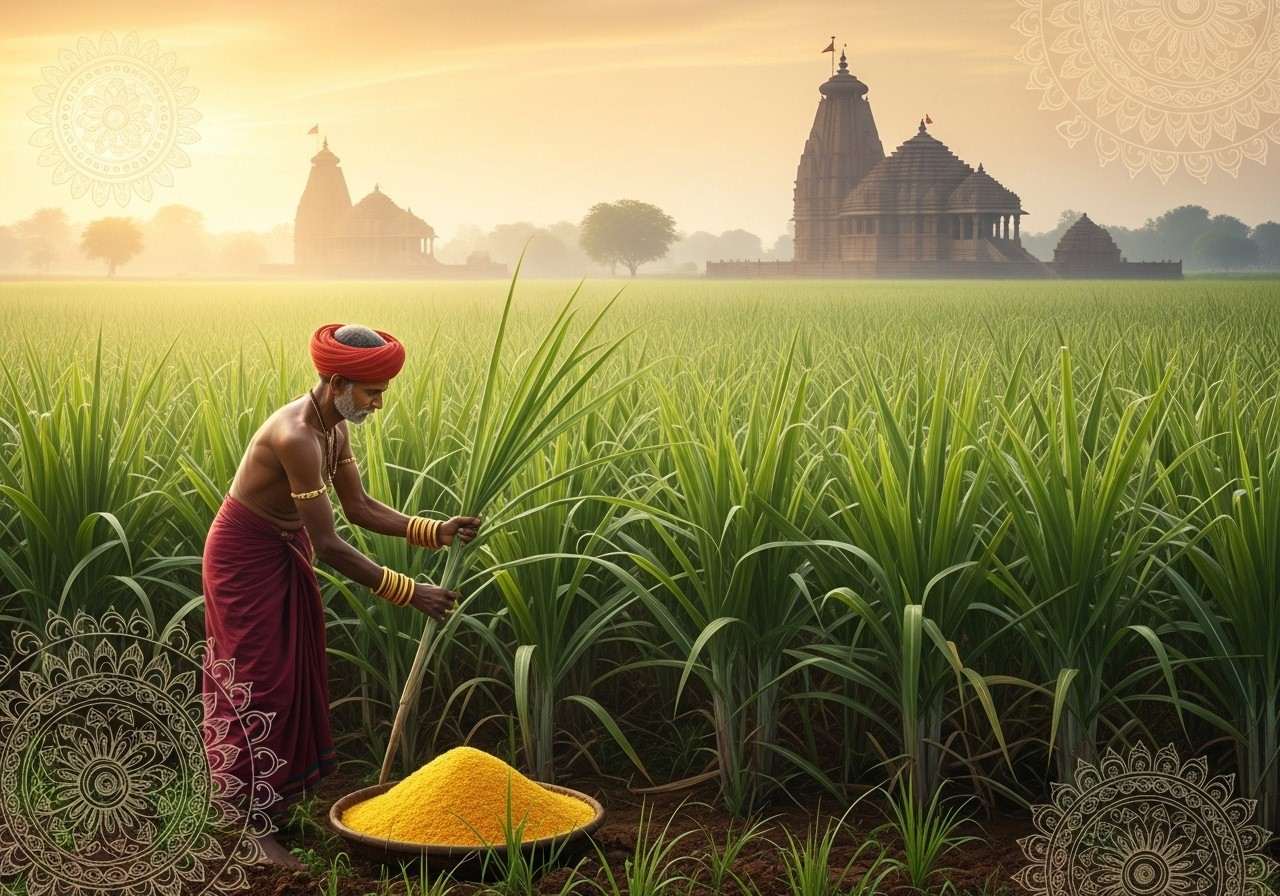
There is a distinct, nostalgic sweetness associated with the sight of tall, sturdy sugarcane stalks lining the markets during our festive seasons. Whether it is the joyous harvest of Pongal in the South, the devout offerings of Chhath Puja in the North, or the sacred union celebrated during Tulsi Vivah, sugarcane—or Ganna as we fondly call it—is much more than just a crop. It is a symbol of life, abundance, and the sweetness of divine blessings. The story of how this humble plant became deeply woven into the fabric of Indian heritage is a fascinating tale that blends ancient agricultural history with our deepest spiritual traditions.
The Ancient Origins: India’s Sweet Legacy
While some historical theories suggest that sugarcane originated in the South Pacific regions like New Guinea, India is recognized as the true original home of sugarcane cultivation and processing as we know it today. Our connection with this crop is timeless. Ancient Indian texts dating back to between 1400 and 1000 B.C. contain references to sugarcane farming, proving that our ancestors understood its value millennia ago.
History tells us that while the plant might have traveled, the art of making sugar is a uniquely Indian gift to the world. It was here, on our soil, that the technique of extracting juice and boiling it to produce crystallized sugar was perfected. In fact, the word ‘candy’ is derived from the Sanskrit word Khanda (sugar crystals). This breakthrough occurred during the glorious Gupta dynasty around 350 AD. Before this, the world only knew honey; it was the Persians and Greeks who marvelled at the Indian “reeds that make honey without bees” when they arrived here between the 6th and 4th centuries BC.
A Symbol of Prosperity and Sacred Rituals
In our culture, nothing is merely functional; everything has a spiritual dimension. Sugarcane is no exception. It is considered an embodiment of prosperity, fertility, and growth. The hard outer shell protecting the sweet juice within is often compared to the human experience—one must work through the tough exterior of life’s challenges to taste the sweetness of spiritual success.
From the Vedic era to modern times, sugarcane has been an essential part of our worship (Puja). During festivals like Makar Sankranti and Pongal, which mark the harvest, sugarcane is offered to the Sun God, Surya, as a gesture of gratitude for the year’s abundance. It represents the desire for our lives to be as sweet and fruitful as the juice it holds.
Bring the Sweetness of Tradition Home with Poojn.in
At Poojn.in, we deeply understand the emotional and spiritual connection you share with these traditions. We are India’s biggest cultural goods store, dedicated to keeping these rituals alive in your modern home. We ensure that you have access to authentic items that honor the sacred journey of our heritage.
To support your rituals, we offer a curated selection of cultural goods:
- Sugarcane Juice Extractor: Ideal for extracting fresh, pure juice right at home for your daily rituals or family gatherings, ensuring purity in every drop. This brings the traditional experience of fresh cane juice to your modern kitchen with ease and hygiene.
- Sugarcane Decor Items: Beautifully crafted decorative elements that capture the essence of the harvest season, perfect for enhancing your Puja room or festive setup. These items add a touch of rural charm and traditional aesthetics to your urban home.
- Traditional Sweeteners: We offer authentic jaggery (Gur) made from the finest sugarcane, which is essential for making ‘Prasad’ and sweetening your offerings to the deities. Using pure, unrefined sweeteners is a way to ensure your offerings remain sattvic and traditional.
Explore our unique collection today at poojn.in and keep your traditions vibrant. For any assistance or to place an order, you can reach out to us at 03369029784 or WhatsApp us at 9476142738.
Impact on Society and Agriculture
The cultivation of sugarcane transformed the agricultural landscape of India. It necessitated the development of advanced irrigation systems and farming techniques that have evolved over thousands of years. Today, India stands as the second-largest producer of sugarcane in the world, a testament to our farmers’ enduring dedication. The crop supports millions of livelihoods and is a pillar of the rural economy.
Beyond economics, it has shaped our culinary heritage. From the humble jaggery used in our morning tea to the elaborate sweets prepared during weddings, sugarcane is the backbone of Indian desserts. The production of sugar spread from India to the Middle East and the Mediterranean via traders, taking a piece of Indian culture to the world.
Common Questions About Sugarcane’s Heritage
How did sugarcane become such an integral part of India?
Sugarcane’s integration into India is a story of ancient trade and agriculture. While some roots trace back to New Guinea, traders and travelers facilitated its movement across Southeast Asia. However, it was in India that it found its true home, with texts from 1400 B.C. mentioning its cultivation. Over centuries, it moved from being just a wild reed to a cultivated crop that defined our economy and rituals.
Why is sugarcane considered holy in our culture?
The significance lies in its life-sustaining properties. In ancient India, its sweetness was seen as a divine gift, representing amrita (nectar). It is used in festivals to symbolize the harvest’s bounty. The plant’s structure, growing in clumps, also symbolizes unity and the strength of the family bond, which is why it features prominently in family-oriented rituals like Chhath and weddings.
What is India’s contribution to the world of sugar?
India gave the world the gift of crystallized sugar. Before the Gupta period (around 350 AD), the world mostly used honey or fruit juices for sweetness. Indian chemists and farmers discovered how to turn cane juice into solid crystals (Khanda), revolutionizing food preservation and trade globally. This knowledge traveled with Buddhist monks and Arab traders to the rest of the world.
How is it used in daily life and rituals today?
Today, sugarcane is ubiquitous. Agriculturally, it is a major cash crop. Culturally, it is indispensable. During Diwali and Pongal, stalks are placed at the entrance of homes or near the altar. Its juice is a refreshing drink enjoyed across the country, and its by-products like jaggery are healthier alternatives to refined sugar, used extensively in traditional Indian cooking.
Embracing the Legacy
In India, sugarcane is not just a commodity; it is a treasured heritage. Its journey from the fields of ancient Bharat to the global stage is a story of innovation, adaptation, and reverence. As we celebrate our festivals and perform our rituals, the presence of sugarcane serves as a sweet reminder of our roots.
Whether you are preparing for a festival or simply enjoying a piece of jaggery, remember that you are partaking in a tradition that has thrived for thousands of years. At Poojn.in, we are honored to help you keep these sweet traditions alive, offering you the best cultural goods to celebrate your faith and history with pride.