


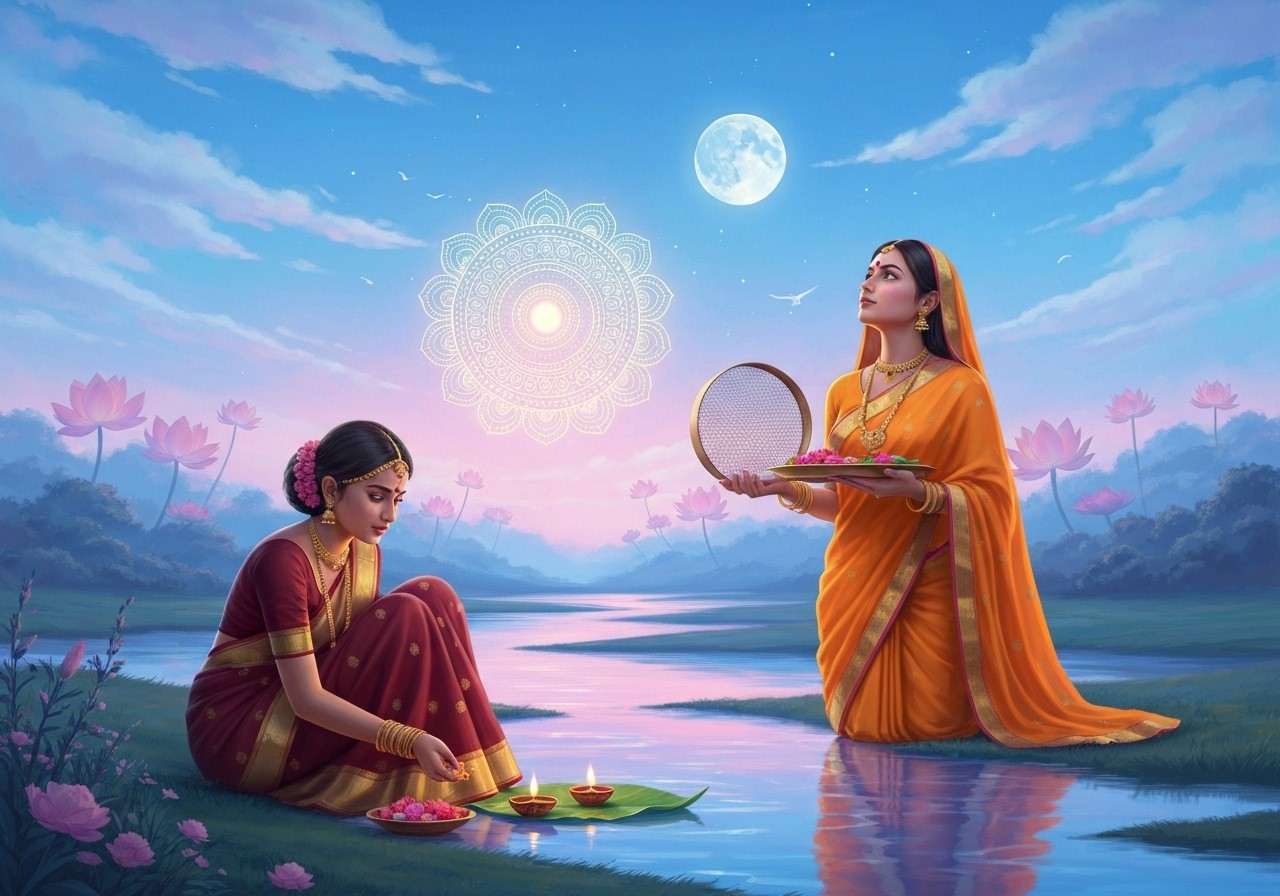
In the rich tapestry of Indian culture, rituals serve as a bridge connecting our past to our present, and our earthly duties to spiritual devotion. Two such profound observances that define the autumn season are Pitra Paksha and Karwa Chauth. While one is a solemn period dedicated to honoring our ancestors, the other is a vibrant celebration of marital bonds and longevity. As we approach 2026, understanding the deep-rooted significance of these days helps us perform them with the sanctity and respect they deserve.
At Poojn.in, we understand that these aren’t just dates on a calendar; they are moments of emotion, gratitude, and faith. Whether you are performing a quiet Shradh at home or preparing for the moonrise on Karwa Chauth, having the right guidance and authentic ritual items is essential.
Honoring the Lineage: Pitra Paksha 2026
Pitra Paksha, often referred to as the fortnight of the ancestors, is a 16-day period in the Hindu lunar calendar where we pay homage to those who came before us. It is believed that during this time, the souls of our ancestors visit the earthly realm to bless their kin. Performing rituals like Shradh and Tarpan is our way of expressing gratitude and ensuring their souls find peace and liberation (Moksha).
In 2026, Pitra Paksha will be observed from September 27th to October 10th. It begins on the full moon following Ganesh Chaturthi and concludes on Sarva Pitru Amavasya.
Key Rituals and Their Significance
The core of Pitra Paksha lies in the offering of water and food. The Tarpan ritual involves offering water mixed with black sesame seeds, barley, and Kusa grass to quench the thirst of the departed souls. Families also prepare Pind Daan—rice balls mixed with honey and ghee—as a symbolic meal. It is customary to cook a sattvic meal (without onion and garlic) including the ancestors’ favorite dishes, often featuring kheer.
For a deeper understanding of how these traditions are evolving and why they remain crucial for our spiritual well-being, you can read more about revitalizing Shradh traditions and their significance here.
While many people visit holy sites, performing these rituals at home with purity and devotion is equally significant. Poojn.in ensures you have access to pure, high-quality puja samagri delivered to your doorstep, so you can focus on the prayers without worrying about sourcing authentic items. Remember to also extend your charity by feeding cows, dogs, and crows, as they are considered messengers in our scriptures.
Celebrating Eternal Love: Karwa Chauth 2026
Following the solemnity of Pitra Paksha and the festivities of Navratri, the atmosphere turns romantic and devotional with Karwa Chauth. This festival is a beautiful testament to the strength of a woman’s love and prayer. Married women observe a strict Nirjala Vrat (fasting without water) from sunrise to moonrise, praying for the longevity and well-being of their husbands.
Mark your calendars: Karwa Chauth 2026 falls on October 29th, a Thursday. The day is filled with anticipation, dressing up in auspicious colors like red and pink, and the community feeling of the evening Puja.
The Rituals: From Sargi to Moon Sighting
The day begins before dawn with Sargi, a meal prepared by the mother-in-law containing sweets, dry fruits, and feni to sustain the fasting woman throughout the day. As evening approaches, women gather for the Puja. The Puja Muhurat for 2026 is from 5:38 PM to 6:56 PM. During this time, the story (Katha) of Karwa Chauth is narrated, and thalis are exchanged in a circle.
The most awaited moment is the moonrise. In 2026, the moon is expected to rise at approximately 8:07 PM. Women view the moon through a sieve (chalni) and then look at their husbands, breaking the fast with water and a sweet morsel.
To ensure your puja is conducted perfectly, having a complete and beautiful thali set is vital. We recommend our exclusive Stainless Steel Karwa Chauth Thali Set, which includes everything you need for the evening rituals, adding grace to your devotion.
For those interested in the deeper spiritual meaning behind this fast, explore our guide on Karwa Chauth’s spiritual significance here.
Understanding the Transition: From Pitra Paksha to Navratri
It is important to note that immediately following the conclusion of Pitra Paksha on October 10th, the auspicious period of Navratri begins. This transition signifies moving from paying debts to ancestors to celebrating the divine feminine power. If you are planning ahead for the festive season, you can check the dates and rituals for Navratri 2026 here.
Common Questions About These Rituals
What constitutes the Shradh ceremony and who can perform it?
The Shradh ceremony is the act of offering food and respect to ancestors on the lunar day corresponding to their death anniversary. While traditionally the eldest son performs it, in modern times and according to scriptures, in the absence of male heirs, wives or daughters can also perform the rituals with equal devotion. The key is the sincerity of the intent.
What if I do not know the exact date of my ancestor’s passing?
This is a common concern. If the specific Tithi (lunar date) of an ancestor’s death is unknown, the Shradh can be performed on Sarva Pitru Amavasya, which is the last day of Pitra Paksha. In 2026, this falls on October 10th. This day covers all forgotten or unknown dates.
Why is the moon sighting so critical for Karwa Chauth?
The moon is seen as a celestial witness to the wife’s devotion. Sighting the moon signifies the successful completion of the fast. It represents coolness, peace, and romance. The ritual involves offering Arghya (water) to the moon, seeking blessings for a peaceful married life, before breaking the fast.
Can unmarried women participate in Karwa Chauth?
Yes, many unmarried women also observe this fast to pray for a suitable life partner. However, their rituals might differ slightly; for instance, they may break their fast by looking at the Pole Star (Dhruv Tara) or simply after the moonrise without the sieve ritual involving a husband.
Poojn.in is dedicated to keeping these beautiful Indian traditions alive. By offering authentic cultural goods, we hope to bring convenience and sanctity to your doorstep, allowing you to focus on what truly matters—devotion and family.