

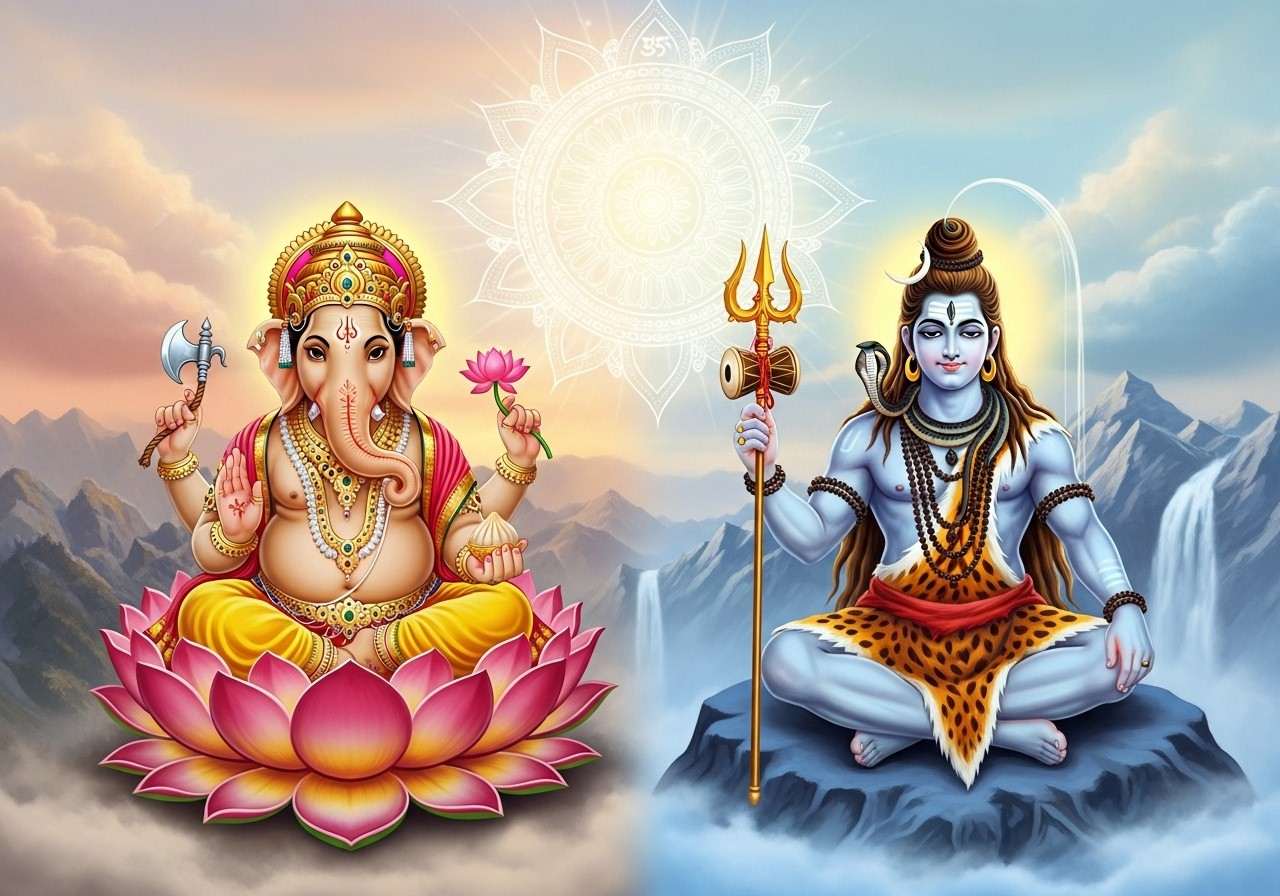
In India, festivals are not just dates on a calendar; they are the rhythm of our lives, bringing families together and filling our homes with divine energy. Among the myriad of celebrations, Ganesh Chaturthi and Maha Shivratri hold a special place in our hearts. They are vibrant threads in India’s cultural fabric, blending deep religious devotion with rich storytelling. For those of us who value our roots, understanding the legends behind these days makes every ritual feel more meaningful.
At poojn.in, we understand that your devotion requires authenticity. As India’s premier destination for cultural goods, we are here to ensure your festivals are celebrated with the purest items, delivered right to your doorstep.
Ganesh Chaturthi: welcoming our Beloved Bappa
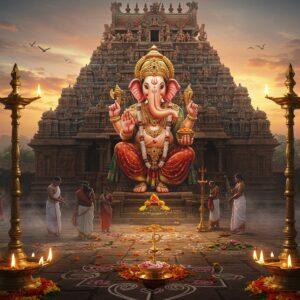
Celebrated with immense enthusiasm between August and September, Ganesh Chaturthi marks the arrival of Lord Ganesha, the remover of obstacles. It is a time when our streets echo with “Ganpati Bappa Morya” and our homes smell of fresh flowers and steaming modaks. But do you know the fascinating tales behind his birth?
The Birth from Turmeric
The most cherished legend tells us that Goddess Parvati created Ganesha from turmeric paste (used for cleansing) to guard her door while she bathed. When Lord Shiva returned and tried to enter, the dutiful boy stopped him. Unaware that this was his own son, Shiva, in a moment of divine rage, severed the boy’s head. When Parvati witnessed this, her grief knew no bounds. To console her and restore life to the boy, Shiva replaced the head with that of the first creature found facing north—a mighty elephant. Thus, Vinayaka was reborn, symbolizing family unity and the triumph of life over death.
For a deeper dive into these fascinating tales, you can read our detailed blog on Ganesh Chaturthi celebration rituals and traditions explained.
The Legend of the Moon and the Mouse
Have you ever been told not to look at the moon on Ganesh Chaturthi? This tradition comes from a story where Lord Ganesha, riding his mouse after a heavy feast of sweets, stumbled and fell. The Moon, witnessing this, laughed with arrogance. Hurt by this mockery, Ganesha cursed the Moon, stating that anyone who looks at it on this day would face false accusations or Mithya Dosha. It is a reminder to remain humble and never mock others.
From Private Worship to Public Unity
While the festival has ancient roots, its modern public avatar was shaped by Lokmanya Bal Gangadhar Tilak in 1893. He transformed it into a tool to unite Indians against British rule, turning a private household puja into a grand Sarvajanik Utsav. Today, we continue this legacy of community bonding.
Preparing for the arrival of the obstacle remover? Ensure your rituals are flawless with our Ganesh Chaturthi Dashakarma Kit. We have curated all the essential puja samagri in one package so you can focus on your devotion rather than running to the market.
Maha Shivratri: The Great Night of Shiva
While Ganesh Chaturthi is a festival of joy and sound, Maha Shivratri is a festival of solemnity, introspection, and spiritual awakening. Observed in February or March, this is the night when the northern hemisphere is positioned in such a way that there is a natural upsurge of energy within a human being.
The Divine Union
One of the most beautiful legends associated with this day is the marriage of Lord Shiva and Goddess Parvati. After intense penance, Parvati won the heart of the ascetic Shiva. Their wedding, celebrated on this night, represents the perfect union of masculine and feminine energies (Shiva and Shakti), essential for the balance of the universe.
If you wish to share these beautiful stories with the younger generation, our guide on Maha Shivratri for kids: stories and activities is a wonderful resource to keep the tradition alive.
Neelkanth: The Savior of the World
Another profound story takes us back to the Samudra Manthan (churning of the ocean). Before the nectar of immortality emerged, a deadly poison called Halahala surfaced, threatening to destroy the cosmos. To save the world, Lord Shiva drank the poison but held it in his throat, turning it blue. Hence, he is worshipped as Neelkanth. Devotees fast and offer water or milk to the Shiva Lingam to soothe the heat of this poison, expressing their gratitude.
For those interested in the deeper mythological context, explore our article on Maha Shivratri stories, myths, and legends explained.
Common Questions About These Divine Festivals
The Significance of Grand Celebrations
Many often wonder why Ganesh Chaturthi is celebrated with such pomp. The answer lies in the belief that Lord Ganesha is the harbinger of good fortune. The grandeur, the music, and the processions are our way of honoring the deity who removes obstacles from our paths. Similarly, the eco-friendly clay idols we use today remind us that just as Ganesha returns to the earth, we too must respect nature.
Why We Fast on Maha Shivratri
Fasting, or Vrat, is a central part of Maha Shivratri. Devotees abstain from food and keep a night vigil (Jagran) to purify the body and mind. This act of austerity helps in detaching from worldly pleasures and focusing on spiritual growth. It is believed that the planetary positions on this night make it easier to transcend the physical senses and connect with the divine.
Understanding the Puja Muhurat
Timing is everything in Hindu rituals. For Maha Shivratri, the Nishita Kala (midnight) is considered the most auspicious time for worship, as it is believed that Shiva performs the cosmic dance of creation and destruction, the Tandava, at this hour. Always consult a reliable panchang to ensure your prayers align with these powerful celestial moments.
Celebrating at Home
You do not always need to visit a crowded temple to find peace. Both festivals can be celebrated beautifully at home. For Ganesh Chaturthi, a simple clay idol, some durva grass, and a sincere heart are enough. For Shivratri, a simple offering of Bilva leaves and chanting ‘Om Namah Shivaya’ can bring immense peace.
Embracing Our Heritage with Poojn
As we navigate our modern lives, staying connected to these traditions grounds us. Whether it is the joy of bringing Ganpati home or the solemnity of the night of Shiva, these festivals remind us of who we are.
At poojn.in, we are dedicated to keeping these traditions alive. We offer a unique collection of cultural goods, from authentic idols to complete puja kits, that you simply won’t find anywhere else. Let us handle the preparations while you focus on the prayers. Visit our store today to explore our collection and make your upcoming festivals truly divine.