
When we think of Haldia, the first image that often comes to mind is that of a bustling industrial port, the hum of machinery, and ships docking from faraway lands. Yet, beneath this modern industrial veneer lies a heart that beats with rich Bengali tradition. Haldia is not just about petrochemicals; it is a city where the aroma of mustard oil wafts through the air, and ancient temples stand as silent witnesses to history. For those of us who cherish our roots, Haldia offers a unique sensory journey where foods and history define the city’s true essence.
At poojn.in, we understand that culture is not just preserved in museums but is lived daily through our rituals and our food. While we don’t offer travel packages, we love to celebrate the stories that make our Indian cities so special.
The Historical Tapestry of Haldia
Haldia’s story is a fascinating blend of the old and the new. While it is celebrated today as a planned industrial city in West Bengal, its roots dig deep into the region’s colonial and ancient past. The development of the Haldia Port was a turning point, transforming the region into a strategic hub for India’s maritime trade. However, this modernization hasn’t erased the past; rather, it has added a new layer to it.
The city stands on land that has seen the ebb and flow of various communities. The colonial era left an imprint on the architectural and cultural fabric, while ancient structures whisper tales of a time long before the factories arrived. If you are interested in how regional histories shape modern cities, you might find our exploration of Panchala Cuisine and history equally fascinating, as it parallels how regions evolve over time.
A Culinary Journey: The Taste of Bengal
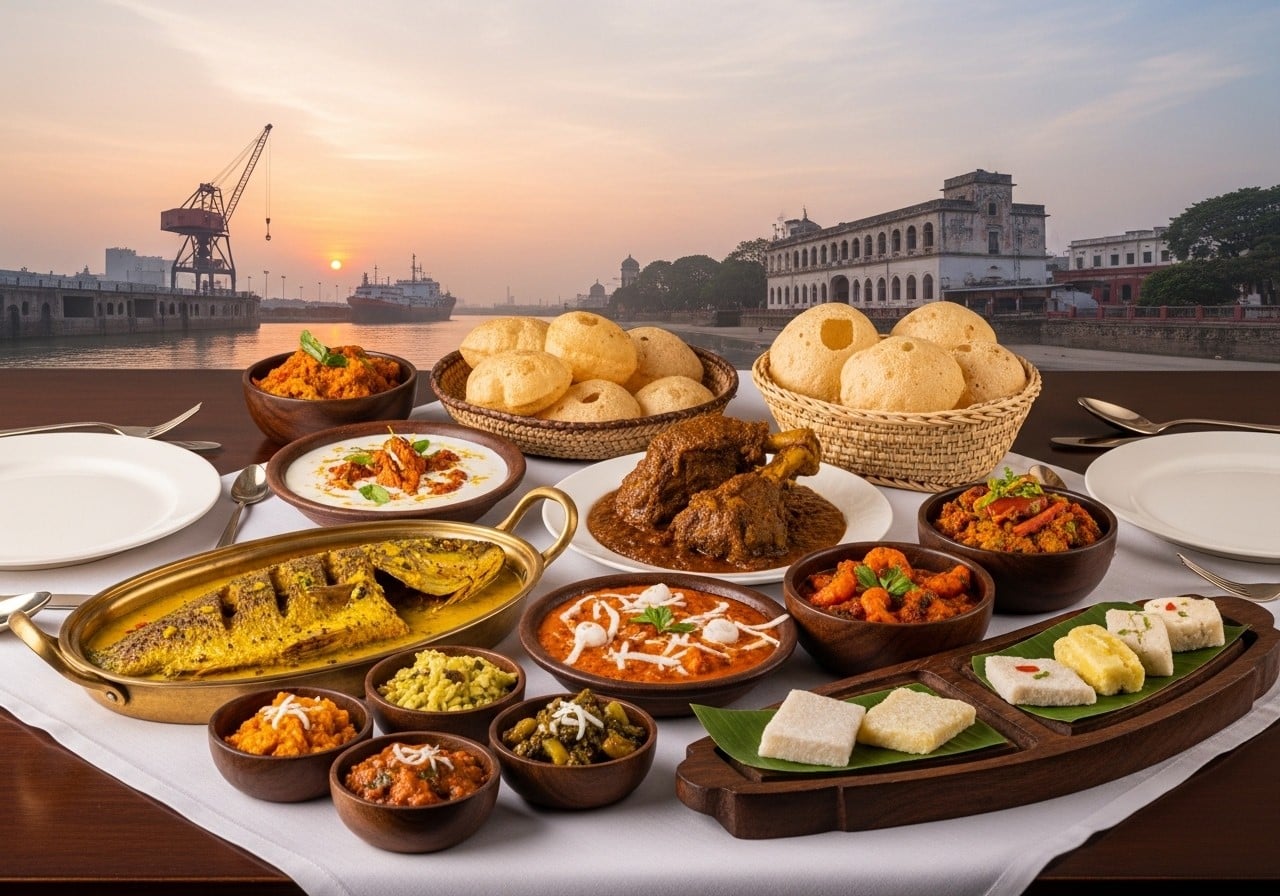
For any Bengali, food is an emotion, not just sustenance. Haldia’s culinary scene is a delightful reflection of this sentiment. The food here is primarily influenced by traditional Bengali cuisine, known for its subtle yet distinct flavors.
-
The Love for Fish (Mach): It is said that a Bengali meal is incomplete without fish. In Haldia, fresh catches like Rohu, Katla, Tangra, and the queen of fish, Hilsa (Ilish), are staples. Whether it is a light Jhol (curry) for a summer afternoon or a rich mustard-based preparation, the fish dishes here are legendary.
The abundance of rivers ensures that seafood like prawns (Chingri) also finds a glorious place on the plate, often cooked in coconut milk or spicy gravies. -
Spices and Flavors: The magic lies in the spices. The use of Kalonji (nigella seeds) and Paanch Phoran (five-spice mix) gives the vegetables and lentils their signature aroma. This method of cooking is deeply rooted in the region’s agricultural history.
To understand more about the deep connection between the land and the plate in this region, read our detailed blog on Bengali food history and recipes. -
Resilience in Cooking: History tells us that Bengal has faced times of scarcity and famine. These hardships taught the locals to be innovative, utilizing every part of a vegetable—from the peel to the stem.
This tradition continues in Haldia, where simple ingredients are transformed into delicacies, showcasing a respect for food that is passed down through generations.
A Unique Cultural Fusion: The Mini Japan
One of the most surprising aspects of Haldia is its multicultural flair. Due to the industrial setup, the city is home to a significant number of expatriates, particularly from Japan. This has led to the creation of a mini Japanese township known as Sutaku.
Here, you can find a slice of Japan in the heart of Bengal, with authentic Japanese restaurants and cultural elements. It is a beautiful example of how Haldia welcomes the world while staying true to its roots. This merging of cultures—where local beguni (batter-fried eggplant) coexists with sushi—makes the food scene here truly dynamic.
Festivals and Spiritual Harmony
Haldia comes alive during festivals. Being an industrial town, Vishwakarma Puja is celebrated here with a grandeur that rivals even the biggest cities. Lord Vishwakarma, the divine architect and lord of machines, is worshipped with great devotion in every factory and workshop. The sound of drums and the sight of beautifully decorated idols create an atmosphere of divine energy.
Other festivals like Rath Yatra and Durga Puja are also celebrated with immense enthusiasm, uniting communities across the city. The religious harmony in Haldia is palpable, with the Gopaljew Temple, Masjid-e-Ibrahim, and St. Joseph’s Church standing as beacons of peaceful coexistence. This reflects a broader cultural heritage similar to what we see in Kolkata’s sacred spaces; you can read more about that spiritual diversity in our post on Kolkata’s cultural heritage.
Preserving Traditions in a Modern World
Despite the malls and modern entertainment hubs, the people of Haldia hold their traditions close to their hearts. The Medinipur region, where Haldia is located, is famous for handicrafts like detailed mat weaving (Madur Kathi), brass and metal works, and exquisite horn crafts. These cottage industries are not just businesses; they are a legacy kept alive by skilled artisans.
At poojn.in, we resonate deeply with this spirit of preservation. We are India’s biggest cultural goods store, dedicated to keeping these traditions alive in your homes. While you may not be able to visit Haldia’s markets today, you can still bring the essence of traditional Bengal into your life.
For instance, if you are looking for authentic traditional remedies often used in Bengali households, consider the Dulal Chandra Bhar’s Tal Michri. It is a staple in many homes for its health benefits and traditional value.
Check out Authentic Dulal Chandra Bhar’s Tal Michri here
Bring the Essence of Tradition Home with Poojn
You don’t always have to travel to experience the divinity and culture of a place. Poojn.in brings the spiritual connection to your doorstep. Whether you need specific puja samagri to perform a ritual just like they do in the temples of Bengal, or traditional items that remind you of home, we are here for you.
- Authentic Puja Items: We source genuine products to ensure your rituals remain pure and traditional, maintaining the sanctity of your worship.
- Cultural Connection: Our range of products is curated for the modern Indian who values their roots but desires the convenience of online shopping.
Please note: We strictly sell cultural goods and do not organize tours, travel packages, or VIP temple darshans.
Common Questions About Haldia’s Culture and Food
Many people often wonder what makes Haldia stand out beyond its factories.
Haldia is famous for its harmonious blend of being a major industrial port and a hub of Bengali culture. It is known for its petrochemical industries, but equally for its vibrant festivals like Vishwakarma Puja and its rich culinary heritage dominated by fresh river fish.
Curious about the must-try foods in the region?
The city is a haven for seafood lovers. Famous foods include the classic Macher Jhol (fish curry), diverse preparations of Hilsa, and prawns. For those with a sweet tooth, traditional Bengali sweets like Rosogolla and Sandesh are widely enjoyed. The street food scene also buzzes with spicy Kachoris and Begunis.
How does history influence the food here?
The history of Haldia plays a massive role in its kitchen. The fertile lands of Bengal have historically provided abundant rice and fish, making them dietary staples. Furthermore, historical periods of food scarcity taught the locals to be resourceful, using simple spices like Paanch Phoran to create flavorful dishes from humble ingredients.
Is there a foreign influence in Haldia?
Yes, quite uniquely! Due to industrial collaborations, there is a distinct Japanese influence. A township called Sutaku hosts Japanese expatriates, introducing authentic Japanese cuisine and culture to the local mix, creating a rare cultural fusion in West Bengal.
What defines the cultural spirit of the city?
The cultural essence is defined by religious harmony and the celebration of craftsmanship. From the coexistence of temples, mosques, and churches to the thriving cottage industries of mat weaving and metalwork, Haldia balances its rapid modernization with a deep respect for traditional arts and community bonds.