

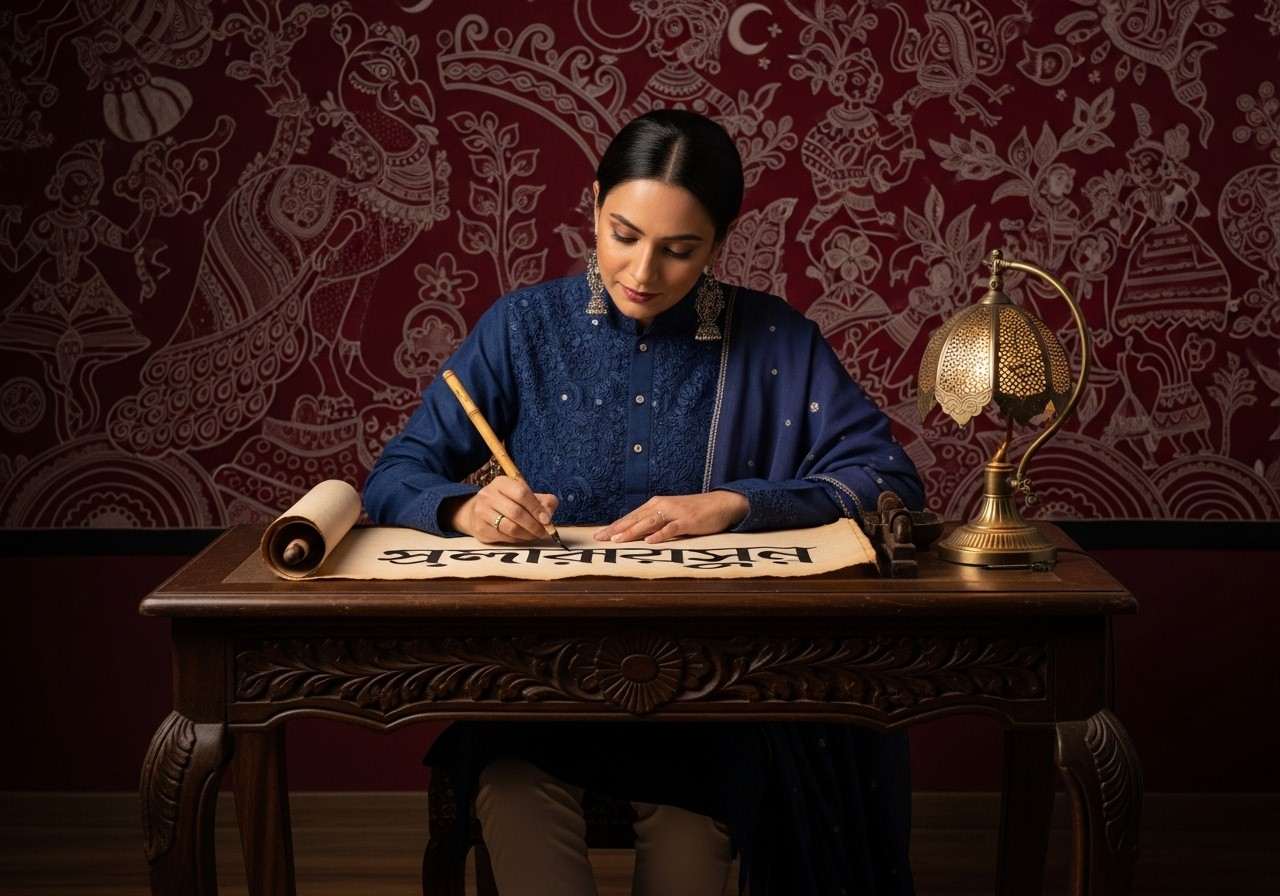
There is a saying that Bengali is the sweetest language in the world, filled with emotion, poetry, and a deep sense of heritage. For anyone looking to connect with the rich culture of West Bengal, Bangladesh, Tripura, or Assam, learning the Bangla Lipi (Bengali script) is the first beautiful step. It is not just about writing letters; it is about unlocking the doors to the works of Rabindranath Tagore, understanding the chants of Durga Puja, and feeling closer to your roots. Whether you are a non-resident Indian wanting to teach your children or a culture enthusiast, mastering the Bengali alphabet is a rewarding journey of patience and pride.
Understanding the Soul of the Script
To write Bengali, one must first understand its structure. The script is an Abugida, meaning it is syllabic in nature. If you are familiar with other Indian scripts, you will find comfort here. The Bengali alphabet is closely related to the Devanagari script used in Hindi and Sanskrit. In fact, understanding the connection between these scripts can make your learning curve much smoother. For those who already know Hindi, we recommend checking our guide on Devanagari: A Simple Guide to Reading and Writing to see the similarities.
Currently, the standard Bengali alphabet consists of 12 vowels (known as Swarabarna) and 52 consonants (known as Byanjanbarna). Unlike English, where vowels are just letters, in Bengali, vowels can live independently or turn into ‘Matras’—diacritic marks that attach to consonants to change their sound. This intricate combination is what gives the language its melodic flow.
Proven Methods to Start Your Journey
Learning a new script can feel overwhelming, but generations of Bengali children have started with a simple, effective book called “Adarsha Lipi”. This primer is the gold standard for beginners, teaching not just the alphabet but also numerals and simple words. However, if you are an adult learner, you might want to try these modern techniques:
-
Use Mnemonics and Visualization:
Connect the shape of the letter to a real-world object to memorize it faster. For example, the letter অ (aw) looks a bit like an upside-down umbrella—you can tell yourself, “Aw, I forgot my umbrella!” Similarly, ই (i) resembles a candle with a flame, helping you remember “ignite.” These small mental stories make the abstract shapes stick in your memory. -
Start with Transliteration:
If your immediate goal is to speak or understand basic phrases, don’t shy away from using transliterated text (Bengali written in English letters). This bridges the gap, allowing you to learn vocabulary while your hand gets used to the script. Eventually, you should aim to transition entirely to the Bangla script. -
Digital Tools and Apps:
In this digital age, you have help at your fingertips. Apps like the Ling App offer finger-tracing features that simulate writing on paper. Additionally, YouTube channels like “Talking Bees” provide excellent visual guides on pronunciation and stroke order. You can also use Google Input Tools to practice typing, which reinforces character recognition.
The Art of Handwriting: Tracing and Practice
Writing Bengali is an art form. It requires fluid, curvy strokes that hang from a distinct horizontal line, known as the matra. To achieve good handwriting, do not rush. Start with pencil sketches on lined paper to maintain uniform size. Focus on the vowels first, as they are the foundation. Once you are comfortable, move to the consonants.
Using tracing worksheets is highly recommended. These sheets guide your hand through the correct stroke sequence—showing you where to start a loop and where to end a line. This builds muscle memory, which is essential for fluency. Don’t just write in isolation; try to form simple words. Connecting letters helps you understand how the shape changes slightly when combined.
Deepening the Cultural Connection
At Poojn.in, we believe that holding a physical book or a ritual item brings you closer to the divine and your heritage. As you learn the script, your goal might be to eventually read religious texts in their original language. Imagine the joy of reading the Durga Pooja Book in Bengali during the festivities. Being able to recite the mantras by reading the script yourself adds a layer of spiritual satisfaction that transliteration simply cannot provide.
Furthermore, understanding the history of these letters makes the process fascinating. The Bengali script originated from the ancient Brahmi script. If you are a history buff, you might enjoy our article on the Evolution and Origins of the Brahmi Script. Seeing how ancient symbols evolved into the modern Bengali letters you are learning today gives you a profound sense of continuity. You can also explore our beginner’s guide on Learning Brahmi Script to broaden your linguistic horizons.
Common Queries for Learners
How can I learn easily without a tutor?
Self-study is entirely possible with dedication. Start by familiarizing yourself with the basic strokes—loops, straight lines, and curves. Using resources like the “Adarsha Lipi” book or free online tracing worksheets allows you to practice at your own pace. Consistently writing a few letters every day is more effective than cramming once a week.
What are the most common mistakes to avoid?
Many beginners rush through the vowels to get to the consonants, but vowels are crucial for grammar and pronunciation. Another common mistake is relying too heavily on English romanization for too long. While helpful initially, it can become a crutch. Also, never underestimate the power of handwriting; typing is useful, but writing by hand reinforces memory much stronger.
How long does it take to become fluent?
This varies from person to person, but with regular daily practice (about 20-30 minutes), you can expect to be comfortable reading and writing basic Bengali sentences within a few weeks. The key is spaced repetition—using flashcards or apps to test yourself on characters you learned a few days ago.
Why is the script important for cultural events?
Writing and reading Bengali allows you to participate fully in rituals. From reading wedding invitations to understanding the lyrics of Rabindra Sangeet, the script is the vessel of the culture. It fosters a sense of belonging and pride, ensuring that these beautiful traditions are passed down to the next generation.
At Poojn.in, we are honored to be a part of your cultural journey. While we do not offer language classes, we take pride in providing the authentic cultural artifacts and books that make your learning and spiritual practice complete. Keep practicing, and soon the beautiful curves of the Bengali alphabet will feel like second nature to you.