


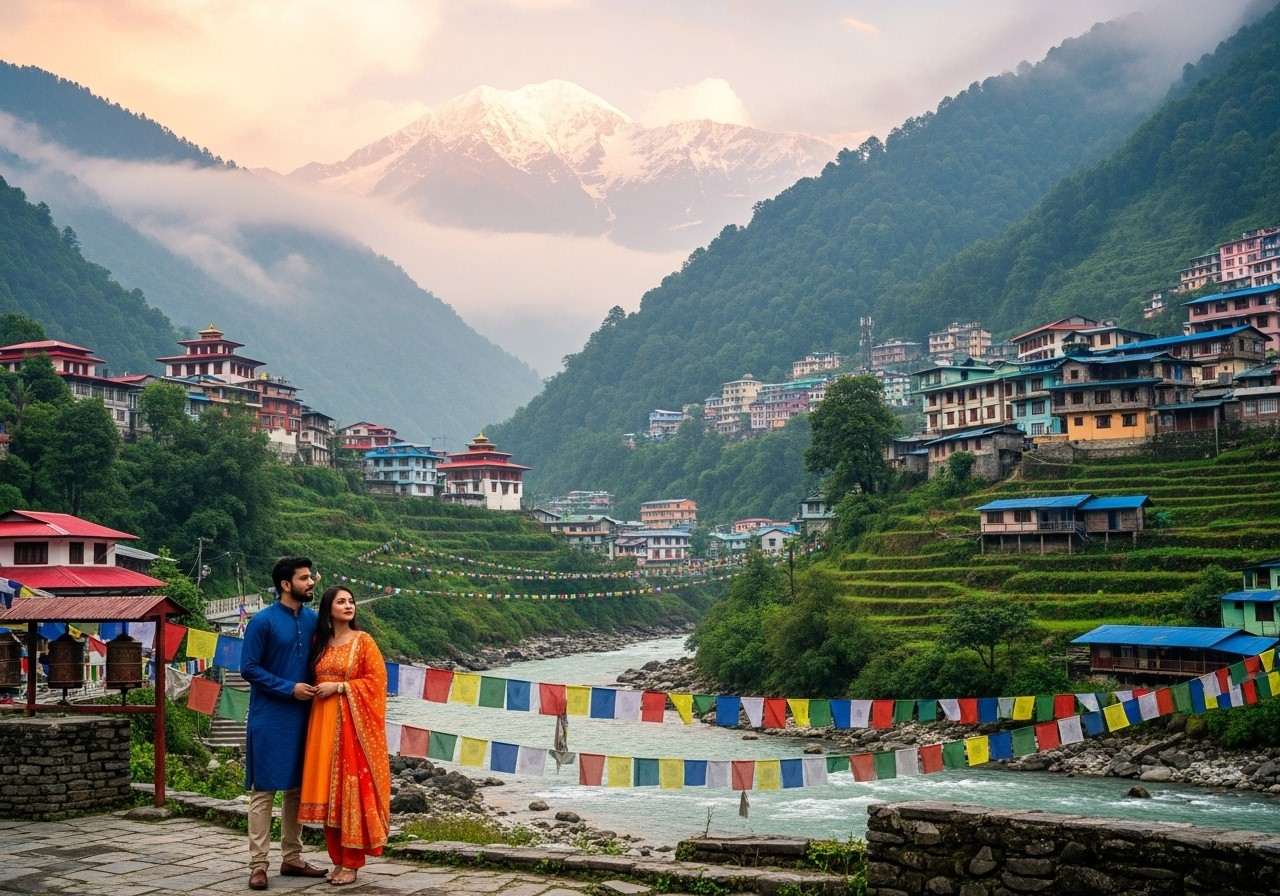
Namaste and welcome to the heart of the Himalayas. When we talk about finding sukoon (peace) amidst the mountains, one name that instantly warms our hearts is Gangtok. As we step into 2026, this vibrant city continues to shine as the capital of Sikkim, offering a blend of modern comfort and deep-rooted traditions that appeals to every Indian soul.
Whether you are a devout pilgrim seeking blessings at the monasteries or a family looking to escape the city heat, understanding the lay of the land is the first step. At Poojn.in, we believe that every journey is a spiritual experience, and knowing the details of your destination ensures a hassle-free yatra.
Where exactly is Gangtok? (Location and Geography)
Situated in the eastern Himalayan range, Gangtok is more than just a hill station; it is a strategic jewel of North East India. Geographically, it sits nestled near the crucial borders of Tibet (China), Bhutan, and Nepal, making it a culturally diverse melting pot. The name “Gangtok” itself translates to “Top of the Hill,” a fitting description for a city that offers panoramic views of the mighty Kanchenjunga.
For those interested in the deeper stories of this region, you can read more about Sikkim’s rich history and culture to understand how the Chogyal monarchs shaped this land before it became an integral part of India in 1975.
Understanding the Altitude and Weather
One of the most common concerns for our elders and families traveling to the hills is the height. Gangtok stands at an elevation of approximately 1,650 meters (5,410 feet). While this provides a pleasant, subtropical highland climate, it is significantly lower than some of the harsher pilgrimages in the North.
For comparison, if you have researched the Vishnuprayag journey altitude or the conditions at the Gangotri Temple, you will find Gangtok much milder and easier to acclimatize to. The weather here in 2026 remains predictable—mild summers perfect for sightseeing, and cool winters that call for warm woolens and hot tea.
Cultural Heritage and Spiritual Vibes
Gangtok is a sanctuary of spirituality. The city rose to prominence as a Buddhist pilgrimage site after the construction of the Enchey Monastery in 1840. Today, the air here is filled with the chanting of monks and the fluttering of prayer flags. The population, hovering around 100,000 people, is a harmonious mix of Bhutias, Lepchas, Indian Gorkhas, and communities from across India living together with mutual respect.
As you prepare for your spiritual journey or daily puja at home, purity is paramount. At Poojn.in, we understand the importance of authentic ritual items. Enhance your auspicious occasions with our Mahatirtha Alta, a symbol of grace and tradition for every Indian household. Visit poojn.in to bring the sanctity of the temple to your home.
Key Facts for the 2026 Traveler
Before you pack your bags, here are some essential facts that make Gangtok unique among Indian cities:
-
A Clean and Green City:
Gangtok takes cleanliness very seriously. It has been a plastic-free zone since 1997. As responsible visitors, we must respect this by avoiding single-use plastics. Furthermore, smoking is strictly banned in public places, ensuring the mountain air remains pure for everyone. -
Connectivity and Access:
The primary mode of travel is by road. The nearest airport is in Bagdogra (West Bengal), about 120 km (75 miles) away. For those taking the train, the nearest major railhead is in Siliguri/New Jalpaiguri, roughly 110 km (70 miles) away. The drive up is scenic, winding through the lush Teesta valley. -
Capital Status:
Gangtok became the capital of Sikkim in 1894. Even after Sikkim was absorbed into India in 1975, Gangtok remained the administrative and cultural headquarters, driving the state’s development in tourism and education.
Common Questions Answered for Your Peace of Mind
We often receive queries from our community members who are planning their trips. Instead of a dry list, let us address these concerns directly.
Many people ask when is the best time to visit? The ideal window is generally from March to June for pleasant weather, and September to December for crystal-clear views of the Himalayas. Monsoon months can be tricky due to landslides, so plan accordingly.
Another frequent question revolves around safety and culture. Gangtok is incredibly safe for tourists, known for its warm hospitality. The locals are helpful, but they deeply value their traditions. It is always good practice to dress modestly when visiting monasteries and ask for permission before taking photos of the locals.
While Poojn.in does not offer travel bookings or VIP darshan tickets, we are your trusted partner for all the cultural goods you might need before or after your trip. From authentic incense to sacred threads, our online store ensures you stay connected to your roots. Explore our exclusive collection today at poojn.in.
Final Thoughts
Gangtok is not just a destination; it is an emotion. It is where the clouds come down to greet the hills, and where the hustle of modern life fades into the chanting of mantras. whether you are there for the views, the momos, or the monasteries, this city welcomes you with open arms. Plan well, respect the local laws, and carry the spirit of India with you.