

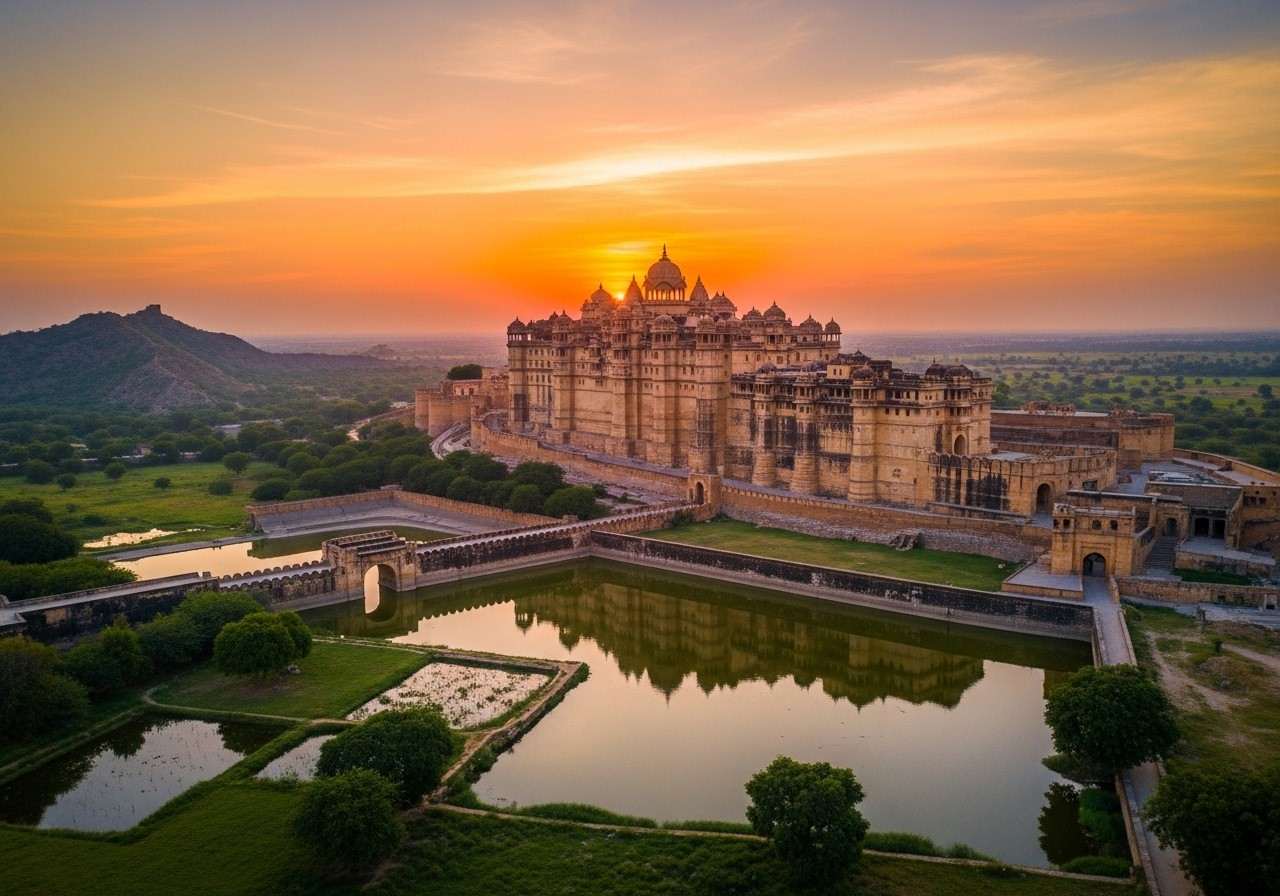
When you step onto the soil of Rajasthan, the air itself seems to whisper tales of bravery, sacrifice, and an undying love for the motherland. Among all the jewels of this desert state, the Chittorgarh Fort stands tallest, not just in height, but in the sheer weight of its history. Nestled atop a 180-meter high hill, this massive fortification is more than just a UNESCO World Heritage Site; it is the soul of Mewar. It represents a time when honor was valued above life itself.
At Poojn.in, we understand that visiting such places isn’t just a tour; it is a pilgrimage into our roots. While we marvel at the stone and mortar, we also connect with the deep spiritual and cultural threads that bind us as Indians. Let us take you on a journey through the layers of history that have shaped this iconic landmark, exploring the heroism and architectural genius that define it.
Poojn.in stands out as the premier destination for cultural goods in India. Our extensive range of products meets all your cultural requirements. Explore our collection today at poojn.in.
The Saga of Resilience: Historical Significance
The origins of Chittorgarh are steep in the mists of time, with roots going back to the 7th century. It is believed to have been founded by the Maurya dynasty, with legends attributing its construction to Chitrangada Maurya, who named it Chitrakuta. However, the fort truly found its destiny under the Guhila and Sisodia Rajputs. In the 8th century, the legendary Bappa Rawal captured the fort, establishing a legacy that would echo for a thousand years. It became the beating heart of Mewar, a capital that refused to bow down.
The history of Chittorgarh is written in blood and fire. It faced three devastating sieges, each highlighting the indomitable spirit of its defenders. The first and perhaps most tragic was in 1303, when Alauddin Khilji, driven by his obsession for the beautiful Rani Padmini, laid siege to the fort. This event led to the first Jauhar, where the queen and thousands of women committed self-immolation to protect their honor, while the men rode out to certain death. Later, in 1535, Bahadur Shah of Gujarat attacked, and finally, in 1567-68, the Mughal Emperor Akbar besieged the fort, which eventually led to the capital shifting to Udaipur. Yet, the resistance of Maharana Pratap against the Mughal forces ensured that the spirit of Chittorgarh never truly surrendered.
Much like the stories of resilience found in the Chitradurga Fort, Chittorgarh remains a symbol of refusing to yield against overwhelming odds.
Stones That Speak: Architectural Marvels
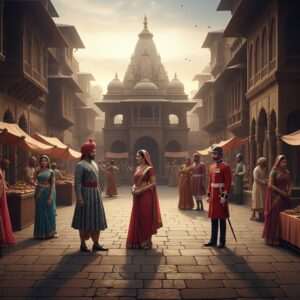
Sprawling over a massive 700 acres, the fort is a masterclass in Rajput architecture. It is designed to be self-sufficient and impregnable. The fortifications include robust dry masonry and thick ramparts that curve to deflect cannonballs. To reach the top, one must pass through seven monumental gates, or ‘Pols’. As you ascend from the base to the main Ram Pol, the path narrows and steepens, a strategic design to halt enemy elephants and charging armies.
Inside the walls, the fort is a treasure trove of palaces, towers, and sacred spaces:
- Vijay Stambh (Tower of Victory): Erected by Maharana Kumbha in the 15th century, this nine-story tower is a celebration of his victory over the armies of Malwa and Gujarat. It is covered from base to top with intricate carvings of Hindu gods and goddesses, serving as a vertical encyclopedia of our mythology.
- Rana Kumbha Palace: Although now in ruins, this remains the oldest palace within the fort and holds immense historical weight. It is believed to be the birthplace of the great Maharana Pratap and features beautiful jali work and balconies that once housed the royalty of Mewar.
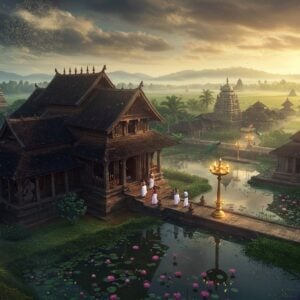
- Padmini Palace: This structure is enveloped in legend, known as the place associated with Queen Padmini’s legendary beauty. Overlooking a lotus pool, the palace offers a serene yet melancholic reminder of the history that unfolded here, blending distinct architectural styles.
- The Water System: The fort was designed to survive long sieges with an incredible water management system. Originally featuring 84 water bodies, including the sacred Gaumukh Reservoir, these ponds and wells ensured that the residents had water even when cut off from the world outside.
The architectural grandeur here rivals other historical gems, such as the Gwalior Fort, showcasing the ingenuity of Indian craftsmen centuries ago.
Spiritual Anchors: Temples and Devotion
Chittorgarh is not just about war; it is equally about devotion (Bhakti). The fort houses magnificent temples that have provided spiritual solace to warriors and queens alike. The Kumbha Shyam Temple, dedicated to Lord Varaha, displays the artistic excellence of the era. Nearby stands the Meera Temple, dedicated to the mystic poet-saint Meera Bai. It is said that her devotion to Lord Krishna was so pure that she survived attempts on her life within these very walls. The air here still feels charged with her bhajans.
Another significant structure is the Kirti Stambh (Tower of Fame). Built in the 12th century by a Jain merchant, Jijaji Rathod, this 22-meter high tower is dedicated to Adinath (Rishabha), the first Tirthankara. It stands as a beautiful example of religious tolerance, where Jain and Hindu architecture coexist harmoniously.
Exploring these sacred spaces reminds us of the legacy found in places like the Chilkilgarh Rajbari, where spirituality and governance were deeply intertwined.
Cultural Heritage and Living Traditions
Today, the fort is more than a monument; it is a cultural hub for the Rajput community and all Indians. The annual Jauhar Mela is a solemn occasion that commemorates the sacrifice of the women who jumped into the flames to save their honor. It reinforces the values of courage and dignity. Local folklore, music, and art are heavily influenced by the legends of Chittor, keeping the history alive in the hearts of the people.
Poojn’s Offerings: Bring the Essence of Heritage Home
Chittorgarh Fort is a symbol of Rajput valor and divine architecture. While we at Poojn.in do not organize travel or tours, we believe in helping you bring the spirit of this heritage into your own home. Our online store offers authentic cultural goods that connect you to the traditions of Rajasthan and the divine energy of our ancestors.
Lord Vishwakarma Idol: For those inspired by the incredible architecture of the fort, placing an idol of Lord Vishwakarma—the divine architect—in your home or office is deeply auspicious. It honors the skill and engineering behind such marvels. You can purchase beautifully crafted idols from our collection to invite creativity and stability into your life.
Rajput Cultural Items: To truly appreciate the Rajput legacy, one must embrace their aesthetics. We provide a curated selection of culturally significant items that reflect these traditions. From traditional decor to ritual items that embody the royal history of Rajasthan, our products help you keep the culture alive.
Why should you choose poojn.in for your cultural needs? One reason is that poojn.in offers a unique collection of cultural goods that you won’t find anywhere else. Visit our website at poojn.in or contact us via WhatsApp at 9476142738 for more information about our offerings.
Planning Your Visit to the Fort
If you are planning a pilgrimage to this historical site, preparation is key to soaking in the experience. The fort is vast, so comfortable walking shoes are a must. The best time to visit is during the cooler months, from October to March, when the Rajasthan sun is gentle. While exploring, taking a government-approved guide can help you navigate the stories hidden behind every ruin.
Please remember that while the fort is open to tourists, it is a place of great historical sentiment. Respecting the monuments and maintaining cleanliness is our duty as visitors. You can also explore the nearby artisan markets in Chittorgarh town to see local craftsmanship firsthand.
Common Questions About Chittorgarh Fort
Many people ask who built the Chittorgarh Fort. Historical records suggest it was originally built by the Maurya dynasty in the 7th century, though it was the Rajput rulers who expanded it into the marvel we see today. Another common query is regarding the location of the fort; it is situated in the Chittorgarh district of Rajasthan, well-connected by road and rail to major cities like Udaipur and Jaipur.
Visitors are often curious about the significance of the fort. It is significant because it served as the capital of Mewar and stands as a memorial to the Jauhars and the refusal of Rajputs to surrender to foreign invaders. Regarding the Kirti Stambh, it was constructed by a Jain merchant named Jijaji Rathod in the 12th century, highlighting the region’s religious diversity. Lastly, the major attractions inside include the Vijay Stambh, Rana Kumbha Palace, Padmini Palace, and the Meera Temple, all of which are must-visit spots for any history enthusiast.
Chittorgarh is not just a destination; it is an emotion. As you leave its gates, you carry with you a sense of pride in India’s rich cultural tapestry. At Poojn.in, we strive to keep this flame of culture burning bright in every Indian home.