

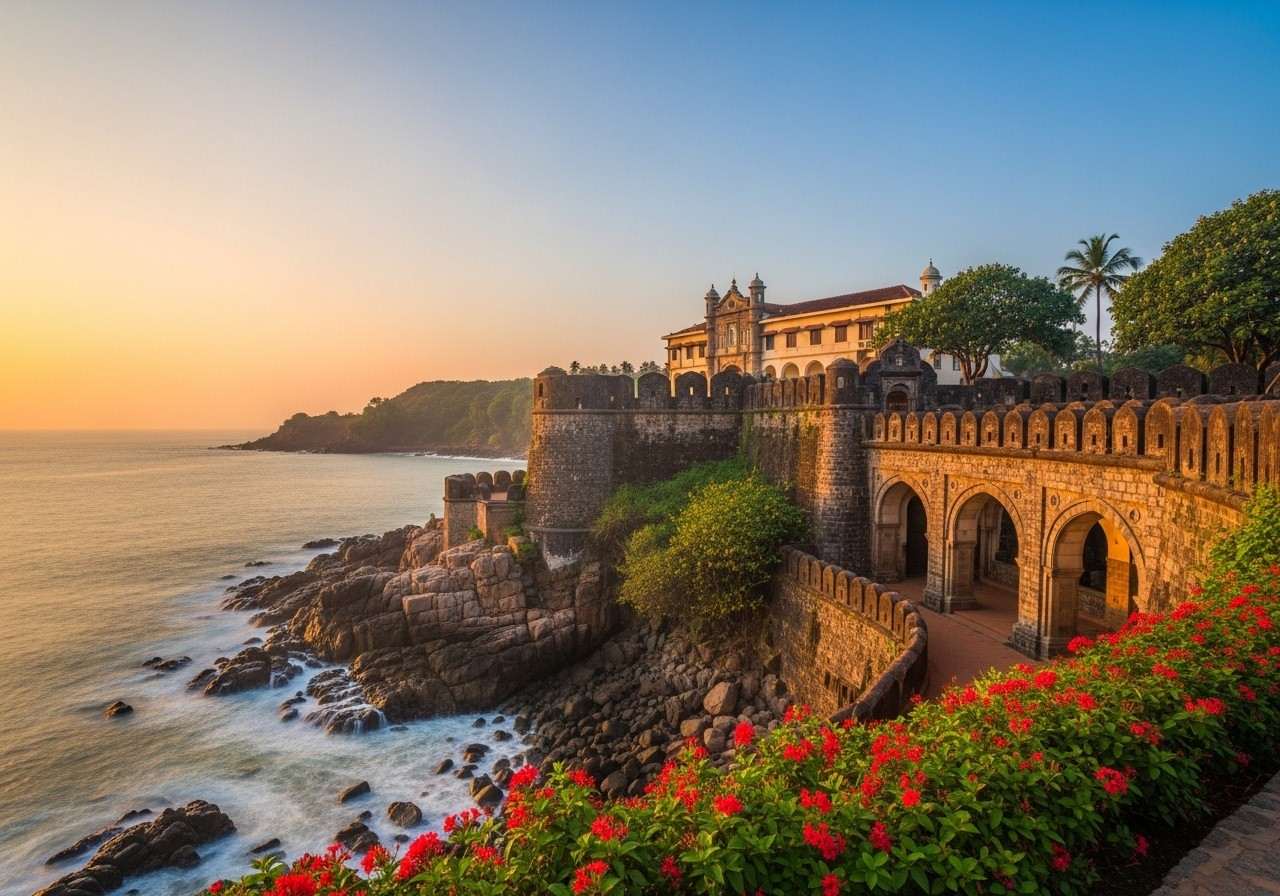
When we think of Goa, our minds immediately paint a picture of sun-kissed beaches, swaying palms, and vibrant nightlife. But what if I told you there’s another side to Goa? A side that whispers tales of courage, conquest, and a rich history that is etched into the very stones of its magnificent forts. For those of us who cherish our culture and history, exploring these ancient sentinels is like a journey back in time, far away from the bustling tourist spots.
These are not just old buildings; they are the proud remnants of a bygone era, telling stories of Goa’s Portuguese colonial past. Let’s step away from the shoreline and walk through the corridors of history together.
A Journey Through Time: Goa’s Most Majestic Forts
Each fort in Goa has a unique personality and a story to share. They were the nerve centres of defence and power, built by rulers long before and during the Portuguese era. Standing on their ramparts, you can almost feel the echoes of the past.
Fort Aguada: The Guardian on the Sea
Built between 1609 and 1612, Fort Aguada is a testament to brilliant Portuguese engineering. Its primary purpose was to protect Old Goa from the attacks of the Dutch and the Marathas. Imagine the relief of sailors who, after a long voyage, would spot its lighthouse, a beacon of safety. The fort even housed a massive freshwater spring (‘Agua’ is Portuguese for water), which gave it its name and supplied passing ships.
Cabo de Rama Fort: Where Legend Meets History
The history of this fort goes back even further, into the realm of our epics. It is named after Lord Rama, who is believed to have stayed here with Sita and Lakshmana during their exile. The Portuguese later captured and rebuilt it in 1763. Standing here, overlooking the vast ocean, you feel a deep connection to both mythology and recorded history, a truly special experience.
Chapora Fort: The Icon of a Generation
Many of us know this fort from the iconic movie “Dil Chahta Hai,” but its history is far older and more significant. Built by the Portuguese in 1510, Chapora Fort offered a commanding view of the sea, crucial for defending their new colony. Today, while it’s famous for its stunning panoramic views, it’s also a powerful reminder of Goa’s strategic importance centuries ago.
More Jewels in Goa’s Historical Crown
Beyond the famous names, there are other forts that hold incredible stories, waiting to be discovered.
- Fort Terekhol: This beautiful fort has seen a dramatic history. Originally built by the Raja of Sawantwadi in the 17th century, it was captured by the Portuguese in 1764. Today, it has been transformed into a lovely heritage hotel, allowing you to literally live within the pages of history while enjoying serene views.
- Reis Magos Fort: Constructed in 1551, this was one of the first lines of defence for Goa, strategically placed to prevent any invasion through the Mandovi River. After years of neglect, it has been beautifully restored and now serves as a cultural centre, keeping its historical spirit alive for all of us to experience.
- Rachol and Colvale Forts: These lesser-known forts are hidden gems. The Portuguese took Rachol Fort from the great Vijayanagar Empire in 1520, marking a significant power shift. Colvale Fort, built in 1681, quietly stands guard on the Bardez River, offering a peaceful and profound connection to Goa’s layered past.
More Than Just Walls: The Portuguese Soul of Goa
Exploring these strongholds reveals a fascinating blend of Portuguese and Indian architectural styles. They are living museums that showcase the battles, the trade routes, and the cultural fusion that defined colonial Goa. The influence is everywhere—from the chapels built within the fort walls to the unique design elements that tell a story of two worlds meeting.
Connecting with History with a Touch of Tradition
Standing in these timeless places, a sense of deep respect often fills the heart. It’s a moment to pause and reflect on the history that unfolded right where you stand. Many visitors feel a natural urge to light a diya or a fragrant agarbatti, not as a ritual, but as a simple, heartfelt gesture to honour the past.
If you feel a similar calling to create a moment of peace, our collection at poojn.in can help. For instance, our handcrafted natural incense sticks are perfect for creating a serene atmosphere. You can explore our authentic and pure pooja items by visiting us at poojn.in or by contacting us at 03369029784. For quick help, our WhatsApp number is 9476142738.
Answering Your Curiosities about Goa’s Heritage
Many people have questions when they start to explore this side of Goa. Let’s talk about some of them.
The Deeper Meaning of Goa’s Forts
You might wonder what makes these old forts so special. They are far more than just tourist spots. They are the keepers of Goa’s identity, representing its resilience, strategic brilliance, and the complex history of cultural exchange during the Portuguese era. They give us a tangible link to the stories that shaped the Goa we know today.
The Portuguese Echo in Modern Goa
The influence of the Portuguese colonial period is still very much alive in Goa. You can see it in the beautiful churches standing shoulder-to-shoulder with temples, taste it in the unique Vindaloo curry, and hear it in the local Konkani language, which has borrowed many Portuguese words. The forts are the most dramatic and visible symbols of this enduring legacy.
Planning Your Historical Trip
If you’re wondering where to start, Fort Aguada, Chapora Fort, and Reis Magos Fort are absolute must-visits. Each offers a different experience – Aguada for its grandeur, Chapora for its views, and Reis Magos for its beautifully restored heritage. Hiring a local guide can make the experience even richer, as they share stories and legends that you won’t find in any book.
A Different Goa is Waiting for You
So, the next time you plan a trip to Goa, we invite you to look beyond the waves and the sand. A whole world of history, courage, and culture is waiting for you in the silent, strong forts that dot its landscape. This journey will not only give you beautiful pictures but also a deeper appreciation for the incredible tapestry that is Indian history.