


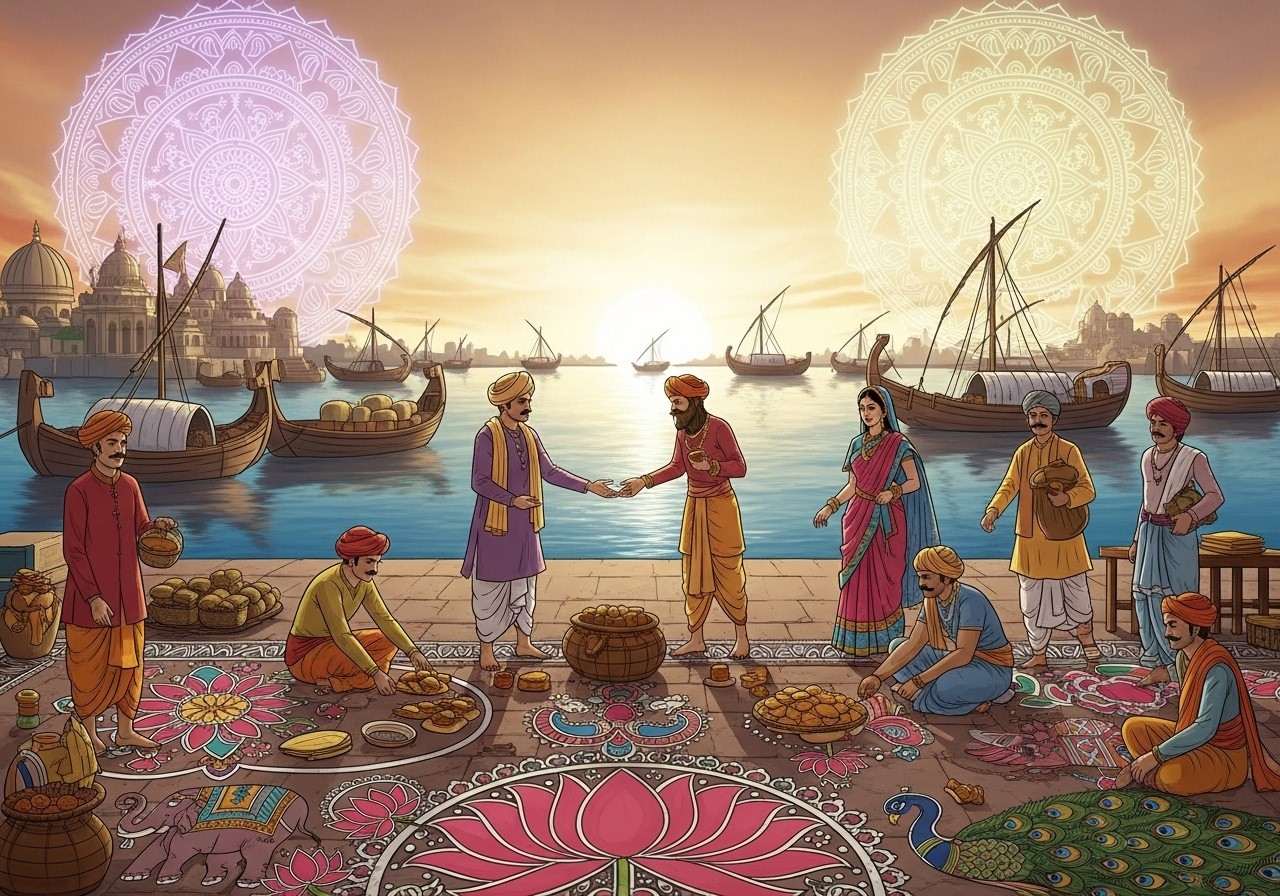
Imagine travelling back in time, not just by years, but by millennia. Picture a bustling port town on the coast of Gujarat, where the air is thick with the scent of spices and the sea. This was Kuntasi, a vibrant hub of commerce during the great Indus Valley Civilization. More than just a dot on an ancient map, Kuntasi was a thriving heart of trade, a place where cultures met and stories were exchanged on the tides. Let’s journey together to uncover the fascinating tale of this ancient gem and see how its legacy continues to echo in our lives today.
The Bustling Marketplace of the Ancient World
Between 2200 and 1700 BCE, Kuntasi was one of ancient India’s most important commercial centres. Its location was a masterstroke of planning – nestled near the Gulf of Kutch on the Phulki River, it had direct access to the Arabian Sea. This wasn’t just a town; it was a gateway, connecting the rich Harappan civilization with distant lands like Mesopotamia and the Gulf countries. Ships would set sail from its docks, laden with goods that were prized across the ancient world.
The historical significance of Kuntasi is immense because it offers a precious window into the sophisticated trade networks of our ancestors. It shows us that India has always been a land of enterprise and global connection.
Treasures That Sailed the Seas
Kuntasi wasn’t merely a trading post; it was a powerful manufacturing centre. Artisans here were busy creating beautiful and valuable items. What did they trade?
- Exports from Kuntasi: The town was famous for its exquisite beads, intricate pottery, items made of copper and shell, and polished stones like agate and carnelian. One of its most significant exports was Lapis Lazuli, a stunning blue stone that was in high demand in places like Mesopotamia.
- Imports to Kuntasi: In return, ships brought back precious materials not easily found locally. This included more Lapis Lazuli from regions like modern-day Afghanistan, and valuable metals such as gold and lead, which fuelled the local economy and craftsmanship.
A Town Designed for Trade, Not Kings
When archaeologists began to study Kuntasi’s origins, they discovered something unique. Unlike many other Harappan cities that were built around a grand citadel for rulers, Kuntasi was designed purely for business. Its very layout speaks of its commercial soul.
The town was protected by strong double walls, ensuring the safety of the valuable goods within. A large stone platform served as a jetty for loading and unloading cargo, and there were dedicated complexes filled with workshops and spacious warehouses. This practical, business-first infrastructure is one of the most significant archaeological findings at Kuntasi, telling us that commerce was the lifeblood of this community.
Connecting with Our Glorious Past Today
The story of Kuntasi is not just a chapter in a history book; it is a part of our living heritage. It reminds us of a time when our ancestors were masters of trade, art, and city planning. This enduring legacy enriches our cultural identity and adds to the incredible tapestry of Gujarat’s and India’s history.
While we may not be able to visit the bustling port of Kuntasi as it was, we can still connect with the spirit of that era. Understanding our roots is a way of honouring the traditions that have been passed down through generations. For those who wish to delve deeper into our rich past and bring a piece of that heritage into their lives, poojn.in is here to help.
At poojn.in, we believe in preserving the essence of our culture. You can explore a curated collection of books that illuminate the history of sites like Kuntasi and the Indus Valley Civilization.
To truly feel connected to our traditions, you can explore authentic items that reflect our rich heritage. For ceremonies and rituals inspired by age-old practices, we offer a wide variety of genuine pooja samagri and traditional artifacts, all available with the convenience of online shopping. We ensure every product is rooted in authenticity, helping you keep traditions alive.
For any assistance or to explore our collections, feel free to call us at 03369029784 or send a message on WhatsApp at 9476142738.
The Fading of a Great Port and Its Lasting Echoes
Like many great cities of the past, Kuntasi also saw pivotal moments that led to its decline around 1900 BCE. This was part of a larger shift happening across the Harappan civilization, possibly due to changing climate and shifting trade routes. The once-thriving port fell silent and was eventually abandoned, its secrets buried under layers of earth for centuries.
But a comprehensive analysis of Kuntasi, through modern archaeological work, has brought its story back to life. Every piece of pottery, every bead, and every seal found here helps us piece together the puzzle of our ancient world. Kuntasi’s rich history impacts us today by offering invaluable lessons about resilience, innovation, and the interconnectedness of human societies. It reminds us that while empires may fall, the spirit of culture and connection endures.