

Imagine walking through a city where every street corner whispers tales of a glorious past, where the air smells of sandalwood, and the skyline is punctuated by domes and spires. Welcome to Mysore (Mysuru), the cultural heartbeat of Karnataka. While many know it as the “City of Palaces,” the true essence of Mysore lies in the visionary leadership of its rulers, the Wadiyar dynasty. Their influence wasn’t just about building grand monuments; it was about laying the foundation for a modern, progressive society that we see today.
For us Indians, heritage is not just history; it is a way of life. At Poojn.in, we celebrate this deep connection to our roots, helping you keep these traditions alive in your own home.
The Visionaries: The Wadiyar Dynasty
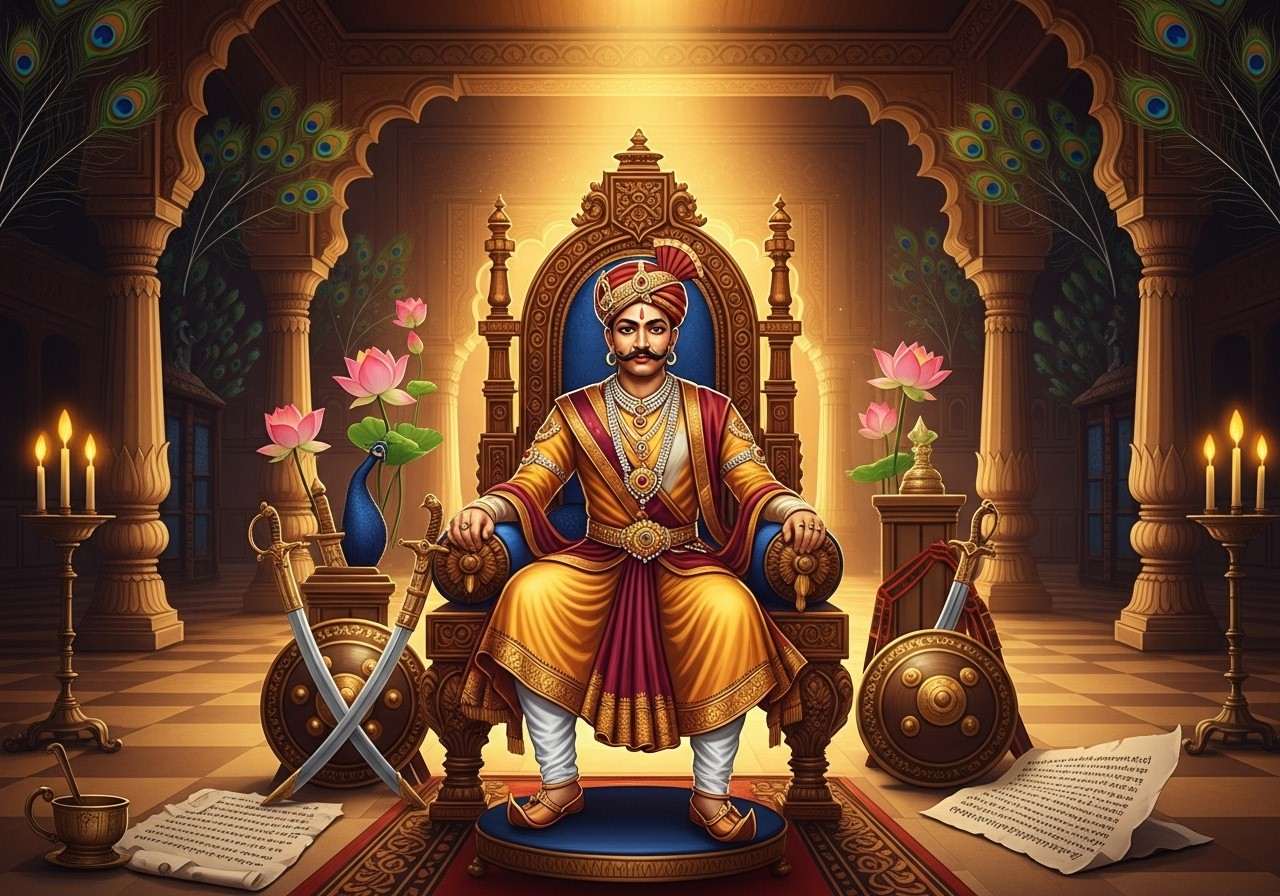
The history of Mysore is inseparable from the Wadiyar dynasty. Their reign was not merely about power but about Dharma and development. The Maharajas were great patrons of the arts, leading to the evolution of the distinct “Mysuru Style” in painting, architecture, and music. Under their patronage, a new dimension was added to Kannada literature, with rulers like Raja Wodeyar and Chamaraja Wodeyar VI themselves being accomplished writers.
However, it was Maharaja Krishnaraja Wadiyar IV, often revered as ‘Rajarishi’ (Saintly King), who truly transformed the region. He saw Mysore not just as a kingdom to be ruled, but as a state to be modernized. His era is often described as the Golden Age of Mysore.
Architectural Grandeur and Urban Planning
When you visit Mysore, you are witnessing one of the earliest examples of structured urban planning in India. The Maharajas envisioned a city with wide roads, elegant parks, and magnificent drainage systems—luxuries that were rare in those times. The cityscape is defined by a beautiful blend of Indo-Saracenic, Dravidian, and Gothic styles.
landmarks like the Jaganmohan Palace, the stunning Lalitha Mahal Palace, and the gothic beauty of St. Philomena’s Church stand as testaments to this era. Of course, the crown jewel remains the Mysore Palace, a structure that captures the imagination of the world.
Pioneering Infrastructure and Industry
It is often surprising to learn how technologically advanced the Kingdom of Mysore was. The Maharajas were pioneers who embraced science to improve the lives of their people. Did you know that Bangalore (Bengaluru) was the first city in India to get electric street lights? This happened way back in 1905, powered by the Hydro Electric Project at Shivanasamudra Falls, established in 1902.
Their contributions to agriculture were equally significant. The Vani Vilasa Sagara in Chitradurga, completed in 1907, was the first dam in Karnataka state, providing a lifeline to farmers. Furthermore, they established industries that became household names, such as the Sandalwood Oil Factory and the Mysore Sandal Soap industry. They also championed sericulture, making Mysore silk a global brand.
Speaking of authentic aromas, the tradition of sandalwood and incense is deeply rooted in our culture. You can bring that divine fragrance into your prayer room with our premium collection. Explore our range of authentic incense sticks at Poojn.in to experience the royal scent of tradition.
A Legacy of Education and Healthcare
The Wodeyars believed that true progress comes from knowledge. They supported and established prestigious institutions like Maharaja’s College in Mysore and the Maharaja’s Sanskrit School. Perhaps their most significant contribution to science was their support for the Indian Institute of Science (IISc) in Bangalore.
In healthcare, they were equally forward-thinking. The Minto Eye Hospital in Bangalore, established in 1903, stands as one of the world’s oldest specialized ophthalmology hospitals. Politically, they were ahead of their time as well; the Mysore Legislative Council was established in 1907 to involve citizens in the law-making process.
Living Traditions: Culture and Festivals
The cultural capital of Karnataka is most vibrant during the Dasara festival. Synonymous with Mysuru, this event was elevated by the Maharajas to a spectacular state festival that now attracts tourists from across the globe. It is a celebration of the victory of good over evil, a sentiment that resonates with every Indian household.
From the classical notes of Carnatic music to the rhythmic beats of Bharatanatyam, the royal court was a haven for artists. Today, Mysore remains a hub for sandalwood and rosewood artifacts, stone sculptures, and incense sticks.
Bring the Royal Tradition Home with Poojn.in
Poojn.in stands out as the premier destination for cultural goods in India, honoring the rich heritage left behind by the Maharajas. Our store offers a wide range of products that cater to all your ritual needs, reflecting the sanctity and grandeur of Indian traditions.
We provide authentic ritual items, including traditional pooja samagri, brass and copper vessels, and sacred powders that feel like they belong in a royal shrine. By choosing Poojn.in, you ensure that you use high-quality items that respect and preserve our cultural practices.
For those interested in hosting ceremonies or events inspired by this royal history, we provide convenient online shopping. Contact us at 03369029784 or via WhatsApp at 9476142738 for personalized assistance.
Common Questions About Mysore’s Royal Heritage
What defines the Majestic Legacy of Mysore?
The legacy is defined by the Wadiyar dynasty’s holistic contribution to culture, economy, and infrastructure. It is not just about the palaces but about creating a progressive state with advancements like the first hydroelectric project in 1902 and the establishment of institutions like the IISc.
How did the Maharajas influence modern Karnataka’s economy?
They laid the industrial foundation by establishing the Sandalwood Oil Factory, Bhadravathi Iron and Steel Industries, and promoting sericulture. Today, Mysuru has also emerged as a major IT hub, ranking second in the state for software exports, a testament to the progressive foundation laid decades ago.
Why is Mysore called the Cultural Capital?
Mysore is called the “Cultural Capital of Karnataka” because of its deep-rooted focus on the arts. The Wadiyars were patrons who helped evolve the “Mysuru Style” of art and architecture. The grand celebration of Dasara and the preservation of traditional crafts like silk weaving and sandalwood carving keep this title alive.
Are the contributions of the Maharajas still visible today?
Absolutely. Beyond the heritage structures, their legacy lives on in the dams that irrigate our fields (like Vani Vilasa Sagara), the hospitals that serve the sick (like Minto Eye Hospital), and the educational institutions that nurture young minds. The Mysore Legislative Council, established in 1907, was a precursor to modern democratic governance.
Where can I find products that reflect this traditional heritage?
For those who value authenticity, Poojn.in offers a unique collection of cultural goods. From incense to ritual vessels, we help you stay connected to these timeless traditions.
As you explore the story of Mysore, remember that it is a city where the past and present embrace. It is a reminder that our traditions are the roots that allow us to grow. Visit Poojn.in today to bring a piece of this majestic heritage into your home.