

Welcome to a journey through time, where spirituality meets architectural grandeur. Immerse yourself in the historical and spiritual essence of Multan, a city often whispered about in legends for its ancient mystique and rich cultural tapestry. Today, we invite you to discover the Tomb of Shah Rukn-e-Alam, a monument that stands not just as a structure of brick and wood, but as the beating heart of Multan’s spiritual legacy. For those of us who cherish our traditions and the stories of our ancestors, exploring the significance of this tomb offers a profound connection to a past that still breathes in the present.
The Deep-Rooted Historical Significance of Multan
Multan, affectionately known as the City of Saints (Madinat-ul-Auliya), holds a very special place in the spiritual geography of South Asia. It is not merely a location on a map; it is a pivotal center where religious scholarship and spiritual pilgrimage have thrived for centuries. The air here seems thick with devotion.
Historically, Multan served as a crucial bridge, a trade hub connecting the mysterious lands of Central Asia with the vibrant Indian subcontinent. This exchange enriched the city’s cultural diversity, layering it with influences from the Delhi Sultanate to the majestic Mughal era. Sufi traditions found fertile ground here, blossoming into a unique cultural environment where the divine and the earthly meet. Every alleyway and ancient stone in Multan tells a story of travelers, mystics, and kings who left their mark on this sacred land.
The Enduring Spiritual Legacy of Shah Rukn-e-Alam
At the center of this spiritual landscape stands the towering figure of Sheikh Rukn-ud-Din Abul Fateh, widely revered as Shah Rukn-e-Alam (1251–1335). His name beautifully translates to the “Pillar of the World,” a title bestowed upon him by the people for his tireless dedication to preaching peace and the ethos of Islam.
He was a distinguished Sufi saint of the Suhrawardiyya order and the grandson of the great Bahauddin Zakariya. His teachings continue to inspire generations, spreading a message of love and humanity that transcends borders. The spiritual practices and rituals associated with his legacy are still vibrantly alive today. Every year, during the ‘Urs’ festival which commemorates his death anniversary, the shrine attracts over 100,000 pilgrims. These devotees come seeking spiritual solace, believing that a prayer offered here carries a special weight.
A Masterpiece of Tughluq Architecture
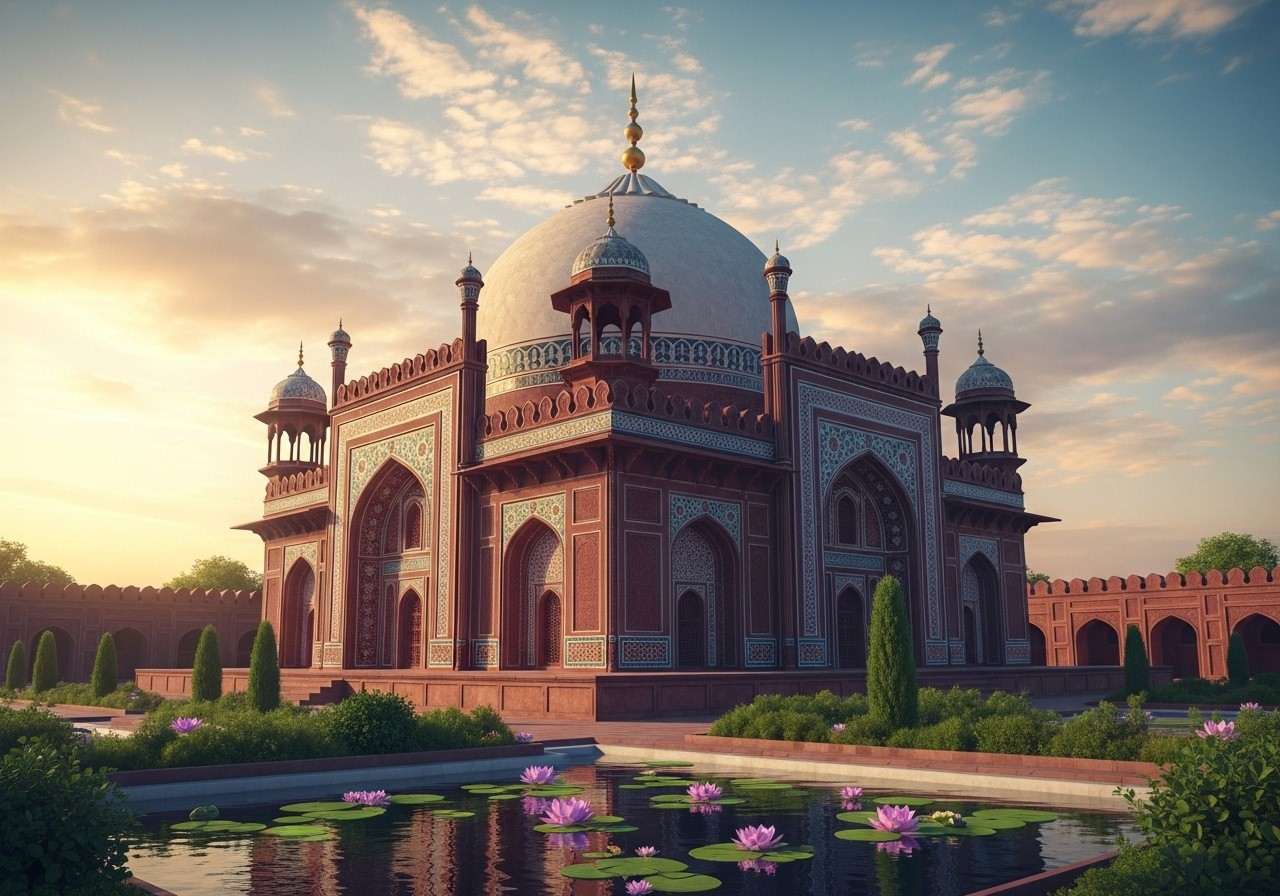
When you look at the Tomb of Shah Rukn-e-Alam, you are witnessing the earliest and perhaps the finest example of Tughluq architecture. It is a visual marvel that showcases unique architectural features, blending Persian, Islamic, and indigenous styles into a harmonious whole.
- Grand Construction and Origins: The tomb was constructed between 1320 and 1324 by Ghiyas-ud-Din Tughluq, the ruler of the Delhi Sultanate. Interestingly, it was originally intended as a royal mausoleum for the Tughluq family but was later gifted to the saint’s descendants, marking a shift from imperial pride to spiritual reverence.
- Structural Brilliance: Standing impressively at 35 meters (115 feet) tall, the tomb features a distinctive octagonal shape spread over three tiers. It is built using red brick reinforced with shisham wood beams, a clever ancient engineering technique that has helped the structure survive centuries of wear and seismic activity.
- Artistic Embellishments: The exterior is a feast for the eyes, adorned with intricate carved brickwork and stunning blue and white faience mosaic tiles. These geometric and floral patterns are not just decoration; they carry deep symbolism, representing the infinite nature of the divine.
Inside, the central chamber houses the sarcophagus of the saint, surrounded by the graves of 72 of his descendants. The interior is equally breathtaking, featuring an early carved wooden mihrab and walls adorned with Quranic verses and elaborate frescoes. Since 2004, it has been recognized as a UNESCO Tentative World Heritage Site, a testament to its global cultural value.
Multan’s Mystique and Cultural Heritage
The mystique of Multan is reflected in its skyline, dominated by spiritual monuments and a vibrant cultural heritage. It is a place where the past is always present. Historical sites, like the ancient Multan Fort where the tomb is situated on the northwestern edge, contribute to this allure. Local artisans continue to shape Multan’s identity, keeping traditional crafts and architectural embellishments alive.
Cultural festivals and rituals here are not just events; they are celebrations of a rich spiritual and historical heritage. The city attracts tourists, scholars, and historians from around the world, all eager to foster an appreciation for its deep-rooted legacy.
The Tomb as a Living Pilgrimage Site
For the faithful, the tomb serves as a significant pilgrimage site for those seeking spiritual enlightenment. Pilgrims observe time-honored rituals and practices, highlighting the tomb’s ongoing spiritual significance. The influx of visitors also positively impacts the local economy, keeping the bazaar buzzing with life. The tomb’s accessibility accommodates diverse cultural practices, ensuring everyone, regardless of their background, can experience its spiritual aura and find a moment of peace.
How Poojn.in Can Enhance Your Spiritual Connection
At Poojn.in, we understand that true spirituality is about the connection you feel, whether you are standing in a historic shrine in Multan or praying in the comfort of your own home in India. We are dedicated to helping you bridge that gap with authenticity.
Poojn.in offers authentic ritual items that can enhance your experience and bring a touch of that sacred mystique into your daily life. Our carefully curated selection includes premium items for prayer and meditation, such as pure incense sticks, camphor, and calming essential oils. These products help create a serene atmosphere, allowing you to connect more deeply with the spiritual essence of traditions like those of Shah Rukn-e-Alam.
If you are inspired by the rituals of the saints, you may want to perform traditional pujas at home. Poojn.in provides high-quality puja kits that include everything needed for a complete ritual. This ensures you have all the necessary shuddha (pure) items without the hassle of searching through multiple market stalls.
For those who value tradition and the convenience of modern life, Poojn.in offers easy online shopping with reliable delivery across India. You can trust our products to be genuine and effective in enhancing your spiritual journey.
For more information or to place an order, contact us at 03369029784 or Whatsapp 9476142738.
Embracing the Timeless Spirit
The Tomb of Shah Rukn-e-Alam is more than a monument; it is a living testament to a vibrant spirit and deep-rooted traditions. As you imagine walking through its sacred halls, you connect with generations of spiritual seekers who found solace there. This enduring site invites you to explore and appreciate the rich tapestry of culture and history. Let the mystique of the city and the wisdom of Shah Rukn-e-Alam inspire your journey, leaving you with a sense of peace and reverence for this timeless heritage.
Common Questions About the Tomb of Shah Rukn-e-Alam
Understanding the significance of this ancient site often leads to many questions. Here is what you need to know about Multan’s spiritual jewel.
What is the historical importance of the Tomb of Shah Rukn-e-Alam?
The tomb is a 14th-century mausoleum and the final resting place of the Sufi saint Shah Rukn-e-Alam. It is historically significant as the earliest masterpiece of Tughluq architecture and a symbol of Multan’s status as a spiritual center.
Why do people visit the tomb?
People visit primarily for spiritual blessings, especially during the ‘Urs’ festival. However, many also come to admire its exquisite architecture, intricate tile work, and to connect with the rich history of the region.
What makes the architecture of the tomb unique?
The tomb is unique for its octagonal plan, three-tiered structure, and the fusion of pre-Mughal, Islamic, and Persian styles. The use of red brick with wood beams for earthquake resistance is a marvel of medieval engineering.
Is the tomb recognized internationally?
Yes, due to its testimony to Islamic cultural traditions and architectural innovation, it has been listed as a UNESCO Tentative World Heritage Site since 2004.
When was the tomb built?
The construction of this majestic tomb took place between 1320 and 1324 AD, under the reign of the Tughluq dynasty.