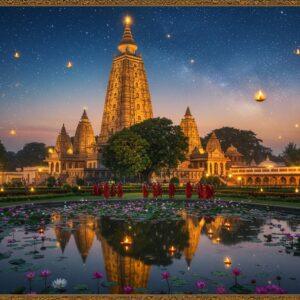


Nestled peacefully on the northern banks of the majestic Brahmaputra River, the Doul Govinda Temple is not just a structure of brick and mortar; it is the beating spiritual heart of North Guwahati. Standing tall at the foothills of the Chandra Bharati hill in Kamrup, this sacred abode of Lord Krishna serves as a beacon of hope and devotion for millions. For us Indians, a temple is more than a place of worship—it is where history, culture, and divine grace come together.
Whether you are a devout pilgrim or a history enthusiast, the layers of stories behind this temple, from the visionaries who built it to the miraculous discovery of the idol, offer a fascinating glimpse into Assam’s rich heritage. Let us take you on a journey to explore the legacy of the Doul Govinda Temple.
Tracing the Divine Roots: A Miraculous Discovery
The history of this temple is as enchanting as the rhythmic flow of the Brahmaputra nearby. The story takes us back to 1826, a time of great change. According to local legend, the sacred idol of Lord Krishna was not sculpted in a workshop but was discovered in the thick forests of Sandhyasar near Nalbari.
The tale goes that a Brahmin’s cow in the village of Jekeria would disappear into the forest every night. Mysteriously, it would stand over a specific birina tree and pour its milk. Witnessing this strange phenomenon, the curious villagers decided to dig the earth beneath that tree. To their astonishment, they unearthed a magnificent idol of the Lord. It was Gargaram Baruah, a man of great faith, who took the responsibility of bringing this idol to Rajaduar.
The Miracle of the Four Fingers
The temple got its unique name through a divine incident that is still whispered with awe among devotees. After the idol was installed, a grand festival was organized. However, confusion arose regarding which idol should be placed on the doul (the festival chariot or palanquin).
It is said that the newly discovered idol performed a miracle to clear the doubts of the devotees. The idol miraculously moved four fingers forward, signaling its wish to be placed on the chariot. Since that auspicious day, the deity has been lovingly worshipped as Doul Govinda. This event cemented the faith of the locals, proving that the Lord himself had chosen his abode.
Architectural Splendor: Where Tradition Meets Devotion
While the original structure was erected over 150 years ago, the temple we see today is a beautiful blend of ancient tradition and modern resilience. The builders and visionaries behind this temple ensured that it reflected the true essence of Assamese Vaishnavite tradition.
The temple complex includes a serene Monikut (sanctum sanctorum) where the Lord resides, and a spacious open hall for devotees to gather and sing kirtans. True to the region’s culture, there is also a Namghar, a traditional prayer hall that serves as a community space for spiritual discourse.
In 1966, the temple underwent a significant renovation to accommodate the growing number of pilgrims. The construction was successfully completed in 1970, not just by hired labor, but through the sewa (service) and contributions of the local people. Today, a dedicated committee of 25 members manages the affairs, ensuring the legacy of the builders lives on.
The temple comes alive particularly during Holi (Doul Utsav) in the months of February and March. During these days, the air in North Guwahati is thick with the fragrance of flowers and abir (colors), as thousands flock here to celebrate the festival of colors with their beloved Govinda.
How Poojn.in Can Enhance Your Spiritual Journey
Poojn.in stands out as the premier destination for cultural goods in India. We understand that a visit to a sacred site like Doul Govinda is incomplete without the proper offerings. Our store offers a wide range of products that cater to all your cultural and ritual needs. Visit poojn.in today to explore our collection.
Authentic Ritual Essentials for Your Visit
Poojn.in is your trusted source for authentic ritual items when planning your visit to the Doul Govinda Temple or performing a puja at home in its honor. We offer high-quality products that ensure your rituals are performed with the utmost sanctity:
- Fragrant Incense Sticks: Create a divine atmosphere during your prayers with our hand-rolled agarbattis that linger with a soothing aroma.
- Pure Camphor: Essential for the Mangal Aarti, our camphor burns without residue, symbolizing the burning of the ego before the Lord.
- Traditional Diya and Wicks: Light up your home or the temple premises with our brass diyas and pure cotton wicks.
- Gangajal (Holy Water): Sourced for purification rituals, ensuring your puja is performed with absolute purity.
Convenience at Your Fingertips
Why should you choose poojn.in for your cultural needs? One reason is that poojn.in offers a unique collection of cultural goods that you won’t find anywhere else. Enjoy the convenience of online shopping and browse through our extensive collection from the comfort of your home. Our user-friendly website makes it easy to find exactly what you need.
Contact Us: For any queries or assistance, feel free to contact us at 03369029784 or WhatsApp us at 9476142738. Our team is ready to help you with your needs.
Understanding the Temple: Common Questions Answered
For those planning a visit or wishing to know more, there are often many questions regarding the temple’s significance and history. Many devotees are curious about the origins of the temple. As mentioned in the scriptures and records, the history dates back to the early 19th century, with the significant discovery of the idol occurring in 1826. It stands as a testament to the devotion of the Assamese people.
People often ask about the builders and visionaries behind this structure. It wasn’t built by a single king but was a collaborative effort involving local patrons, the devotee Gargaram Baruah, and later, the community itself during the 1966 renovations. The legacy of these builders is evident in how the temple fosters community bonding today.
If you are wondering about the best time to visit, while the temple is open year-round, the atmosphere is electric during the Doul Utsav (Holi). This is when the cultural significance of the temple is at its peak, with vibrant processions and religious fervor. The temple’s architecture, with its open halls and intricate designs, reflects the welcoming nature of the Assamese culture, inviting everyone to partake in the divine joy.
Embracing the Timeless Legacy
The Doul Govinda Temple is more than just a destination; it is an experience of peace and cultural pride. It stands as a guardian of the Assamese Vaishnavite identity, bridging the gap between the past and the present. As you step onto its holy grounds, you are not just visiting a tourist spot; you are walking in the footsteps of visionaries and devotees who have kept the flame of faith burning for over a century.
We invite you to immerse yourself in this spiritual journey, seek the blessings of Lord Krishna, and carry a piece of this timeless heritage back home with you.