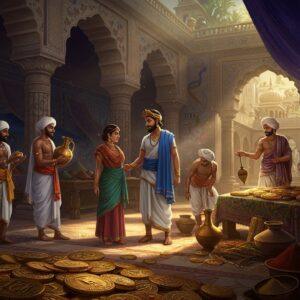



India is a land of endless stories, where every stone and hill has a tale to tell. Yet, amidst the popular tourist trails, there are places that quietly guard their glorious past, waiting for the true connoisseur of culture to discover them. Sandur State, nestled comfortably in the Bellary district of Karnataka, is one such hidden gem. For those of us who hold our traditions close to our hearts and seek authenticity in a rapidly changing world, the untold history of Sandur offers a profound connection to our roots. It is not just a geographical location; it is a living memory of resilience, royalty, and dharma.
The Royal Lineage and Historical Tapestry
To truly understand the soul of this region, we must look back at its origins. The history of Sandur is not merely a record of dates but a saga of valor. Sandur State was established in 1713 by the visionary Shrimant Sidalji Ghorpade, a Maratha nobleman whose family lineage traces back to Karnasinh, a Sisodia Rajput. This unique blend of Maratha and Rajput heritage gave Sandur a distinct martial and cultural identity that stood the test of time.
The journey of this state was not without its trials. In the late 18th century, the region saw turbulent times, with control fluctuating between the powerful Mysore Kingdom (1776-1790) and the expansive Maratha Dominions. However, the resilience of its rulers ensured its survival. By July 1, 1818, Sandur formally became a British protectorate, yet it managed to maintain its internal autonomy under the Madras Presidency, a testament to the diplomatic acumen of the Ghorpade dynasty.
A Fortress of Nature and Resources
One cannot speak of Sandur without admiring its geography. The state was naturally cradled by majestic hills, creating a natural fortress that played a crucial role in its defense and stability throughout the centuries. Beyond its strategic value, this land is blessed by Mother Earth.
- Strategic and Natural Wealth: The valley is renowned for its rich mineral deposits. Sandur holds huge deposits of iron ore and manganese ore, which have been the backbone of the local economy. Today, mines and steel plants located here continue to drive economic growth, blending modern industry with ancient landscape.
- Integration into Modern India: The transition from a princely state to a part of independent India was marked by dignity. Raja Yeshwantrao Ghorpade signed the instrument of accession to the Dominion of India on August 10, 1947. Following this, in 1953, Sandur became an integral part of the Bellary District, eventually merging into the state of Karnataka.
The Legacy of Progressive Leadership
What truly sets Sandur apart in the pages of history is the progressive mindset of its rulers. Long before it became a nationwide movement, the Ghorpade rulers implemented visionary social reforms. They were instrumental in opening places of worship to all castes and strictly outlawing untouchability, ensuring that spirituality was accessible to every soul regardless of birth. Furthermore, they established educational institutions for all, planting the seeds of knowledge that would nurture generations to come.
This legacy of leadership has shaped Sandur’s unique identity—a place where tradition does not mean stagnation, but rather a foundation for social upliftment and cultural preservation.
Cultural Vibrancy and Spiritual Significance
For the culturally rooted Indian, Sandur is a delight. The region is a melting pot where ancient traditions embrace modernity. The temples here are not just architectural marvels but active centers of devotion, echoing with the chants that have been recited for centuries. The arts and crafts of Sandur, particularly its unique textiles and pottery, reflect intricate craftsmanship passed down through families. Festivals here are celebrated with a fervor that reminds us of the community spirit often lost in big cities.
Moreover, the landscape invites eco-tourism. The lush forests and hills are not just beautiful; they are sacred spaces that have shaped the local rituals and lifestyle. Visiting Sandur is an opportunity to witness how nature and culture can coexist in harmony.
Bring the Essence of Tradition Home with Poojn.in
Exploring the rich history of places like Sandur often reignites a spark within us to connect deeper with our own spiritual practices. At Poojn.in, we understand this sentiment deeply. We are dedicated to providing you with authentic ritual items that honor the sanctity of your traditions. Whether you are looking for pure brass lamps to light up your evening prayers or specific puja samagri that is hard to find in the city, we have curated a collection that brings the divinity of India’s heritage right to your doorstep.
By choosing Poojn.in, you are not just buying a product; you are supporting the continuity of our cultural practices. Our online platform is designed for your convenience, ensuring you can perform your rituals with the purest ingredients without the hassle of hunting through crowded markets.
Need assistance or have a specific request? We are here to help you.
📞 Call us: 03369029784
💬 WhatsApp: 9476142738
Exploring the Hidden Significance: Common Questions
Why is the history of Sandur State considered unique?
The uniqueness of Sandur lies in its distinctive lineage and governance. Established in 1713 by Maratha noblemen with Rajput ancestry, it served as a cultural bridge between different royal traditions. Its status as a British protectorate that maintained internal autonomy allowed it to preserve its customs while adopting progressive policies, such as the early opening of temples to all castes.
What treasures does Sandur offer to the modern traveler?
Sandur is much more than a historical site; it is a biodiversity hotspot and a cultural hub. Visitors can explore ancient temples that display brilliance in architecture and soak in the natural beauty of the hills which once served as a fortress. The region is also famous for its iron and manganese ore deposits, making it economically significant while retaining its traditional charm through local arts, cuisine, and festivals.
How can we experience the untold stories of this region?
To truly uncover the untold stories of Sandur, one must look beyond the surface. Engaging with the local community, witnessing the unique music and dance forms, and exploring the vibrant markets give a glimpse into a heritage that has thrived for generations. The legacy of the Ghorpade rulers, especially their contribution to social equality and education, provides a profound narrative that is waiting to be heard.
Embracing Our Heritage
As we reflect on the majestic history of Sandur State, we are reminded of the resilience and depth of Indian culture. It is a legacy that deserves to be celebrated and preserved. By understanding the past of regions like Sandur, we enrich our own understanding of what it means to be Indian. Let us continue to honor these traditions, not just in memory, but in our daily lives and practices.