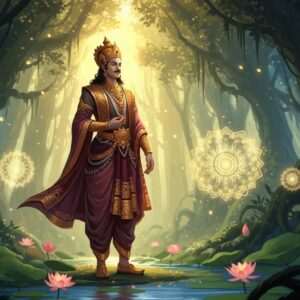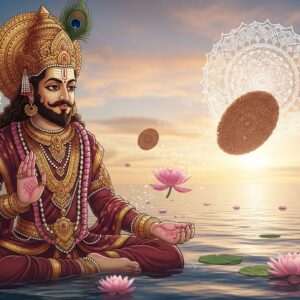


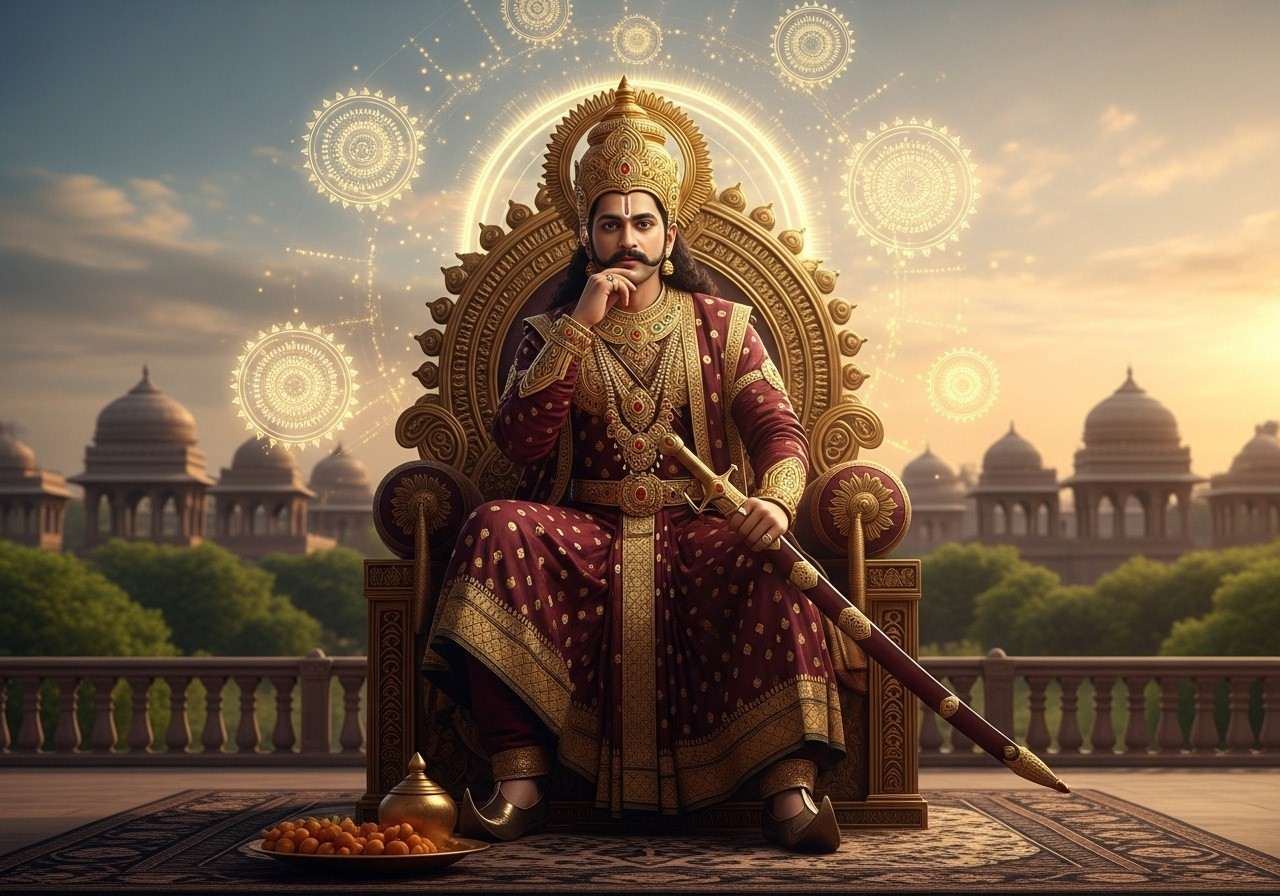
Our revered Indian scriptures are vast oceans of wisdom, filled with captivating narratives of immense bravery, intricate moral dilemmas, and the deepest of human emotions. Within the sacred pages of the Bhagavata Purana, the Matsya Purana, and the magnificent Mahabharata, one particular saga leaves a lasting impression on the reader’s soul. It is the life journey of an ancient ruler whose experiences hold profound reflections on human desires and ultimate spiritual awakening. This captivating story is not just a tale from a bygone era; it is a mirror reflecting our own modern struggles with ambition, contentment, and finding inner peace. Let us embark on a journey to understand his remarkable life and the beautiful, timeless lessons it leaves behind for all of us.
Tracing the Noble Lineage: Who Was This Majestic Ruler?
To truly appreciate this epic, we must first look at the glorious ancestry of this Chandravamsha king. He was the proud son of King Nahusha—who once briefly held the celestial position of Indra—and his mother, Queen Virajas. Growing up in a household steeped in royalty and dharma, he was accompanied by his five brothers: Yati, Samyati, Ayati, Viyati, and Kriti. When his eldest brother, Yati, felt the calling of the divine and renounced the royal throne to become an ascetic, the immense responsibility of the kingdom fell upon his shoulders.
Rising to the occasion, he became a Chakravarti—a universal monarch whose righteous governance brought peace and prosperity to the entire world. To ensure that dharma was upheld in every corner of his empire, he wisely appointed his younger brothers to rule over the different cardinal directions. As the respected progenitor of both the Yadava and Pandava lineages, his existence forms the very foundation upon which much of our great epic is built. His reign was marked by wisdom, yet his personal life became a profound teaching ground for generations to come.
The Complex Web of Relationships and a Fateful Curse
Even the most powerful monarchs are not immune to the complexities of the human heart and destiny. His life took an unforgettable turn through his marital alliances. He entered into holy matrimony with Devayani, the fiercely proud daughter of the revered sage Shukracharya. Alongside her, he also accepted Sharmishtha, the daughter of King Vrishparva, into his life as a companion. These intertwined relationships eventually sparked a deep domestic conflict.
When Devayani discovered her husband’s secret affection for Sharmishtha, she was consumed by betrayal and rushed to her father. In a moment of intense wrath, Sage Shukracharya pronounced a devastating curse: the vibrant king would be immediately stripped of his youth and struck with premature old age in the very prime of his life. Realizing the severity of the punishment, the sage eventually offered a small glimmer of hope—the cursed monarch could exchange his sudden old age if he found someone willing to bear it in return.
A Profound Sacrifice and the Illusion of Worldly Pleasures
Desperate to hold onto the fleeting joys of life, the king approached his sons, pleading with them to take on his old age so he could reclaim his vibrant youth. One by one, they refused, unable to let go of their own desires. However, his youngest son, Puru, driven by immense filial piety and unconditional love, willingly accepted his father’s burden. This incredible act of sacrifice allowed the monarch to regain his youthful vigor.
With his youth restored, he immersed himself in every worldly pleasure imaginable. Yet, as the years rolled by, a profound spiritual realization dawned upon him. He understood a universal truth that still rings true today: the fire of desire can never be extinguished by feeding it with worldly enjoyments; it only grows stronger, much like pouring clarified butter into a blazing sacrificial fire.
Choosing the path of ultimate wisdom, he gracefully returned his youth to Puru, accepted his old age, and retreated to the tranquil forests. By observing strict vows and renouncing his kingdom, he eventually ascended to the heavenly realms. Interestingly, our scriptures mention that he was later hurled down from heaven by Lord Indra due to remnants of spiritual pride, teaching us yet another vital lesson: our actions and intentions constantly shape our spiritual journey, requiring continuous humility and genuine internal transformation.
Enriching Your Spiritual Journey at Home
As we delve deeply into these magnificent stories from our heritage, it is only natural to feel a strong urge to honor our ancestors and the divine through daily practices. At Poojn.in, we understand your deep-rooted desire to maintain these beautiful cultural traditions right in the comfort of your own home. We are passionately committed to helping you create an authentic, spiritually uplifting environment for your family’s prayers and rituals.
Here is how our carefully curated offerings can assist you in keeping these ancient traditions vibrantly alive:
- Comprehensive Dashakarma Kits: Our meticulously assembled kits contain every single authentic item you need for traditional household rituals. By using these pure materials, you can effortlessly recreate the sacred ambiance described in our ancient epics, ensuring that every prayer is conducted with the utmost devotion and correctness. You can explore these traditional offerings at https://www.poojn.in/dashakarma-kits.
- Aromatic Incense Sticks and Handcrafted Diyas: The right fragrance and a warm, flickering light are essential to center your mind before reading the scriptures or meditating. Our premium quality incense and beautiful diyas will help you instantly transform any room into a tranquil, temple-like sanctuary where peace and spirituality naturally flourish. Enhance your home altar by visiting .
- Authentic Sacred Texts for Deep Reading: While we focus broadly on various aspects of our rich heritage, we proudly offer an extensive collection of foundational sacred texts that provide the perfect context for these epic narratives. Reading these holy books allows you and your family to gain a deeper, more enriched understanding of Indian spirituality and moral values. Discover our literary collection at https://www.poojn.in/sacred-texts.
Embrace the profound beauty of our shared traditions with the unparalleled convenience of modern online shopping. You can easily place your orders on our secure website or reach out to our dedicated support team directly. Feel free to contact us at 03369029784 or simply send a WhatsApp message to 9476142738 for any personalized guidance regarding our authentic cultural goods.
Frequently Asked Questions About This Timeless Narrative
Who is this prominent ancestor in the grand epic of Mahabharata?
He is a highly revered sovereign and the noble son of King Nahusha and Queen Virajas. As a wise and powerful ruler, his lineage directly leads to both the Yadavas and the Kuru dynasty, making him a central foundational figure in our ancient history.
What makes his life story so famous and enduring?
His legacy is primarily remembered for the extraordinary event where he was cursed with premature old age and subsequently exchanged it for the youth of his youngest son. This gripping narrative beautifully highlights the eternal human struggle between materialistic desires and the ultimate need for spiritual redemption.
Can you summarize his main journey as depicted in the scriptures?
The saga revolves around his complex marriages, a sage’s devastating curse, and his desperate plea to swap ages with his offspring. After a period of indulging in restored youth, he finally attains enlightenment, realizing that true peace comes only through the complete renunciation of endless earthly cravings.
Why did Sage Shukracharya pronounce such a harsh curse?
The severe punishment was a direct result of the sage’s protective anger over his daughter, Devayani. When he learned that the monarch had secretly formed a deep bond with Sharmishtha, violating the sanctity of his primary marriage, the sage acted out of a sense of betrayed parental trust and righteousness.
How does this legendary tale ultimately conclude?
The journey concludes with a beautiful moment of profound self-realization and grace. Understanding the sheer futility of chasing temporary pleasures, he happily returns the borrowed youth to his devoted son, embraces his natural old age, and retreats into the peaceful forest to focus entirely on his spiritual evolution.
What is the core moral lesson we should take away from this?
The fundamental teaching is about recognizing the deceptive nature of unchecked ambition and sensual enjoyment. It serves as a powerful reminder that genuine contentment and lasting joy are found through self-discipline, inner balance, and a deep understanding of life’s higher, spiritual purposes.
How is his bloodline connected to the famous Pandava brothers?
As a foundational patriarch, he is the proud father of Puru. It is through Puru’s distinguished lineage that the illustrious Kuru dynasty eventually emerges, meaning the Pandavas are his direct, honored descendants in this grand historical tree.