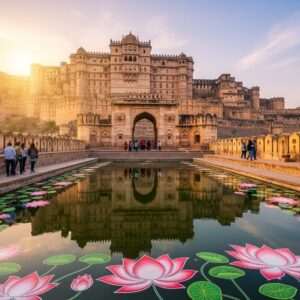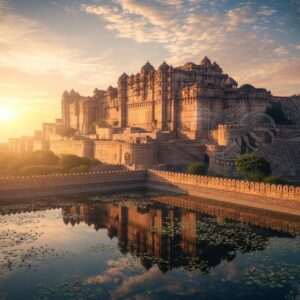


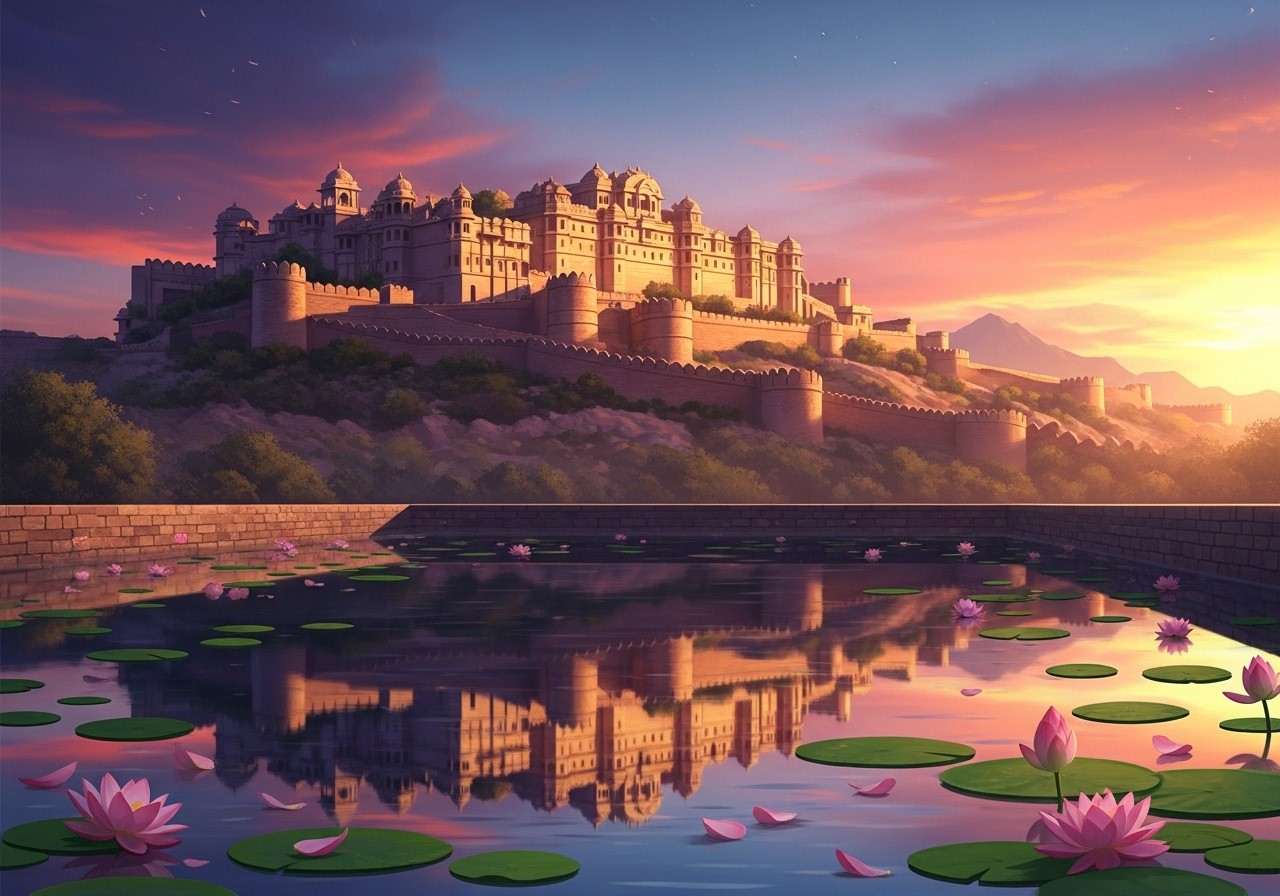
Namaste! For those of us who hold deep respect for our cultural roots and heritage, the stories of ancient India are not just chapters in a history book—they are emotions that course through our veins. Located on a picturesque hilltop along the tranquil banks of the Berach River in Rajasthan, there lies a majestic citadel that stands as the ultimate symbol of Rajput courage, nobility, and sacrifice. When viewed from above, this magnificent architectural marvel takes the unique shape of a fish, sprawling gracefully across the landscape. Today, we invite you to explore the fascinating history, breathtaking architecture, and deep spiritual significance of this timeless heritage site.
The Historical Canvas: Courage, Nobility, and Sacrifice
To truly understand the heartbeat of Rajasthan, one must delve into the origins of this grand stronghold. Built in the 7th century by the Mauryan dynasty, it eventually flourished under the stewardship of the Mewar rulers. This ancient fortress served as the proud capital of Mewar for an astounding 834 years, witnessing eras of immense prosperity and heartbreaking challenges. Its massive stone walls echo with legendary tales of unmatched bravery and the ultimate sacrifices made to protect the honor of the motherland.
Throughout its illustrious history, the stronghold faced three major, devastating attacks that tested the unyielding spirit of its defenders. These historical sieges shaped the legacy of the region forever:
- The First Major Siege of 1303: Ala-ud-din Khilji, the ambitious Sultan of Delhi, launched a massive attack on the citadel. This battle remains etched in our collective memory, highlighting the incredible bravery of the Rajput warriors and the legendary sacrifices of the queens to protect their honor.
- The Second Attack in 1533: Bahadur Shah, the Sultan of Gujarat, led another fierce campaign against the stronghold. Despite being heavily outnumbered, the brave defenders showcased immense resilience, leaving behind inspiring stories of valor that are still sung in local folklores today.
- The Final Great Siege of 1568: Mughal Emperor Akbar marched his forces to conquer the hill fort, leading to one of the most intense battles in Indian history. Though the fort eventually fell, the unwavering courage of the Rajputana forces during this struggle immortalized them in the annals of time.
Architectural Splendor: Exploring the 65 Marvels
Sprawling across a massive 700 acres, this is officially recognized as the largest fort in India, boasting a staggering peripheral length of 13 kilometers. Walking through its ancient pathways feels like stepping into a living museum, where ancient engineering expertise and artistic brilliance come alive. The complex is meticulously safeguarded by seven monumental main gates, each designed with unique defensive mechanisms and intricate architectural details.
Within these formidable walls, historians and culture enthusiasts can find exactly 65 carefully preserved historical structures that showcase the opulence of the Mewar dynasty. These include:
- Four Magnificent Palace Complexes: The palatial ruins, including the famous Rana Kumbha Palace and Fateh Prakash Palace, beautifully reveal the luxurious yet deeply cultured lifestyle of the bygone royals. Additionally, Rani Padmini’s Palace is incredibly significant, elegantly built on the serene banks of a lotus pool, offering a breathtaking view that transports you to another era.
- Twenty Essential Water Bodies: Recognizing the importance of water conservation on a hilltop, the ancient engineers created a sophisticated network of 20 water bodies. These reservoirs and stepped wells ensured that the residents had a constant water supply, even during the longest and most grueling military blockades.
- Four Respected Memorials: These deeply moving structures were erected to honor the fearless warriors who laid down their lives for their homeland. Each memorial serves as a quiet place for reflection, reminding visitors of the heavy price paid for the preservation of dharma and duty.
- Two Prominent Victory Towers: The skyline is dominated by two stunning pillars of architectural triumph. The 37-meter-high Vijay Stambh (Tower of Victory) mesmerizes visitors with its intricate carvings of Hindu deities, while the beautifully sculpted Kirti Stambh (Tower of Fame) proudly displays profound Jain architectural influences.
A Spiritual Haven: Unveiling the 19 Sacred Temples
Our parampara (tradition) has always been deeply intertwined with devotion, and this majestic heritage site is no exception. Housing an impressive collection of 19 temples, the fort grounds reflect the beautiful spiritual diversity and deep-rooted bhakti (devotion) of our ancestors. Visiting these sacred shrines offers a profound sense of peace amidst the tales of historic warfare.
- The Kalika Mata and Meerabai Temples: The ancient Kalika Mata Temple stands as a powerful site for the worship of Goddess Kali, drawing devotees seeking strength and protection. Just a short walk away is the Meerabai Temple, dedicated to the legendary poet-saint, where the gentle echoes of her immortal bhajans celebrating Lord Krishna seem to linger in the air.
- Revered Shrines of Lord Shiva and Ganesha: Devotees find great solace at the Sammidheshwara Temple and the Neelkanth Mahadev Temple, both offering magnificent architectural homage to Lord Shiva. Nearby, the Ganesha Temple stands as a testament to the auspicious beginnings sought by the Rajput kings before any major undertaking.
- Kumbha Shyam and the Jain Sanctuaries: The Kumbha Shyam Temple is an absolute masterpiece of ancient carving and devotion. Furthermore, the fort grounds beautifully accommodate the Satbis Deori Jain Temples, which highlight the historical presence, prosperity, and peaceful coexistence of the Jain community within the kingdom.
Celebrating Our Living Heritage
Designated as a UNESCO World Heritage Site under the category of the Hill Forts of Rajasthan, this citadel is recognized globally for its immense historical and architectural value. Yet, for us Indians, its true beauty lies in its living, breathing cultural legacy that is celebrated year after year. Vibrant festivals like the Jauhar Mela honor the supreme sacrifices of the brave Rajput women, while the joyful Teej Festival fills the ancient courtyards with traditional music, dance, and the celebration of the life-giving monsoons.
Recreate the Spiritual Aura at Home with Poojn.in
Reading about these 19 magnificent ancient temples and the deep devotion of saint Meerabai often awakens a desire to connect with our own spiritual practices. While nothing compares to physically standing in these historic shrines, you can certainly bring that same purity and devotion into your home mandir. At Poojn.in, India’s most trusted online store for cultural goods, we are dedicated to helping you preserve your traditions with the utmost authenticity and respect.
Whether you are looking for pure incense sticks that smell like the temple courtyards of Rajasthan, complete traditional puja kits, or beautiful decorative pieces for your daily rituals, we have thoughtfully curated our collection for your everyday needs. By incorporating these authentic items into your daily worship, you invite the timeless grandeur of our Indian heritage into your living space.
Please note: Poojn does not provide travel packages, fort tours, or VIP darshan services for any temples. We proudly focus solely on providing you with the highest quality cultural and spiritual items directly through our online store.
Embrace your roots and explore our extensive range of authentic cultural goods by visiting https://www.poojn.in today. For any guidance on our products, feel free to contact us warmly at 03369029784 or simply drop us a WhatsApp message at 9476142738. Let us help you keep the flame of our glorious parampara burning bright in your home.
Frequently Asked Questions About This Magnificent Fortress
What is the overall size and land area of this historic citadel?
Sprawling gracefully across a massive hilltop, the site covers an impressive 700 acres of land. With a remarkable peripheral length of 13 kilometers, it proudly holds the title of the largest fort in India, offering vast spaces filled with architectural wonders.
Why does this ancient stronghold hold the prestigious UNESCO World Heritage Site status?
It is globally recognized as one of the Hill Forts of Rajasthan due to its exceptional historical importance, brilliant defensive architecture, and its representation of Rajput nobility. UNESCO honors this site to ensure that its profound cultural legacy and architectural brilliance are preserved for future generations to admire.
What exactly makes the layout and structure of this heritage site so unique?
When viewed from the sky, the entire fortress intriguingly resembles the shape of a fish. Furthermore, it is incredibly unique because it houses 65 distinct historical structures, including 7 highly fortified main gates, 20 water conservation bodies, and legendary towers like the Vijay Stambh and Kirti Stambh.
Are there specific spiritual sites that visitors should know about inside the complex?
Absolutely! The complex is a true spiritual haven, featuring 19 beautiful temples. Devotees and tourists alike are captivated by sacred spaces such as the Kalika Mata Temple, Jain Temple, Ganesha Temple, Meerabai Temple, Sammidheshwara Temple, Neelkanth Mahadev Temple, and the Kumbha Shyam Temple.
What is the historical significance of Rani Padmini’s dwelling within the fort?
Rani Padmini’s Palace is an incredibly vital piece of the region’s history, symbolizing beauty, grace, and ultimate sacrifice. It was thoughtfully built on the serene banks of a beautiful lotus pool, creating a picturesque setting that strongly contrasts with the fierce battles fought just outside its walls.
How far back does the history of this grand Mewar capital reach?
The foundations of this incredible stronghold were laid all the way back in the 7th century by the Mauryan dynasty. Over the centuries, it evolved into an impenetrable capital for the Mewar rulers, successfully serving as their central seat of power and culture for a staggering 834 years.