
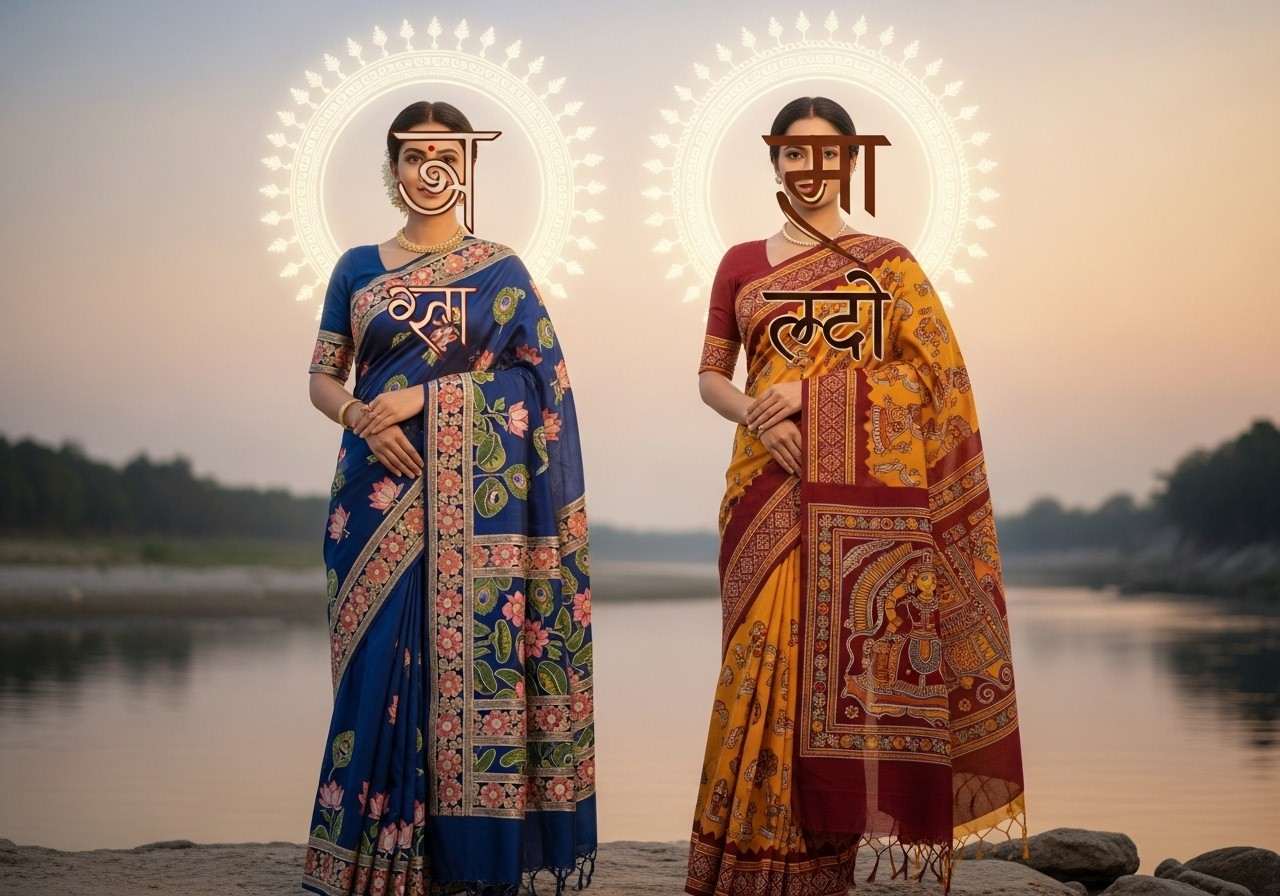
Namaskar! India is a breathtaking mosaic of cultures, traditions, and languages. For many of us who deeply value our roots, the regional alphabets of our motherland are far more than mere letters on a page. They are the very heartbeat of our linguistic tradition and cultural identity, connecting us to the wisdom of our ancestors. Today, we embark on a fascinating journey to explore two of India’s most prominent writing systems. Often regarded affectionately as sister scripts, they share a profound historical connection while beautifully reflecting the unique cultural nuances of their respective regions.
Whether you are teaching your children about their heritage or simply nurturing your own love for Indian parampara (tradition), understanding these interconnected scripts offers wonderful insights for those who cherish tradition and linguistic diversity. Let us delve into their shared past, structural elegance, and modern-day significance.
The Ancient Roots: Tracing Our Historical Background
Both of these magnificent writing systems can proudly trace their origins back to the ancient Brahmi script, which is the revered mother of most Indic writing systems. As centuries passed, the Gupta script played an instrumental role in shaping these alphabets during India’s glorious classical period.
Around the 11th century AD, the writing style of the East began to beautifully diverge from the Devanagari script, evolving into its own unique form. Over time, regional dialects and royal patronages influenced these adaptations. While historical shifts, including Mughal rule, left a lasting impact on the development of central Indian languages, the eastern writing system flourished and meticulously maintained its distinctiveness and poetic charm.
Script and Structure: A Visual Delight
When you look at traditional texts or spiritual manuscripts, the visual differences between these two alphabets are immediately captivating. Both are classified as abugida scripts, meaning that every consonant inherently carries a beautifully resonant vowel sound within it. Furthermore, both follow a comfortable left-to-right writing direction.
- The Devanagari Elegance: This script is instantly recognizable by its distinct horizontal top line, lovingly known as the matra, which elegantly connects the letters of a word together. This feature gives the writing a very grounded, structured, and blockier appearance that feels incredibly traditional and deeply rooted.
- The Eastern Wavy Flow: In contrast, the eastern counterpart dances across the page without a horizontal top line connecting every character. Instead, the letters boast a wavy, fluid elegance that perfectly mirrors the artistic and deeply emotional spirit of the culture it represents.
Letters and Pronunciation: The Soul of the Sounds
The mathematical precision of our ancient languages is truly something to marvel at. In both of these writing systems, each letter generally commands its own independent and distinct sound, ensuring clear and harmonious communication.
- The Eastern Script Character Count: This beautifully rich alphabet contains 11 specific vowel letters, affectionately called Swarabarnas, alongside 32 consonant letters, known as Byanjanbarnas. This brings the system to a total of 43 main letters, each capturing the rhythmic essence of the language seamlessly.
- The Central Script Character Count: The widely spoken central alphabet features a slightly larger set. It generally includes 11 to 12 vowels and 35 to 36 consonants, creating a robust collection of 48 characters that allow for incredibly precise phonetic expressions.
- A Phonetic Masterpiece: The eastern language is celebrated as a strictly phonetic alphabet, meaning almost every spoken sound correlates to a designated, written letter. It includes unique melodic sounds that sometimes have no direct equivalents in English or its sister script!
- The Power of Aspiration: The Devanagari system proudly features a wide array of aspirated (breathy) and unaspirated sounds, adding a layer of depth and forceful emotion to the spoken words that resonate beautifully during prayers and daily conversations.
Key Differences and Shared Connections
While they are undoubtedly part of the same Indo-European family and share a remarkably similar grammatical syntax and vocabulary derived from Indo-Aryan languages, their paths diverged in fascinating ways.
- Handling Consonant Clusters: When two consonants combine, the eastern script often beautifully merges them into a single, intricate ligature. In contrast, the Devanagari script generally relies on half-letters to represent these clusters, maintaining clear individual identities for the merged sounds.
- Diacritical Marks: The wavy sister script relies far more extensively on diacritical marks to guide pronunciation, adding a layer of visual complexity and sophistication that takes practice and devotion to master fully.
A Glimpse into the Vowels and Consonants
To truly appreciate the intertwined history of these sister scripts, it is deeply fulfilling to look at them side by side. Below is a comparative glimpse of how the fundamental sounds map out across the two alphabets:
| Devanagari | Eastern Script | Pronunciation |
|---|---|---|
| अ | অ | a |
| आ | আ | aa |
| इ | ই | i |
| ई | ঈ | ee |
| उ | উ | u |
| ऊ | ঊ | uu |
| ऋ | ঋ | re |
| ए | এ | e |
| ऐ | ঐ | ei |
| ऍ | এ্যা | ea |
| ऑ | অউ | ou |
| ओ | ও | o |
| औ | ঔ | oi |
| अं | অং | an |
| अः | অঃ | ah |
| क | ক | ka |
| ख | খ | kha |
| ग | গ | ga |
| घ | ঘ | gha |
| ङ | ঙ | ang |
| च | চ | ca |
| छ | ছ | cha |
| ज | জ | ja |
| झ | ঝ | jha |
| ञ | ঞ | ng |
| ट | ট | ta |
| ठ | ঠ | tha |
| ड | ড | da |
| ढ | ঢ | dha |
| ण | ণ | na |
| त | ত | ta |
| थ | থ | tha |
| द | দ | da |
| ध | ধ | dha |
| न | ন | na |
| प | প | pa |
| फ | ফ | pha |
| ब | ব | ba |
| भ | ভ | bha |
| म | ম | ma |
| य | য | ya |
| र | র | ra |
| ल | ল | la |
| व | ওয়া | va/wa |
| श | শ | sha |
| ष | ষ | sha |
| स | স | sa |
| ह | হ | ha |
| क्ष | ক্ষ | ksha |
| त्र | ত্র | tra |
| ज्ञ | ঞ্জ | gya |
Cultural Significance: Woven into Our Lives
These alphabets do far more than document our histories; they breathe life into our vibrant regional identities. The eastern script is intimately woven into world-renowned literature, soul-stirring art, and sacred religious texts, conveying incredibly rich narratives that have shaped generations. On the other hand, the central alphabet sits at the very core of mainstream cinema, devotional music, and popular media, uniting millions across the nation through shared emotional experiences.
During joyous festivities, these scripts truly come alive. Whether reading the enchanting folk tales during Poush Mela or singing celebratory folk songs during Holi, the interplay between language and tradition serves as a constant, beautiful reminder of our shared Indian identity.
Nurturing Traditions with Authentic Offerings
As we lovingly embrace the richness of India’s linguistic tapestry, it is essential to surround ourselves and our children with items that foster a deep connection to our shared cultural heritage. Taking the time to understand these majestic writing systems inspires us to celebrate our diversity while cherishing the timeless threads that connect us all.
At poojn.in, India’s most trusted destination for cultural goods, we are deeply committed to helping you preserve these age-old traditions within your own home. While exploring the spiritual and historical depths of our regional languages, you can rely on our carefully curated online store to enhance your journey.
- Sacred Texts and Books: Dive deeper into the beautiful complexities of our regional languages with our authentic collection of spiritual literature and learning books, meticulously sourced to ensure you receive the truest representation of our heritage.
- Traditional Stationery: Reconnect with the physical art of writing by practicing these beautiful alphabets using our handmade paper and traditional writing instruments, which turn everyday learning into a soulful, grounding ritual.
- Aesthetic Cultural Artifacts: Bring the blessings and beauty of our ancient scripts into your living space with our elegant wall hangings and authentic cultural artifacts, serving as daily visual reminders of the profound stories our roots hold.
We invite you to bring these beautiful traditions into your modern life. For more information on our exclusive cultural offerings, please visit https://www.poojn.in. Should you need any assistance in selecting the perfect item for your home, you can warmly reach out to us at 03369029784 or simply send us a message via WhatsApp at 9476142738. We are always here to serve you with respect and devotion.
Frequently Asked Questions About Our Heritage Scripts
What is the most defining distinction between these two beautiful alphabets?
The core distinction naturally lies in their structural forms and visual presentation. While both evolved from ancient roots, one relies on the structured Devanagari style complete with a unifying top horizontal line, whereas the other flourishes with a distinctly wavy, line-free elegance that highlights its regional artistry.
How does the character count vary between the two writing systems?
The beautifully fluid eastern alphabet consists of 43 main letters, capturing its phonetic richness. In contrast, the widely used Devanagari script generally features a robust set of 48 characters, which includes a comprehensive range of vowels and consonants to accommodate a vast array of phonetic sounds.
Do these distinct writing styles share underlying similarities?
Absolutely. Because both beautifully crafted writing systems originate from the revered Brahmi script, they share remarkable similarities. They both function as abugida scripts, utilize a foundational combination of vowels and consonants, and trace their vocabulary roots to the Indo-Aryan language family.
Why are these two writing systems frequently referred to as sister scripts?
They are affectionately known as sister scripts because they are born from the exact same ancient maternal source. Despite developing distinct visual styles and adapting to different regional dialects over the centuries, their linguistic DNA and cultural significance deeply interlock them.
Are there significant differences in how vowels are represented?
Yes, while both systems rely heavily on vowels to bring life to consonants, they represent them uniquely. The eastern system uses highly distinct script forms and independent/dependent variations that differ visually and sometimes phonetically from the structured vowel system found in Devanagari.
Is transitioning between learning the two alphabets considered difficult?
The experience of learning deeply depends on an individual’s background and dedication. Some find the elegant curves of the eastern script intricately beautiful yet challenging to master, while others may initially find the strict structural rules of Devanagari requiring more focused practice. However, their shared structural logic makes learning both a highly rewarding cultural endeavor.