


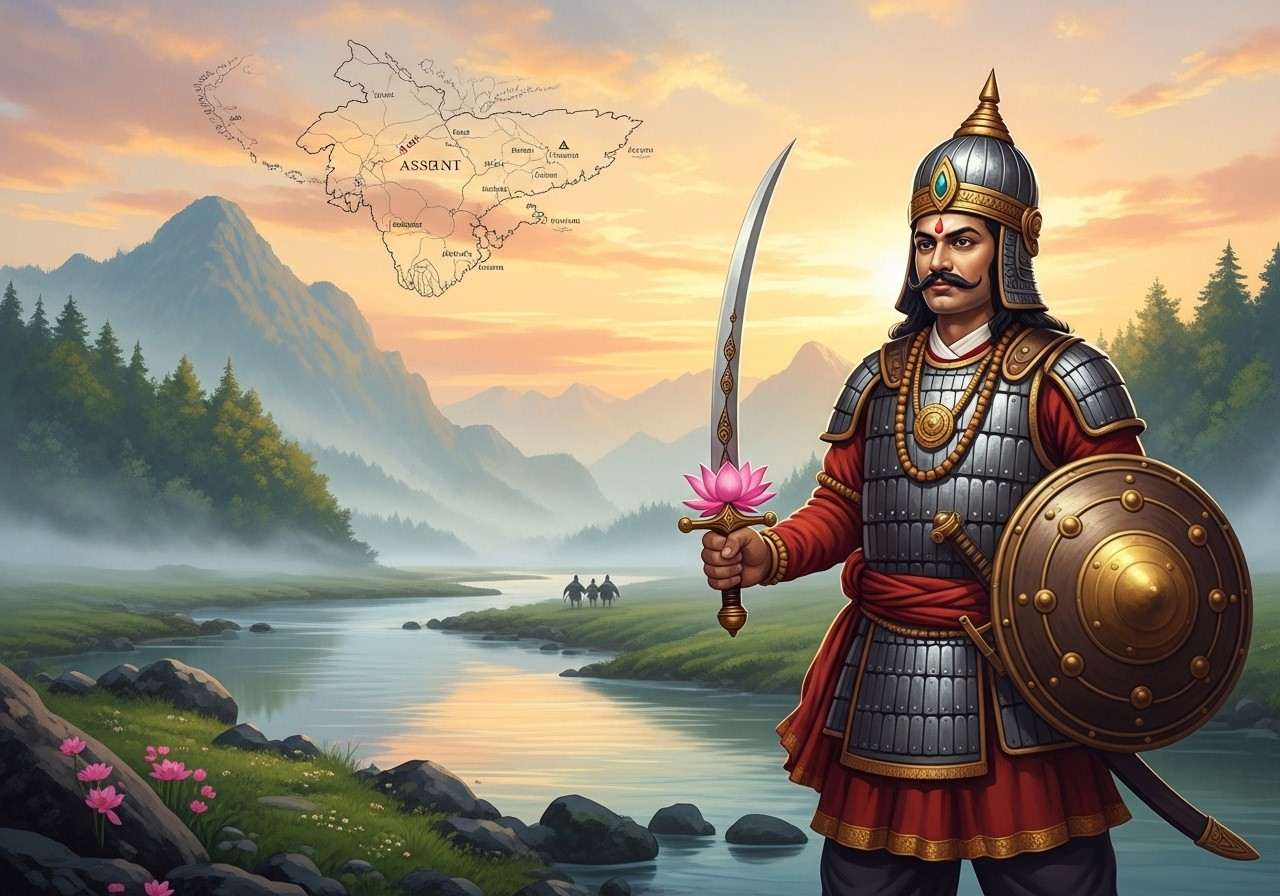
The Ahom community holds an incredibly special place in the vibrant history of Assam. Their long and courageous journey from faraway lands to the fertile embrace of the Brahmaputra Valley is more than just a historical event—it is a deeply captivating story of survival, devotion, and cultural blending. Exploring this epic migration gives us a profound understanding of Indian history and the rich, diverse tapestry of Assamese culture.
Where Did It All Begin? Looking at the Ahom Origins
The ancestors of the Ahoms are widely believed to have roots in regions that are today part of Thailand, Myanmar, and China. They share profound cultural and linguistic connections with the broader Tai ethnic family. Ancient chronicles and cherished oral traditions give us precious glimpses into their early lives, suggesting that shifting political landscapes and socio-economic trials in their native lands inspired them to seek a new beginning.
The Courageous Voyage to the Brahmaputra Valley
The migration of the Ahom people is a moving testament to human resilience and unyielding determination. Led by the visionary Tai prince, Sukaphaa, this incredible expedition began in Mong Mao, an area situated in present-day Dehong, China. With a small, dedicated group of followers by his side, Sukaphaa embarked on a path that would beautifully transform the destiny of Assam forever.
Understanding the Homeland and Migration
Scholars and historical records point out that the Ahom lineage can be traced back to the Mongkawng valley in Myanmar, as well as parts of Yunnan, China. Their movement was an essential branch of a massive Tai migration that unfolded between the 8th and 13th centuries, gently weaving its way through Southeast Asia and into the heart of India.
Why They Chose to Move
Leaving one’s ancestral home is never an easy decision. For Sukaphaa, the choice was guided by internal disputes and the heavy burden of external pressures. As he courageously marched forward, his spiritual and leadership aura attracted other Tai chiefs and their communities. Remarkably, by the time this expanding caravan reached the welcoming arms of Assam, their numbers had swelled to nearly 9,000 devoted souls.
Navigating Unforgiving Terrains
The path to their new home was paved with enormous challenges. The community had to cross the formidable Patkai Hills, the rugged natural boundary separating Myanmar from India. Braving these steep mountains required immense faith. They found their guiding light along the Burhi Dihing River, whose flowing waters gently directed them straight into the lush plains of the Brahmaputra Valley.
A New Dawn in Assam
In the auspicious year of 1228 AD, Sukaphaa and his loyal followers finally stepped into the Brahmaputra Valley. They were greeted by vast stretches of unoccupied, fertile land waiting to be nurtured, free from the rule of any dominant kingdom. Embracing this divine opportunity for a permanent home, they lovingly established their first capital at Charaideo, located near the modern-day town of Sivasagar.
The Beautiful Process of Ahomisation
Sukaphaa and his people brought with them advanced and highly effective wet-rice cultivation techniques. Guided by a profound belief that they were divinely chosen to turn barren lands into thriving agricultural heavens, they warmly embraced the local indigenous communities. This harmonious integration of local stateless farmers into their cultural fold lovingly became known as Ahomisation, a true example of unity in diversity.
A Lasting Imprint on Assamese Culture
The Ahom Kingdom flourished majestically for nearly 600 years, from 1228 to 1826. Their deeply rooted influence shaped the political, social, and spiritual identity of Assam. Through innovative farming techniques and a highly compassionate administrative system, they forged a uniquely beautiful Assamese identity. Furthermore, their legendary bravery played a critical role in shielding the region from numerous Mughal invasions, protecting their sacred land and traditions.
Today, the legacy of Sukaphaa’s voyage continues to be an endless source of inspiration, filling our hearts with pride. It reminds us of the power of adaptability and the beauty of honoring one’s heritage.
Embracing Ahom Culture with Poojn.in
At Poojn.in, we believe that understanding your roots is a deeply spiritual journey, and having the right cultural elements makes this connection even more meaningful. As India’s most trusted online destination for authentic cultural items, we are devoted to helping you beautifully integrate traditions into your daily life.
Discover Authentic Goods for Your Rituals
Our carefully curated collections feature everything you need to celebrate and honor the splendid heritage of the Ahom community. We take immense pride in offering items that resonate with authenticity and devotion.
- Premium Brass Utensils: Essential for maintaining the purity of your daily ceremonies and ancestral rituals, our authentic brass utensils ensure your spiritual practices remain deeply rooted in tradition. These beautifully crafted vessels add a touch of divine elegance to any sacred space, allowing you to perform rituals with the utmost devotion.
- Exquisite Traditional Attire: Dressing in traditional garments is a beautiful way to honor your ancestors and deeply immerse yourself in their historic customs. Explore our magnificent collection of traditional attire to feel an instant connection to the glorious Ahom heritage, expertly woven to reflect true Assamese pride.
- Inspiring Sacred Texts: Knowledge is the ultimate bridge to our ancestors and the guiding light for future generations. To explore profound spiritual insights and historical narratives of the Ahom legacy, browse our library of sacred texts. These carefully curated books provide a comforting connection to the ancient wisdom of the Brahmaputra Valley.
Whenever you choose to shop at Poojn.in, you are embracing convenience without ever compromising on authenticity. We ensure every item honors your ancestry with the utmost respect. If you need any assistance in selecting the perfect cultural goods, please feel free to reach out to our warm and friendly team at 03369029784 or simply WhatsApp us at 9476142738.
Reflecting on a Magnificent Legacy
The story of the Ahom community is undeniably one of the most brilliant chapters in the grand book of Indian history. Sukaphaa’s visionary migration from Mong Mao to the heart of Assam stands as an eternal symbol of courage, hope, and community building. The Ahoms did more than just survive; they truly enriched the native soil by warmly accepting the local culture while sharing their own unique gifts. Their revolutionary approaches to farming and deeply compassionate governance created a foundation for a blossoming society. Today, as devoted custodians of Assamese heritage, the Ahom legacy ignites a brilliant flame of unity and pride, guiding us all to respect our glorious past while bravely stepping into the future.
Frequently Asked Questions About Tracing Ahom Roots
Curious about where the Ahoms originated? Many historians agree that the Ahom people trace their roots back to the Yunnan province in China and the Mongkawng valley in Myanmar, successfully migrating to Northeast India during the early 13th century.
You might wonder why the Ahoms decided to travel all the way to Assam. Driven by internal conflicts back home and the pure desire for a prosperous future, they ventured out in search of fertile lands. Their primary goal was to find a strategic, peaceful location where they could lay the foundation for a thriving new homeland.
The journey from their homeland to the Brahmaputra Valley was nothing short of miraculous. The brave Ahoms traveled across rugged Southeast Asian terrains, scaling the steep Patkai Hills and following river routes, ultimately drawn by the abundant natural resources of the Brahmaputra basin.
When looking at the impact the Ahoms had on Assam’s culture, the cultural transformation was profoundly beautiful. They lovingly introduced advanced wet-rice agricultural techniques and sophisticated administrative systems, deeply enriching the region’s existing heritage by blending indigenous traditions with their own.
How did the Ahom Kingdom manage to flourish so well in the Brahmaputra Valley? The kingdom’s incredible success was largely due to its highly efficient governance, strong military defenses, and, most importantly, its heartfelt integration with local tribes, which cultivated lasting peace and unity.
As for the key traditions or rituals the Ahoms brought with them, their legacy is still vibrant today. They introduced deeply spiritual rituals honoring their ancestors and significantly contributed to the vibrant Bihu celebrations, beautifully blending their customs with the local Assamese way of life.
Finally, did the Ahoms contribute to the economy of Assam? Absolutely. The Ahoms were master administrators and agriculturists. Their incredible focus on developing wet-rice farming, encouraging local trade, and promoting native craftsmanship laid a phenomenally strong and enduring foundation for the region’s economy.