

Namaste, and welcome to a soulful journey through time. Exploring the cultural heartland of southern India is not just about reading dates on a map; it is a profound emotion for those of us who deeply cherish our Indian traditions, family values, and spiritual history. From ancient mythological tales to the sheer grandeur of royal dynasties, this magnificent area beautifully blends the timeless charm of yesteryears with the vibrant pulse of modern life. In this comprehensive guide, we will joyfully explore the ancient roots, the territorial evolution, and the deep-seated cultural significance of this remarkable land. Let us dive deep into understanding how its enduring legacy has continuously shaped the proud identity of present-day Karnataka.
The Dawn of an Era: Uncovering the Formation of the State
To truly appreciate the vibrant present of this region, we must lovingly look back at its past. During the British era, this area functioned as a highly prosperous and culturally rich princely state. After our beloved nation gained its hard-fought independence in 1947, significant administrative restructuring took place across the country to better serve the people. A major turning point occurred on November 1, 1956, when the linguistically unified Vishala Mysore State officially came into being. Visionary leaders and passionate socio-political movements championed this thoughtful reorganization, aiming to bring communities with shared languages and traditions under a single, unified administrative umbrella. This vital transformation laid the strong socio-economic foundation for the thriving, beautiful state we proudly call Karnataka today, a name that was officially embraced in 1973.
Tracing the Majestic Roots and Traditions of the Region
The story of this southern jewel is steeped in fascinating legends, spiritual devotion, and royal valor. It is a deeply inspiring narrative that has carefully molded the area’s rich family traditions, spiritual depth, and breathtaking architectural marvels.
Mythological Origins and the Rise of Royalty
Every street and temple in this sacred land has a story to tell. Did you know that the city’s ancient name is beautifully derived from “Mahishasura Uru,” translating to the city of the demon Mahishasura? According to our sacred lore, this mighty demon was vanquished by the fierce and protective Goddess Chamundeshwari. To this very day, countless devoted families flock to the sacred Chamundi Hill, drawing immense spiritual strength and seeking the Mother Goddess’s divine blessings for their homes.
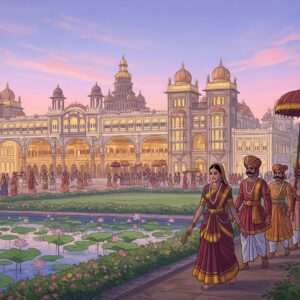
Historically, the political landscape shifted in 1399 with the auspicious establishment of the illustrious Wodeyar dynasty by Yaduraya Wodeyar. Initially serving as a modest principality under the grand and glorious Vijayanagara Empire, the rulers astutely declared their sovereignty following the empire’s decline in 1565. This highly strategic move paved the way for remarkable territorial growth and an era of unparalleled cultural patronage.
Eras of Expansion and Enduring Influence
The 17th century brought monumental and highly positive changes to the region’s cultural landscape. By 1610, the visionary Raja Wodeyar I established Srirangapatna as the new capital and initiated the spectacular Dasara festivities—a majestic, deeply spiritual tradition that continues to mesmerize millions even today. Under the capable and culturally rooted leadership of subsequent rulers like Chikka Devaraja Wodeyar, the kingdom’s boundaries stretched far and wide, uniting various communities across southern India.
Later in the timeline, the formidable leadership of Hyder Ali and Tipu Sultan significantly fortified the kingdom’s military prowess in the late 18th century, showcasing immense resilience against colonial forces and leaving behind an undeniable legacy of bravery and architectural brilliance.
Navigating the British Era and Modern Urbanization
The twilight of the 18th century witnessed complex treaties with the British East India Company, which eventually led to a brief period of British administrative control starting in 1831. However, justice and our deep-rooted traditions prevailed when the ruling powers were respectfully returned to Maharaja Chamaraja Wadiyar X in 1881, inaugurating a modern cultural renaissance for the region.
The early 20th century marked the bright dawn of planned urban growth, notably through the pioneering City Improvement Trust Board established in 1903. The founding of the prestigious University of Mysore in 1916 further transformed the area into a premier, respected center for education, literature, and the fine arts.
The Journey to Statehood and Expanding Boundaries
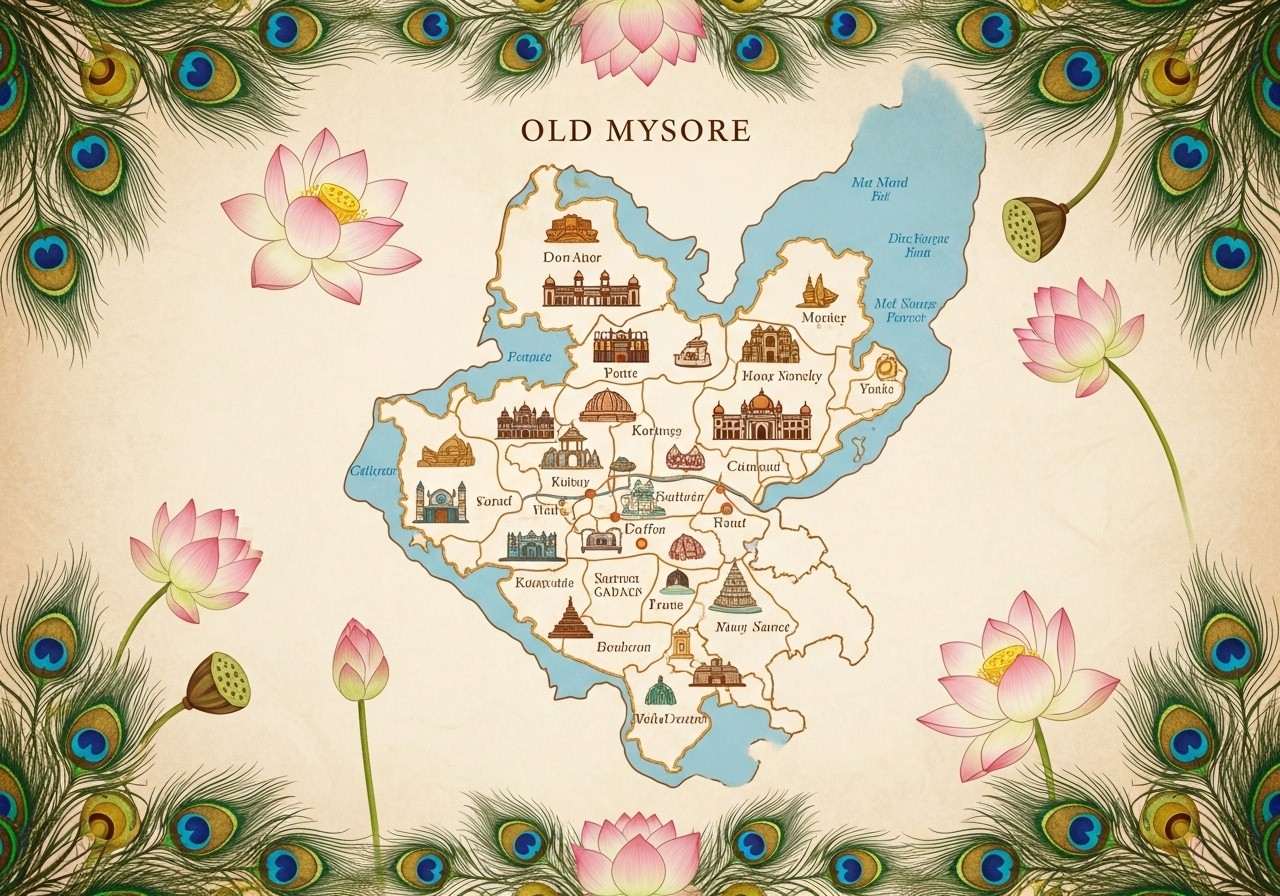
Following India’s glorious independence, the revered Maharaja Jayachamarajendra Wodeyar gracefully and patriotically integrated the kingdom into the newly formed Indian Republic. As the decades progressed, the administrative map underwent highly beneficial changes. From just four original districts around the 1800s, the region evolved dynamically to serve its people better. By 1940, the region proudly featured eight prominent districts, with key additions like Hassan and Chamarajanagar greatly enhancing the area’s economic and cultural diversity. Today, these vibrant regions remain the very soul of Karnataka’s agricultural wealth and industrial prosperity.
Elevating Your Spiritual Journey with Authentic Goods from Poojn.in
As we lovingly immerse ourselves in the spiritual and historic aura of this incredible southern kingdom, bringing a piece of that divine, pure energy into our own homes becomes a beautiful endeavor. At poojn.in, we deeply understand and share your immense reverence for our cultural roots and everyday rituals. Please note that we do not provide travel packages, temple guidance, or VIP darshan services; rather, we exclusively focus on being India’s premier online destination for authentic cultural and spiritual goods.
If you are lovingly setting up your household shrine or preparing for an upcoming festive ritual, we warmly invite you to explore our thoughtfully curated collection.
- Premium Ritual Accessories: Elevate your daily prayers and sacred ceremonies with our genuine brass and copper puja items. These are meticulously sourced to maintain the utmost traditional purity, ensuring that every ritual is performed exactly as our ancestors intended, bringing immense positive energy to your home. Find your perfect spiritual set at .
- Aromatic Offerings: Transform your living space into a tranquil and divine sanctuary with our premium natural incense. Our beautifully crafted aromatic sticks are uniquely designed to soothe the mind, eliminate negative energies, and invoke a deep sense of peace during your daily meditation sessions or family worship.
- Divine Masterpieces: Adorn your household shrine with our beautifully handcrafted idols that constantly radiate peace and prosperity. These exquisite, culturally rich pieces reflect the unmatched artistry and divine heritage of ancient Indian craftsmanship, making them absolutely perfect for both home decor and personal devotion. Browse our divine collection at .
Choosing poojn.in means warmly embracing modern convenience without ever compromising on our sacred authenticity. Allow us the honor of delivering the finest traditional items directly to your doorstep. For personalized assistance with your spiritual needs, you can easily reach our dedicated, welcoming team at 03369029784 or message us conveniently on WhatsApp at 9476142738.
Carrying Forward a Glorious Legacy
The beautiful narrative of this ancient principality is an inspiring testament to our cultural resilience, unwavering faith, and continuous evolution. From its deep mythological foundations to its emergence as a modern, thriving state, the journey is nothing short of magnificent. Every grand palace, every ancient, bustling street, and every rhythmic beat of the Dasara celebrations honors the enduring, vibrant spirit of our ancestors.
By cherishing this history, we ground ourselves in the pure values that have nurtured our society for centuries. It gently reminds us to celebrate our unique identity, preserve our beautiful family traditions, and pass on this profound, culturally rich legacy to the generations yet to come.
Frequently Asked Questions About the Region’s History and Evolution
Understanding the Primary Districts: Many often wonder about the main administrative zones that formed the early state. Historically, the core territory was primarily anchored by key areas like Bangalore, Mysore, and Tumkur. Each of these vibrant districts held its own distinct character, deeply enriched by fertile agriculture, unique architectural heritage, and cherished local traditions that families still uphold today.
The Birth of the Unified State: A significant curiosity revolves around exactly when the newly expanded linguistic region was formed. The integrated Vishala Mysore State officially came into existence on the historic day of November 1, 1956. This incredible milestone was a defining moment in India’s broader linguistic reorganization, effectively bringing culturally and linguistically aligned communities under one proud, unified banner.
The Significance of 1956: People frequently ask why the year of this establishment holds such immense historical weight. The year 1956 is deeply pivotal because it marks the birth of a vast, cohesive administrative entity. This strategic formation laid the critical and enduring groundwork for accelerated regional development, streamlined local governance, and a beautifully shared cultural identity among the people.
Impact of District Reorganization: There is always interest in how the restructuring of districts directly influenced the state’s trajectory. By thoughtfully organizing the expanding region into well-defined districts, the authorities enabled much smoother and highly focused local governance. This highly strategic division ensured that vital resources and community development initiatives successfully reached the grassroots level, empowering everyday citizens.
Relevance of Heritage Today: A beautiful thought we often contemplate is why the cultural legacy of this era remains so deeply relevant in our modern lives. The rich heritage we proudly inherited from the erstwhile rulers continues to profoundly dictate the artistic, architectural, and spiritual ethos of modern Karnataka. It instills an irreplaceable sense of pride and cultural continuity that resonates deeply in our everyday spiritual and social lives.
Cultural Shifts from Integration: It is natural to inquire whether the regional reorganization brought about any notable cultural transformations. The integration absolutely led to a magnificent cultural synthesis. By amalgamating neighboring regions, the state experienced a beautiful and harmonious mingling of dialects, culinary traditions, and artistic expressions, resulting in a highly vibrant and deeply connected cultural landscape.
Traces of History in the Present: How can one observe this deep historical influence in the present day? Our glorious past is wonderfully alive and beautifully preserved in our majestic palace architecture, the classical music and timeless painting styles, and the unparalleled, vibrant grandeur of our traditional festivals, which seamlessly weave our proud history into our modern, everyday existence.
Broader Impacts of the 1956 Integration: Finally, regarding the broader cultural impact of the 1956 unification, the integration successfully fostered an environment of incredible cultural harmony. By uniting various sub-regions, the state transformed into a beautiful melting pot of unique yet deeply related traditions, forever enriching the socio-cultural fabric of southern India and ensuring our heritage lives on brightly.