


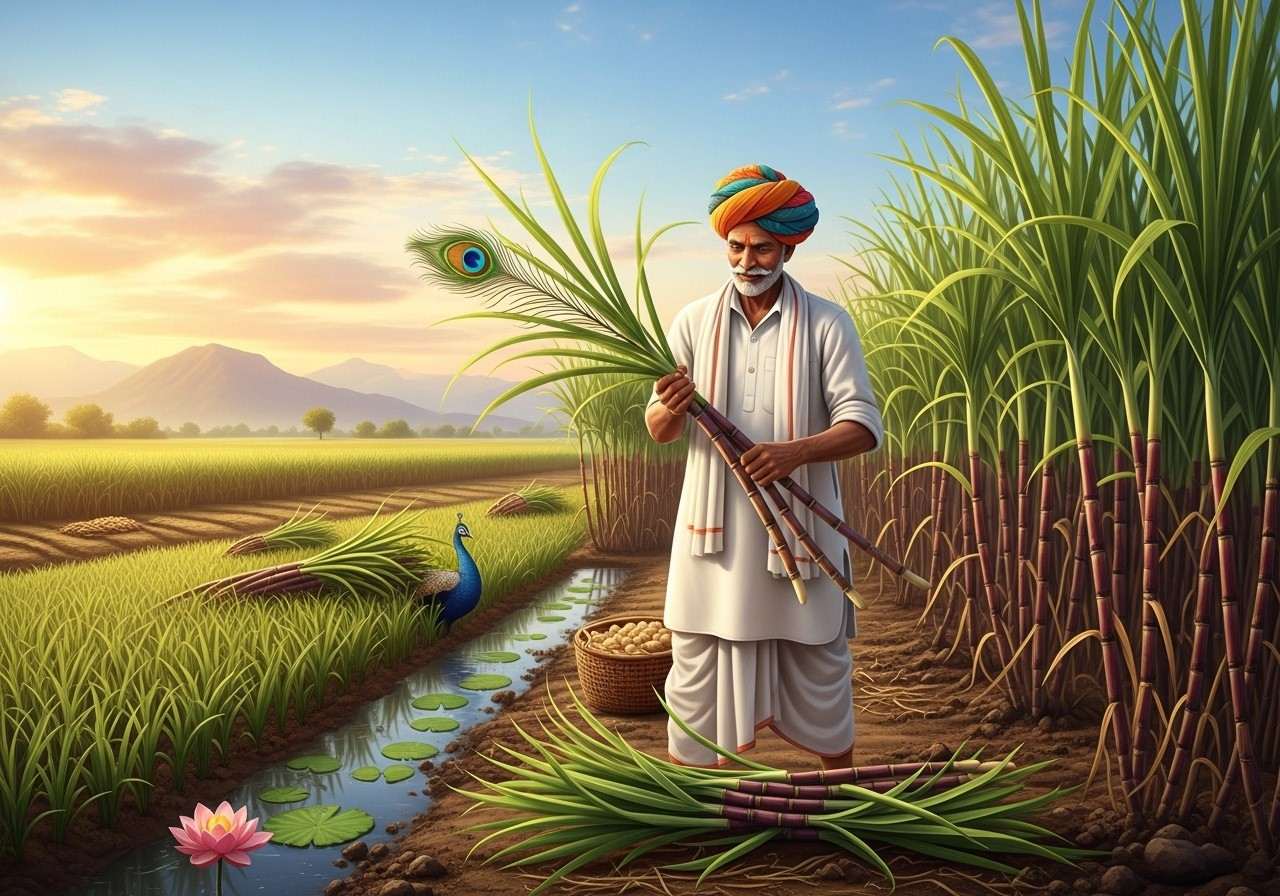
In our vibrant country, growing this sweet and sacred crop is far more than a mere agricultural routine; it is a deeply cherished tradition woven seamlessly into our cultural fabric. For generations, sugarcane (often affectionately called ganna or karumbu) has stood as a powerful symbol of abundance and divine blessings. From adorning our mandirs during Chhath Puja to being the centerpiece of Makar Sankranti and Pongal celebrations, this golden crop bridges our ancient, spiritual practices with the enduring spirit of modern Indian agriculture.
Understanding the rhythmic cycles of this farming tradition helps us feel closer to the earth and our hardworking farming communities. This journey is especially meaningful for those of us who hold our traditional roots close to our hearts, ensuring that even amidst our busy urban lives, we never lose touch with the soil that feeds our culture.
Embracing the Rhythms of Regional Farming Cycles
Our beautiful nation proudly stands as one of the largest producers of this sweet grass globally. Vast fields stretch across states like Uttar Pradesh, Maharashtra, and Tamil Nadu, where the warm embrace of the sun and the nurturing monsoon rains create the perfect cradle for growth. While many of us grew up learning about the simple winter ‘rabi’ and monsoon ‘kharif’ cycles, the lifecycle of this particular crop is a beautifully complex dance that gracefully transcends these conventional boundaries.
The Diverse Tapestry of Sowing Seasons
- A Year-Round Devotion to the Soil: Across our incredibly diverse landscapes, the dedication to planting this crop continues almost entirely throughout the year. The only mindful pause our farmers take is during the heavy monsoon months of June and July, deliberately holding back to protect the delicate young shoots from severe waterlogging.
- The Sub-Tropical Heartlands: In the fertile northern belt covering Uttar Pradesh, Bihar, Haryana, and Punjab, our resilient farmers honor three specific sowing periods. They carefully plant seeds during Autumn (September to October), Spring (February to March), and Summer (April to May), with most crops maturing gracefully over 10 to 12 months, though the autumn sowings can patiently mature for up to 15 months.
- Peninsular India’s Unique Rhythms: Moving towards the southern and central belts, including states like Tamil Nadu, Andhra Pradesh, and Maharashtra, the primary planting season stretches comfortably from December to February. Additionally, a highly revered, long-duration crop known affectionately as ‘Adsali’ is sown during July and August, requiring a full 16 to 18 months of nurturing to reach its peak sweetness.
- Karnataka’s Methodical Agricultural Calendar: Farmers in Karnataka follow deeply ingrained, ancestral schedules with three major planting cycles. They manage the 12-month ‘Eksali’ crop sown from December to February, a dedicated ‘Preseasonal’ crop sown between October and November that matures in 15 to 16 months, and the robust ‘Adsali’ planted in July-August for an 18-month cycle.
- Distinct State-by-State Traditions: In the culturally rich lands of Tamil Nadu, the sowing window generously spans from December right through to May, while lush Kerala focuses its planting efforts closely between October and December. In the west, Gujarat dedicates December and January to planting for an 11 to 12-month cycle, whereas Maharashtra balances a pre-seasonal (October), seasonal (December-January), and the longer Adsali (June-July) planting periods.
The Sacred Ritual of the Harvest
- The Festive Harvesting Window: The much-awaited harvest is a time of immense joy and communal celebration that generally stretches from the cool breezes of December through the warming days of March. This perfectly mirrors the industrial crushing season, which officially kicks off in October, hits its absolute peak in January amidst festival cheers, and slowly wraps up around March or April.
- Patience, Maturity, and Generous Yields: Depending on the region and the specific ancestral variety chosen, this resilient plant requires anywhere from 10 to 18 months to offer its sweet bounty. While northern spring and summer crops are ready in 10-12 months, the southern regions patiently tend to their tropical Adsali crops for 18 to 20 months to ensure the highest quality and thickest, sweetest stalks.
The Enduring Cultural Legacy and Economic Lifeline
Beyond its immense economic value, this sweet crop is a profound cultural emblem in our society. It holds an irreplaceable spot in our ancestral folklore, ancient mythology, and the deeply nostalgic regional stories our grandparents passed down to us. Whether it is being offered to the Sun God during harvest festivals or used to prepare customary festive sweets, its presence is a mandatory blessing.
Furthermore, this agricultural marvel acts as the absolute backbone for countless rural families across the nation. The income generated through these harvests sustains livelihoods, educates the next generation, and fortifies the bonds within close-knit farming communities. Despite facing modern hurdles like unpredictable climate shifts and occasional labor shortages, our farmers continue to beautifully meld time-honored traditional wisdom with modern sustainable practices.
Bringing Auspicious Traditions Home with Poojn.in
At poojn.in, we deeply honor the sacred connection you share with our nation’s rich agricultural festivals. We stand as your premier destination for authentic cultural items, making it effortlessly simple for you to celebrate the harvest seasons with the purest devotion and profound respect for our heritage.
Explore our carefully curated selections to elevate your festive rituals:
- Premium Puja Essentials: Invest in our intricately designed Puja Thalis, which are absolutely essential for performing your sacred thanksgiving rituals during the harvest time. Each thali is meticulously crafted to comfortably hold your diyas, fragrant incense, and fresh kumkum, bringing an aura of divinity to your home temple.
- Auspicious Entrance Decor: Welcome the divine blessings of Mother Earth and the sweet prosperity of the harvest into your household with our stunning Decorative Torans. Hanging these beautiful, traditional pieces at your doorway instantly sets a joyous, welcoming, and deeply spiritual tone for any visiting family or friends.
- Elegant Festive Clothing: Honor the legacy of our hardworking farmers and the joyous spirit of regional festivals by adorning yourself in our beautiful Traditional Attire. Our carefully curated ethnic wear is tailored to help you celebrate your vibrant roots with both unmatched grace and modern comfort.
Why is poojn.in the trusted choice for thousands of Indian families? We firmly believe in absolute authenticity, ensuring every piece you receive resonates with genuine cultural value. We offer the modern convenience of bringing premium cultural goods straight to your doorstep, backed by an unwavering promise of quality.
Common Curiosities About Our Farming Heritage
How is this cherished plant nurtured across the varied soils of our country?
The beautiful process begins by lovingly planting healthy cuttings taken from fully mature stems straight into deeply plowed, nutrient-rich earth. Our dedicated farmers meticulously enrich the soil with natural fertilizers, arrange the cuttings in neat, purposeful rows, and ensure the young plants receive consistent, life-giving water.
Does this sweet grass fall under the traditional winter or monsoon farming cycles?
Fascinatingly, this robust plant refuses to be confined strictly to either the rabi or kharif categories. Because it is fundamentally a tropical wonder that thrives in warm, sun-kissed environments, its life cycle spans across seasons, often taking a full year or more to reach its divine sweetness.
When does the joyous season of gathering the mature crop take place?
The highly anticipated gathering of the mature stalks generally sweeps across our nation between the pleasant months of October and March. However, the exact festive timing is a delicate dance dictated heavily by the region’s unique climate and the ancestral variety of the seed that was lovingly sown.
What kind of environmental embrace does this plant need to truly flourish?
To produce a truly bountiful and sweet yield, the plant demands the warm, radiant embrace of the sun paired with generous monsoons or deeply reliable irrigation. Furthermore, the mother soil must be wonderfully well-drained and incredibly rich in organic matter to sustain such a long growth journey.
How long must a farmer patiently wait for the crop to reach its absolute peak?
Patience is deeply woven into the soul of an Indian farmer, as this particular crop generally requires anywhere from 10 to 20 months to fully mature. This extensive and demanding growth period fluctuates beautifully based on regional temperatures, soil health, and the specific variety cultivated.
In what ways does cultivating this grass benefit our larger rural ecosystem?
Beyond providing the essential sweet essence for our daily cups of chai, this farming tradition serves as a critical economic lifeline for countless rural households. It simultaneously acts as a foundational pillar supporting major national industries, including modern ethanol production and sustainable paper manufacturing.
Is it possible to witness these lush fields in every corner of the country?
While small patches can be nurtured in various regions, this crop truly finds its soul and thrives magnificently in states blessed with consistently warm and tropical climates. Vast, awe-inspiring fields are most prominently found waving in the breezes of Uttar Pradesh, Maharashtra, and Tamil Nadu.
What are the daily hurdles our dedicated agricultural families have to navigate?
Our resilient farming communities constantly battle a myriad of unpredictable challenges, ranging from highly erratic monsoon behaviors to sudden pest attacks and ever-shifting market dynamics. Expertly managing our precious water resources and maintaining the soil’s sacred fertility are daily devotions required to secure a prosperous yield.
Passing Down a Legacy of Sweetness
The legacy of India’s agricultural devotion is a shining testament to our enduring cultural wealth. It beautifully showcases a harmonious blend where ancient, spiritual reverence for the earth meets the pressing needs of modern times. By continuing to celebrate and support these deep-rooted practices, we actively safeguard the livelihoods of millions and ensure that our rich, traditional heritage continues to flourish for the generations yet to come.