
In the rich and vibrant tapestry of our Indian heritage, sacred symbols play a beautiful role in connecting us to the divine. For generations, we have grown up in the comforting laps of our grandparents, listening to glorious tales of mighty deities wielding powerful tools. Two such iconic symbols, often spoken about in the same breath but carrying vastly different energies, are the classic Western three-pronged spear and our very own sacred Hindu emblem carried by Mahadev. Understanding these fascinating artifacts is not just a matter of history; it is a deeply personal journey of feeling closer to our spiritual roots. And today, with the wonderful blessing of online convenience, bringing home an authentic piece of this divine energy is easier and more reassuring than ever.
Tracing Back to Ancient Times: Cultural Origins
Let us gently explore where these revered symbols truly originate. The Western three-tined spear finds its deep roots in the ancient myths of Greece and Rome. It is universally recognised as the mighty tool of Poseidon and Neptune, the legendary gods who ruled the vast, unpredictable oceans. Its historical tales are filled with awe-inspiring stories of controlling the seas, protecting water realms, and even stirring up powerful earthquakes.
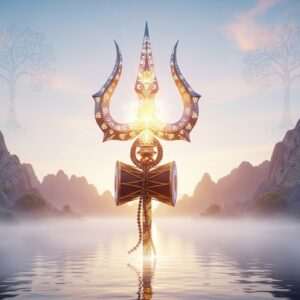
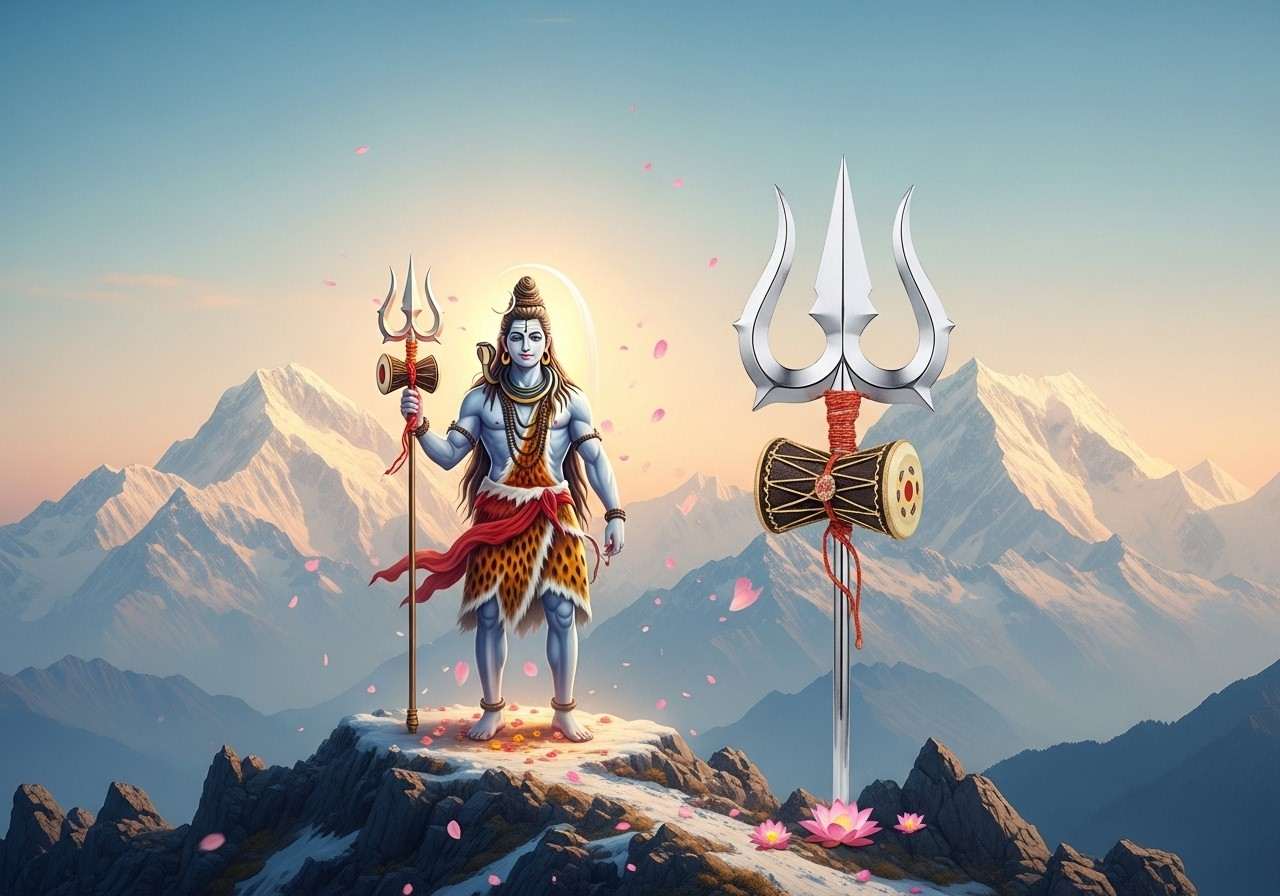
On the other hand, the three-bladed divine weapon of our culture holds a supremely sacred place in our hearts. Known profoundly as the cosmic tool of Lord Shiva, it is a brilliant symbol of divine intervention and universal balance. We also frequently and lovingly see it clutched gracefully in the hands of Maa Durga, representing her ultimate, fiercely maternal power to protect the innocent and conquer worldly chaos.
Decoding the Depths of Meaning and Spiritual Power
When we look at the meaning behind these ancient artifacts, we discover beautiful layers of profound wisdom. In classical Western mythology, the oceanic spear was viewed primarily as an instrument of authority and protection over the water realms. It was considered a powerful tool of immense elemental control.
However, the sacred emblem of Lord Shiva goes far beyond mere elemental power; it holds incredibly rich metaphysical significance for our everyday lives.
- The Holy Trinity of Existence: It beautifully reflects the supreme aspects of the divine as the Creator, the Preserver, and the Destroyer. This profound, timeless concept constantly reminds us of the beautiful, unending flow of life and the grand, miraculous design of the universe we inhabit.
- The Three Essential Qualities: The distinct prongs eloquently symbolize the three Gunas or intrinsic, fundamental qualities of nature: Sattva (representing absolute peace, purity, and harmony), Rajas (symbolising intense passion, movement, and activity), and Tamas (denoting ignorance, lethargy, and darkness).
- The Mastery over Time and Self: It beautifully points towards the ultimate, divine conquest of the past, present, and future. Furthermore, it gently and firmly guides devoted spiritual seekers along the three fundamental, time-tested paths to complete self-realization: profound knowledge, righteous action, and unwavering, pure devotion.
Historical Context and Weaponry Use
While we deeply revere these objects today, looking at their historical, practical uses offers an incredibly interesting contrast.
- Practicality in the Western World: Historically, the Greco-Roman spear was designed with highly practical maritime uses in mind, such as the vital, everyday skill of spear fishing for coastal communities. Additionally, in the ancient, dust-filled Roman arenas, a specific type of gladiator known as a ‘retiarius’ bravely fought for survival using this specific three-pronged polearm accompanied by a weighted, tactical net.
- A Divine Instrument of Righteousness: In stark, beautiful contrast, Mahadev’s sacred weapon is not merely a tool of physical war; it is a supreme, divine instrument purposefully crafted to destroy inner ignorance and worldly evils like blinding anger, destructive lust, and arrogant pride. Sacred, ancient legends even say that this magnificent symbol of perfect cosmic balance was actually forged directly from the brilliant, blazing matter of the sun itself, highlighting its immense, unmatched celestial power.
Form and Function: A Tale of Aesthetic Differences
Even when simply observing their physical structure, you can immediately notice a distinct, beautiful difference in craftsmanship. The Western oceanic spear typically features three completely straight prongs that are uniformly and equally spaced. It is highly straightforward and geometric, perfectly echoing its functional, practical maritime origins.
Conversely, our traditional Hindu emblem is known for a much more elaborate, deeply spiritually inspired aesthetic. The prongs often showcase a beautifully curved or sharp, blade-like structure. This intricate design gracefully highlights the phenomenal artistry and the deep, soulful spiritual reverence poured into its creation by highly skilled, traditional Indian artisans over countless centuries.
Embracing Our Sacred Traditions in Today’s World
It is truly heart-warming to see how these ancient symbols remain so incredibly relevant in our fast-paced modern lives. While the Western spear often finds its place in modern corporate logos, athletic branding, and military insignia to signify strength and legacy, our sacred three-bladed symbol continues to be the vibrant, beating heartbeat of our daily spiritual practices.
Whether it is placed reverently in our home mandirs, lovingly adorned during joyous festive rituals, or worn as an auspicious piece of jewelry, it serves as a constant, comforting reminder of Lord Shiva’s eternal, protective embrace. Navigating today’s busy world, creating a serene, deeply spiritual corner in our homes brings a profound sense of peace and grounding.
At Poojn.in, proudly standing as India’s premier destination for cultural goods, we are deeply dedicated to helping you stay beautifully connected to your rich traditions. We take immense pride in offering an exclusive, highly authentic collection of handcrafted ritual goods designed perfectly to elevate the sanctity of your home altar. Please remember, we focus solely on delivering high-quality, genuine cultural products right to your doorstep, bringing complete convenience to your personal spiritual journey without offering travel or VIP darshan packages. We warmly invite you to explore our exclusive collection today by visiting https://www.poojn.in/. If you ever need any personal assistance with selecting our beautiful products, please feel free to reach out to us directly at 03369029784 or simply send us a warm, friendly message via WhatsApp at 9476142738.
Addressing Common Curiosities and Spiritual Inquiries
Many devoted individuals often wonder about the finer, nuanced details of these beloved symbols. For instance, people frequently ask about the primary difference between these two three-pronged instruments. The profound distinction truly lies in their deep-rooted cultural and symbolic significance. While one is widely celebrated as a maritime tool of Greek mythology used by the ocean gods, the other is the ultimate, universally revered symbol of creation, protection, and cosmic dissolution in our beautiful Sanatana Dharma.
Sometimes, there is a genuine confusion about whether these two culturally distinct items can be called by the exact same name. Technically speaking, because both happen to share a three-pronged shape, one might loosely use the terms interchangeably in a casual conversation. However, doing so genuinely overlooks the profound, unmatched religious devotion and immense spiritual weight attached to our revered Hindu emblem.
Another very common thought revolves around the specific traditional materials used by artisans to lovingly craft these sacred objects. Traditionally, both are expertly forged from strong, enduring metals like iron, brass, or steel. Yet, what makes our traditional sacred weapon so incredibly unique is how it is lovingly adorned during our household pujas. We often lovingly wrap it with sacred red threads (kalawa), anoint it with pure vermilion (sindoor), and dress it in beautiful fresh flower garlands, deeply amplifying its divine, protective vibration in our homes.
Lastly, families often lovingly seek to know about the specific daily rituals associated with bringing this divine symbol into their modern homes. Indeed, it plays an incredibly vital, central role in our daily household prayers and grand, joyous temple ceremonies. Worshippers lovingly place it in their sacred, purified spaces to invoke ultimate divine protection, peacefully dispel any negative energies, and warmly invite the magnificent, benevolent power of the divine into their peaceful households.
Embracing these magnificent cultural treasures brings a deep, reassuring sense of peace and familial belonging. They are not merely cold objects made of metal; they are golden, spiritual bridges connecting us to the ancient, profound wisdom of our ancestors. Let us joyfully continue to honor our beautiful past, keeping the sacred flame of our traditions burning bright and warm for all the generations to come.