

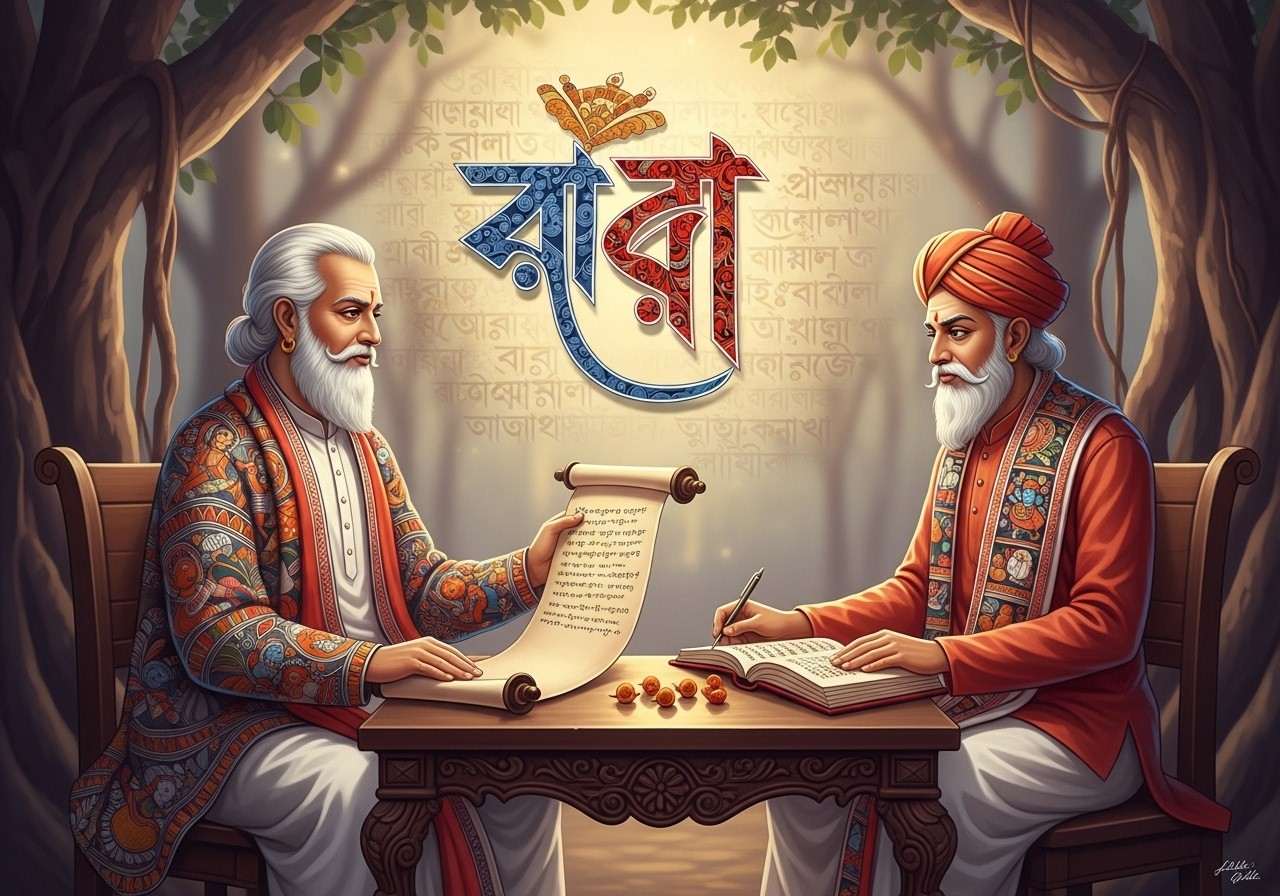
In our beautifully diverse motherland, written languages are far more than mere characters on a piece of paper; they are the very soul of our regional identities. The Bengali and Odia writing systems offer a profound window into India’s vibrant cultural and linguistic heritage. Both of these magnificent scripts trace their sacred roots back to the ancient Brahmi script, weaving a rich historical tapestry that has been passed down through generations. By understanding how these languages evolved, we can deeply appreciate the incredible diversity of our country and their enduring relevance in our daily pujas, literature, and modern lives.
Tracing the Historical Roots of the Bengali Script
The journey of the Bengali script is a fascinating tale of continuous evolution and regional pride. Evolving from the ancient Brahmi script, it transitioned through the Siddham and Gaudi scripts before taking its own distinct form. By the 11th century, the Proto-Bengali script, affectionately known as the Eastern Nagari script, began to flourish. This profound transformation reached its zenith during the Bengal Renaissance, a golden era when the written word became the backbone of literature, art, and modern education. Today, it stands as one of the most widely embraced writing systems in India, gracefully influencing neighboring languages like Assamese and beautifully adapting to the digital age, ensuring our ancestors’ voices echo in everyday contemporary communication.
The Ancient Journey of the Odia Script
Equally mesmerizing is the historical path of the Odia writing system. This beautiful script is a direct descendant of the Kalinga script, which itself blossomed from the original Brahmi script. Historical records proudly show that the earliest known physical example of Odia writing dates all the way back to 1051 AD. This centuries-old journey has not only nurtured timeless Odia literature but has also been a pillar of strength for regional identity. A moment of immense pride for the community was when the Indian government officially recognized Odia as a classical language, cementing its vital place in our nation’s cultural heritage. In today’s fast-paced world, the script has wonderfully embraced modern technology, continuing its sacred duty of preserving local traditions.
Visual Grace: Structural Differences Between the Scripts
While both systems share a common ancestry, their visual evolution reflects the unique practicalities of their respective regions. The most striking distinguishing feature of the Bengali script is the prominent horizontal line at the top, known as the ‘matra’. This continuous line connects the letters in a beautifully flowing, linear, and slightly angular manner, giving the text a horizontally stretched appearance.
In wonderful contrast, the Odia script is globally recognized for its soft, rounded shapes and completely enclosed circular loops. This curvilinear grace is deeply rooted in tradition; our ancestors historically wrote on delicate palm leaves using a sharp stylus. If they had used straight lines or a top connecting ‘matra’, the fragile leaves would have torn instantly. Therefore, the letters evolved to stand independently, curving gently to preserve the sacred texts etched upon them.
Linguistic Similarities and Phonetic Distinctions
Beyond their visual beauty, both are classified as abugidas, meaning their consonants carry an inherent vowel sound that can be altered using specific diacritics. Both are naturally written from left to right and share incredibly similar structural sets of vowels and consonants. However, the exact composition reveals their unique linguistic paths.
The traditional Odia phonetic family is lovingly structured with 12 vowels and 36 consonants, and is known for having simpler, less clustered compound letters (conjuncts). On the other hand, the Bengali family gracefully accommodates 11 vowels and 39 consonants. Furthermore, while both inherently carry the “a” vowel sound, the actual pronunciation of this foundational sound differs significantly between the two, granting each spoken language its own unmistakable, heartwarming melody.
Embracing and Preserving Our Heritage with Poojn.in
These ancient alphabets hold immense cultural significance, acting as the lifeblood of our local festivals, daily rituals, and timeless traditions. They fiercely protect our cultural identity amidst the rapid pace of globalization. We deeply understand the emotional connection families have with their mother tongues, and we believe that nurturing this bond at home is essential for the generations to come.
For those looking to celebrate and practice these sacred writing styles, Poojn.in proudly offers an authentic collection of cultural goods designed specifically for your household needs. Please note that while our online store is fully dedicated to bringing authentic ritual items directly to your doorstep, we do not provide travel packages, holiday guidance, or VIP darshan services for temples.
Meaningful Cultural Products for Your Home:
- Script Calligraphy Sets: Perfect for those who want to practice the divine art of writing in these traditional scripts. These thoughtfully curated sets include classic calligraphy pens and high-quality paper, allowing you to master the graceful curves of Odia and the linear strokes of the Bengali languages with absolute ease.
- Alphabet Learning Charts: Ideal for beginners and the younger generation, these beautifully illustrated guides help you and your children deeply understand the letters. They serve as a wonderful daily visual reminder of our rich linguistic heritage right on your study room walls.
- Cultural Books: Explore our carefully selected collection of texts that dive deep into the fascinating history and profound significance of these regional writing systems. Immersing yourself in these books is a comforting and educational way to connect with the timeless traditions of our incredible Indian heritage.
Shopping for these meaningful items is completely hassle-free, allowing you to honor your ancestral roots from the absolute comfort of your living room. Should you ever need assistance finding the perfect cultural item, please feel free to call our friendly team at 03369029784 or drop us a warm message on WhatsApp at 9476142738.
Common Curiosities About Bengali and Odia Writing Systems
Many devotees and cultural enthusiasts often wonder about the primary differences between these two prominent writing systems. The fundamental distinction lies in their visual structure and historical adaptation; Bengali is easily recognizable by its open, angular strokes and the connecting horizontal top line, whereas Odia is universally celebrated for its independent, soft, rounded letters designed specifically to prevent the tearing of ancient manuscript leaves.
People frequently express curiosity over whether a native speaker of one language can effortlessly read the text of the other. While they do share deep ancient roots, the independent visual evolution of both scripts means that reading the other requires dedicated learning. The characters have taken on entirely unique physical shapes over the centuries, making mutual legibility quite challenging without formal practice.
Another area of interest revolves around the exact number of characters present in each system. As established through historical texts, the Bengali alphabet beautifully comprises 50 letters in total, divided into 11 vowels and 39 consonants. Conversely, the Odia alphabet embraces 48 characters, specifically structured with 12 vowels and 36 consonants.
For those seeking to transition written text from one language to the other, there are several modern digital tools available today. Various online applications and websites offer transliteration services that can swiftly convert the letters, though users should be mindful that the accuracy of subtle cultural phonetic nuances can occasionally vary in digital translation.
Language lovers also inquire if these two systems share common letters. Because of their shared Sanskrit ancestry, they possess incredibly similar phonetic sounds and structural arrangements. However, due to their localized evolution, the actual physical writing of these sounds remains visually distinct to each respective region.
The fascinating question of why they look so completely different despite sharing common origins naturally arises. It entirely comes down to local geographical practices and the materials available to our ancestors. The ancient Odishan tradition of meticulously etching on palm leaves required curved, closed lines to avoid splitting the leaf, sharply contrasting with the ink-based linear style that naturally developed in the Bengal region.
When it comes to the spoken word, many wonder if the pronunciations mirror each other. They indeed share a solid phonetic framework inherited from ancient times. Yet, the distinct pronunciation of the inherent ‘a’ sound, along with other localized inflections, gives each language its own beautiful, unmistakable, and deeply emotional rhythm.
Lastly, gentle debates often arise regarding which script is older. Historical timelines trace both back to the ancient Brahmi script, evolving as parallel contemporaries. Odia’s earliest known physical evidence dates back to 1051 AD, while the Proto-Bengali script began taking its distinct, recognizable shape around the 11th century, making both scripts equally majestic pillars of our ancient Indian history.
Embracing these magnificent scripts means honoring the resilient spirit of our ancestors. Let us joyfully celebrate this vibrant linguistic diversity and ensure our rich cultural identity remains eternally strong in an ever-changing world.