


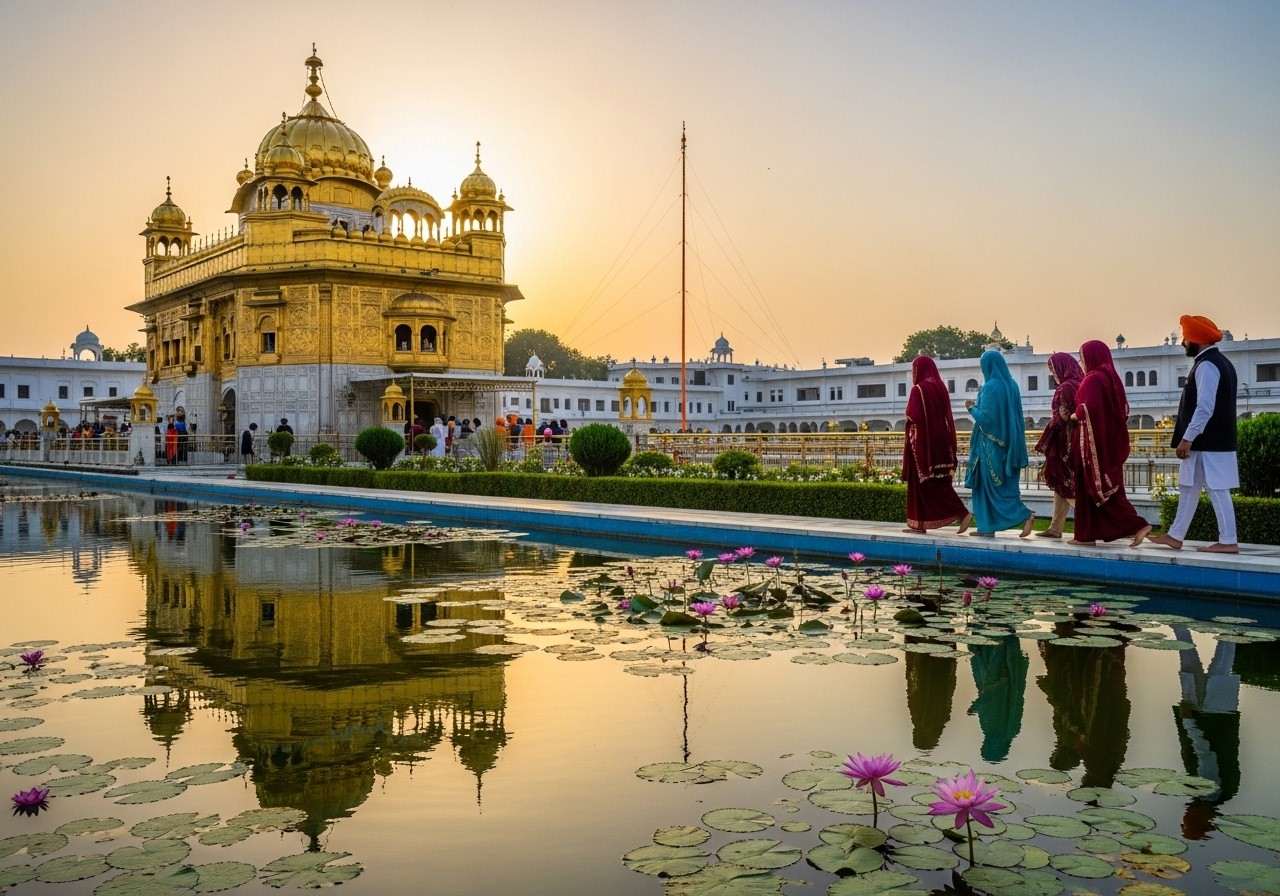
Kapurthala, often affectionately termed the “Paris of Punjab”, is far more than just a city of royal palaces and gardens. It is a profound meeting point of diverse cultures and a sanctuary where spirituality flows as deeply as the rivers that nurture the land. For generations, Sikhism has been the heartbeat of this region, shaping its values, architecture, and daily life. The city’s Gurudwaras are not merely structures of brick and mortar; they are living institutions of peace, preserving the timeless teachings of the Sikh Gurus.
For the modern Indian seeking a connection to their roots, a visit—whether physical or spiritual—to Kapurthala offers a grounding experience. It is a reminder of the power of Seva (selfless service) and Simran (remembrance of God). While we at Poojn.in do not organize travel or tours, we understand the deep emotional pull of these sacred sites and strive to help you recreate that spiritual sanctity within your own home.
The State Gurudwara: An Architectural Marvel
Standing tall as a beacon of secularism and faith is the State Gurudwara of Kapurthala. Commissioned in 1915 by the visionary Maharaja Jagatjit Singh, the last ruler of the princely state, this shrine was built to fulfill the spiritual aspirations of his Sikh subjects. The Maharaja was known for his love of art, and this is vividly reflected in the Gurudwara’s design.
What makes this Gurudwara truly unique is its breathtaking Indo-Saracenic architecture. It is a rare fusion that captures the eye and the soul:
- A Blend of Styles: The structure harmoniously combines Mughal and Rajput architectural elements, with distinct influences of Moorish and Gothic styles. This unique aesthetic makes it stand out distinctly among other Sikh shrines in India, attracting architecture enthusiasts alongside devout pilgrims.
- Transformation Over Time: Originally constructed using red sandstone from Rajasthan, the Gurudwara has witnessed a transformation over the last half-century. It has been painted pristine white, and its central dome has been altered, yet it retains the grandeur of its historical foundations.
- Community and Equality: True to Sikh tradition, the Gurudwara features a vast Langar Hall. Here, the community kitchen serves meals to everyone, erasing lines of caste, creed, and status, symbolizing the core Sikh value of universal brotherhood.
Tracing the Footsteps of Guru Nanak Dev Ji
Kapurthala’s spiritual landscape is deeply intertwined with the life of Guru Nanak Dev Ji, the founder of Sikhism. Several Gurudwaras here mark significant moments in his divine journey.
Gurudwara Sri Hatt Sahib
This sacred site commemorates the period when Guru Nanak Dev Ji worked at a provision store (Hatt) for the Nawab. It is believed that he would often distribute goods to the poor, seeing the divine in everyone. The Gurudwara houses a historic Hatt tree, under which the Guru is said to have rested and delivered spiritual discourses on equality and compassion. Today, the Gurudwara continues this legacy through daily Kirtan and community events that promote unity.
Gurudwara Ber Sahib
Perhaps one of the most significant sites, Gurudwara Ber Sahib marks the place where Guru Nanak Dev Ji spent 14 years and attained enlightenment. Legend holds that he would meditate under a Ber tree near the Kali Bein river. It was here that he disappeared into the river for three days, emerging with the profound Mool Mantar and the message of “Ek Onkar” (God is One). The current structure, with its white marble and golden dome, stands by that very Ber tree, inviting devotees to take a holy dip in the Sarovar for spiritual cleansing.
Gurudwara Antaryatma Sahib & Guru Ka Bagh
The spirit of interfaith dialogue is captured at Gurudwara Antaryatma Sahib, built on the site of a mosque where Guru Nanak Dev Ji was invited to offer prayers, emphasizing that true devotion transcends religious labels. Meanwhile, Gurudwara Shri Guru Ka Bagh in Sultanpur Lodhi holds a personal significance as the first home of Guru Nanak Dev Ji and Mata Sulakhani after their marriage, and the birthplace of their two sons.
The Legacy of Guru Arjan Dev Ji and Guru Hargobind Singh Ji
The spiritual lineage continued to bless this region through the visits of later Gurus, marked by specific historical events.
- Gurudwara Shri Baoli Sahib: Located in Dalla village, this shrine is associated with Guru Arjan Dev Ji. He visited this area for the marriage of his son, Guru Hargobind Singh Ji. It is said that the Guru himself initiated the digging of the Baoli (stepwell), emphasizing the importance of water and service to the community.
- Gurudwara Shri Vivah Asthan: Also in Dalla village, this Gurudwara marks the joyous occasion of the wedding of Guru Hargobind Singh Ji and Mata Damodri Ji in 1604. It stands as a testament to family values and the community celebrations that are central to Punjabi culture.
- Gurudwara Shri Tahli Sahib: In the village of Balehar Khanpur, this site recounts a tale of immense courage. Guru Hargobind Singh Ji is believed to have tied his horse to a Tahli tree here and protected the villagers by slaying a ferocious lion, symbolizing the Guru’s role as a protector of the innocent.
Bring the Spiritual Vibrance Home
While walking the hallowed grounds of Kapurthala is a blessing, true spirituality thrives in your daily practices at home. At Poojn.in, we are dedicated to helping you maintain that divine connection. We are India’s premier online store for authentic cultural and ritual goods, ensuring that your home shrine reflects the purity and tradition you cherish.
Whether you are looking to recreate the serene atmosphere of a Gurudwara or simply wish to perform your daily prayers with devotion, our collection is curated for you:
- Premium Incense & Dhoop: Fill your home with fragrances that calm the mind and elevate the spirit, much like the soothing aroma of incense that wafts through the State Gurudwara during evening prayers.
- Authentic Prayer Accessories: From beautifully crafted brass puja thalis to sacred prayer beads (Malas), we provide high-quality items that add dignity and grace to your personal worship.
- Convenience & Trust: We understand your busy lifestyle. You can order these essential spiritual items online from Poojn.in and have them delivered directly to your doorstep, ensuring your rituals never face a pause.
Please note: We strictly sell cultural goods and do not offer travel packages, hotel bookings, or VIP darshan services.
Common Questions About Visiting Kapurthala’s Gurudwaras
Devotees and travelers often have questions when planning their pilgrimage to this historic city. Here is what you need to know to ensure a respectful and fulfilling visit.
Understanding the Historical Context
Many visitors ask about the origins of the State Gurudwara. It was established in the early 20th century, specifically around 1915, by Maharaja Jagatjit Singh. It serves as a powerful symbol of the syncretic culture of Punjab, blending Sikh religious requirements with the Maharaja’s European-influenced aesthetic tastes.
Dress Code and Etiquette
A frequent query concerns proper attire. As with all Sikh shrines, it is mandatory to cover your head with a scarf, chunni, or turban before entering the premises. Modest clothing that covers shoulders and knees is required for both men and women. Shoes must be removed at the entrance area (Joda Ghar) as a sign of respect.
Best Time to Visit
While the Gurudwaras are open year-round, many devotees prefer visiting during major festivals like Gurpurab or Baisakhi, when the atmosphere is electric with devotion and celebration. However, for a quieter experience to admire the architecture and meditate, weekdays are often recommended.
Accessibility and Facilities
The Gurudwaras in Kapurthala are active centers of community life. They are generally accessible to all. The Langar (community kitchen) is a key feature where visitors can partake in a simple, vegetarian meal, sitting together on the floor, which is a humbling experience of equality.
Visiting Kapurthala is an invitation to witness the harmony of history and divinity. May your journey be filled with peace, and remember, for all your worship needs back home, Poojn.in is always here to serve you.