
In the rich tapestry of Indian culture, we believe that our existence is a blessing bestowed upon us by our forefathers. Pitru Paksha, often called Shraddha Paksha, is that poignant time in the Hindu calendar dedicated entirely to remembering and honoring these departed souls. It is a period not of mourning, but of deep gratitude and remembrance, ensuring that the bond between the present generation and their roots remains unbroken.
For those of us leading busy lives in 2026, understanding the correct dates and rituals is essential to perform these duties with sincerity. This sacred fortnight is a time to offer prayers for the peace and Moksha (liberation) of our ancestors, seeking their blessings for the prosperity and protection of our families.
Significant Dates for Pitru Paksha 2026
The dates for Shraddha Paksha are determined by the lunar calendar. In the year 2026, this 16-day period commences on September 26, 2026, and concludes on October 10, 2026. The period begins from the Purnima (Full Moon) of the Bhadrapada month and ends on Sarvapitri Amavasya (New Moon).
Each day within this fortnight carries specific significance. It is customary to perform the Shradh on the specific Tithi (lunar day) that corresponds to the day your ancestor passed away. If the exact date is unknown, the final day, known as Sarvapitri Amavasya, is the designated day to honor all ancestors collectively.
The Spiritual Significance of Shradh Rituals
Why do we perform Shradh? It is believed that during these days, the souls of our ancestors visit Earth to be with their kin. By offering them water and food, we satisfy their hunger and thirst, which in turn brings peace to their souls. In our scriptures, this act is seen as repaying the Pitra Rin (debt to ancestors). When we perform these rituals with a pure heart, it is said to remove obstacles from our lives and bring harmony to the household.
Understanding the Core Rituals
The observance of Pitru Paksha revolves around three main pillars: Tarpan, Pind Daan, and Daan (Charity). While traditional procedures can be elaborate, the essence lies in devotion.
1. Tarpan Vidhi (Offering Water)
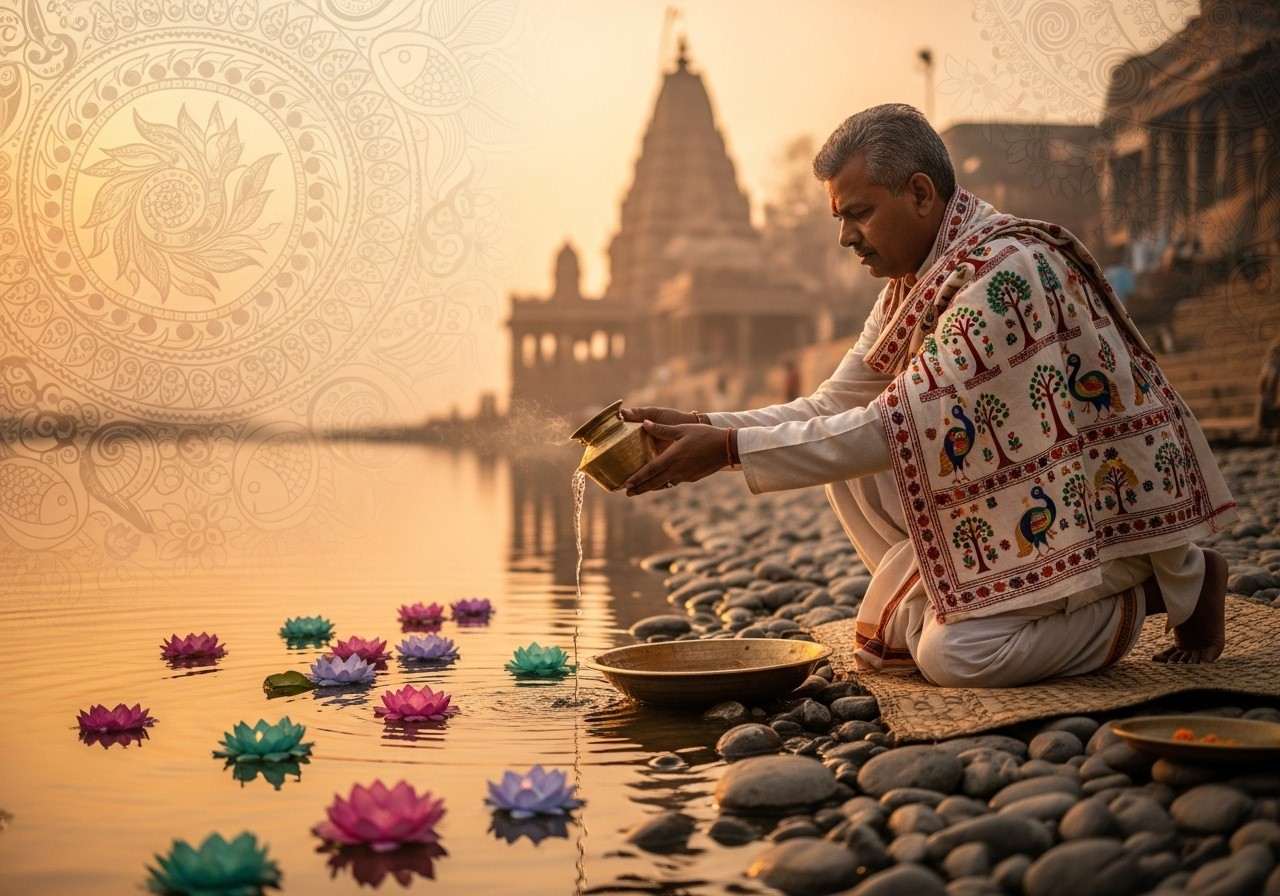
Tarpan is the act of satisfying the ancestors with water. It involves offering water mixed with black sesame seeds (Til), barley, and Kusha grass. Standing facing the South—the direction associated with the ancestors—one pours this sacred water slowly through the fingers while chanting mantras. This simple yet powerful act is believed to reach the ancestors directly, cooling their souls.
2. Pind Daan (Food Offering)
This ritual involves making small balls, or Pinds, from cooked rice mixed with black sesame seeds, honey, and ghee. These rice balls symbolize the body of the soul and are offered to help them detach from the material world and progress on their spiritual journey toward liberation.
3. Brahmin Bhoj and Daan
No Shradh is complete without feeding a Brahmin or the needy. Families prepare a sattvic meal—pure vegetarian food without onion or garlic—often including Kheer, Puri, and seasonal vegetables. After the offering is made to the ancestors, this food is served to Brahmins, cows, crows, and dogs. Finally, Daan (donation) of clothes or essentials is given to the poor to earn merit.
How to Perform Pitru Paksha Puja at Home
Living in urban settings often makes it difficult to visit holy river banks for rituals. However, you can perform these sacred duties at home with equal sanctity. Here is a simplified guide:
- Preparation and Purity: Begin your day early. After a bath, wear clean, traditional clothes. Clean your puja space or a quiet corner facing South. Place a photo or a symbolic representation of your ancestors on a clean cloth.
- Sankalp (Taking the Vow): Sit facing the South. Take some water, flowers, and rice in your hand and solemnly state your intention (Sankalp) to perform the Shradh for your specific ancestors or the family lineage.
- The Offering: Mix black sesame seeds in a copper vessel filled with water. With folded hands and deep respect, slowly pour this water offering, remembering your parents and grandparents.
- Sattvic Cooking: Prepare a simple meal of rice, dal, kheer, and vegetables. Ensure the kitchen is clean and the food is cooked with devotion. Offer a portion of this food to the ancestors first.
To assist you in this process, Poojn.in offers complete Pind Daan Kits that contain all the necessary Vedic items, ensuring you don’t miss out on any essential component of the ceremony.
Essential Do’s and Don’ts During Pitru Paksha
This period requires a lifestyle of restraint and mindfulness. To maintain the sanctity of the rituals, certain guidelines are traditionally followed:
- Maintain a Sattvic Diet: Avoid consuming meat, alcohol, and tamasic foods like onions and garlic. A pure vegetarian diet is strictly recommended to maintain spiritual purity.
- Avoid New Beginnings: It is generally advised not to purchase new clothes, jewelry, or vehicles, or to organize weddings and house-warming ceremonies during these 16 days. This time is reserved for reflection, not celebration.
- Personal Grooming: Traditionally, men avoid shaving or cutting their hair and nails during Pitru Paksha as a mark of mourning and respect.
- Kindness and Charity: Be gentle in your speech and generous in your actions. Feeding animals, especially cows and dogs, is considered highly auspicious.
Clarifying Common Misconceptions
There is often a fear associated with Pitru Paksha, with people worrying that it brings bad luck. This is a misconception. It is not an inauspicious time; rather, it is a powerful time for healing and clearing karmic debts. It is a period to heal family patterns and seek the protective guidance of those who came before us. Honoring ancestors creates a shield of blessings around the family.
Embracing Tradition with Modern Convenience at Poojn.in
We understand that while your heart desires to follow every tradition, finding the right ritual items in a busy city can be challenging. Poojn.in bridges this gap by bringing authentic culture to your doorstep.
Why Trust Poojn.in for Your Ritual Needs?
Pitru Paksha is a time of sincerity, and the purity of the materials used is paramount. At Poojn.in, we take pride in being India’s most trusted store for cultural goods. We provide:
- Authentic Pind Daan Kits: Curated with care, our kits include black sesame, sacred threads, and other essentials so you can focus on the prayer, not the procurement.
- Traditional Brass Utensils: We offer high-quality brass utensils that are traditionally prescribed for offering water and food during Shradh.
- Pure Incense and Camphor: Create the perfect sanctified atmosphere with our natural incense sticks and camphor.
We ensure that all our products are genuine and respectful of the traditions they serve. You can shop online from the comfort of your home and have everything delivered before the rituals begin. If you need assistance choosing the right items, our support team is available at 03369029784 or via WhatsApp at 9476142738.
Frequently Asked Questions About Pitru Paksha 2026
When does the Shraddha period begin and end in 2026?
For the year 2026, the sacred period of Pitru Paksha starts on September 26 and continues for 16 days, ending on October 10. It is crucial to mark these dates to ensure you can pay homage at the right time.
What constitutes the Shradh rituals?
The rituals are a blend of offering food (Pind Daan), water (Tarpan), and prayers. The core intent is to satisfy the ancestors’ souls through these offerings and the feeding of Brahmins and the poor. It is a gesture of love that transcends the physical realm.
Is it possible to perform Tarpan at home?
Absolutely. While riverside ceremonies are traditional, performing Tarpan at home is fully accepted, especially in modern times. Using a clean copper vessel, black sesame seeds, and water, you can perform the ritual facing South in your own prayer room or balcony.
What if I don’t know the date of my ancestor’s death?
If you are unaware of the specific Tithi (lunar day) of your ancestor’s passing, you should perform the Shradh on the final day, Sarvapitri Amavasya (October 10, 2026). This day covers all ancestors, known and unknown.
Why is a vegetarian diet mandatory?
Consuming a sattvic, vegetarian diet is essential to maintain physical and mental purity. It helps in channeling positive energies and ensures that the body is in a state suitable for performing sacred rites.
As we approach Pitru Paksha 2026, let us pause to remember those who paved the way for us. With the right guidance and authentic materials from Poojn.in, may your offerings bring peace to your ancestors and blessings to your home.