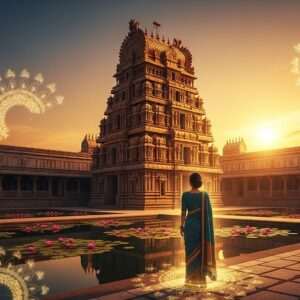


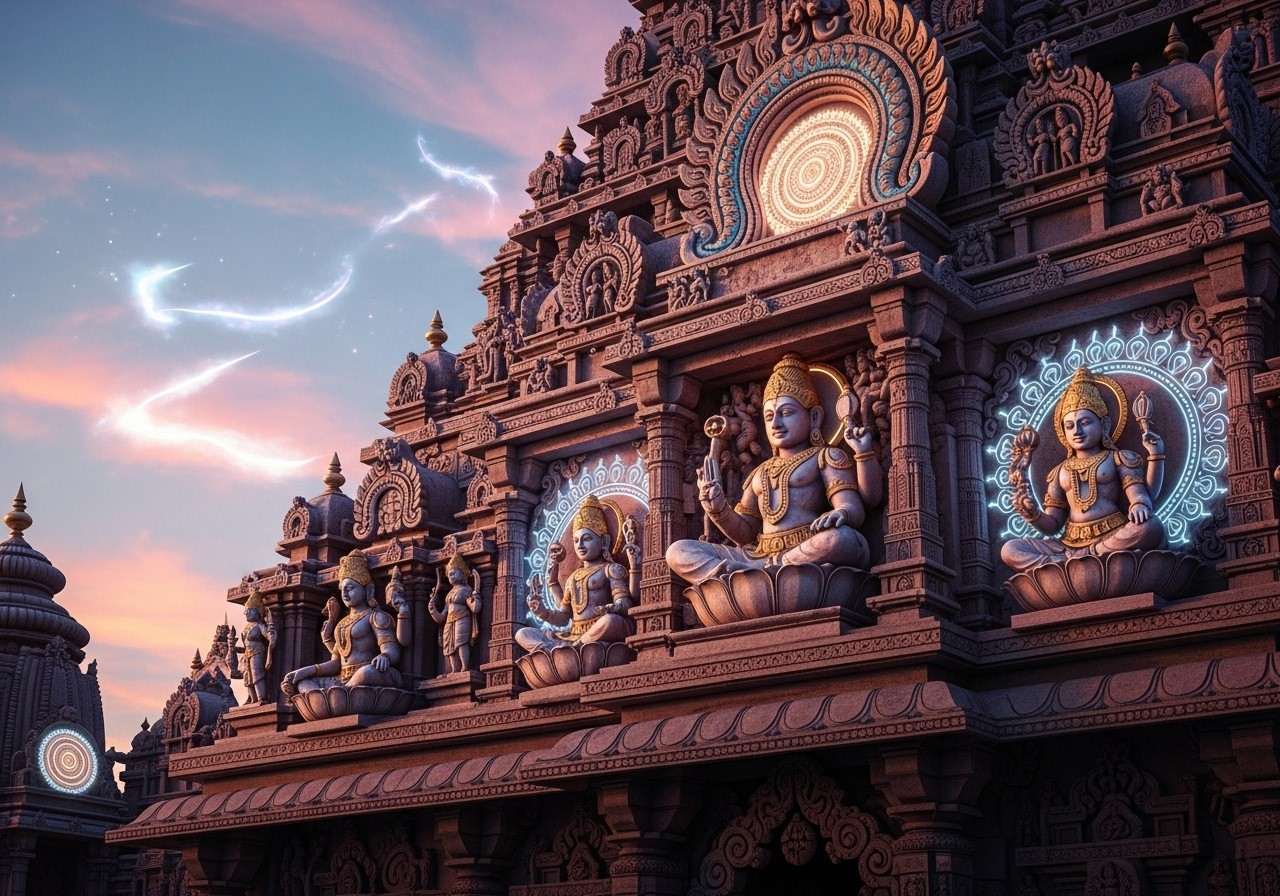
Imagine standing in the courtyard of an ancient temple as the first rays of the sun touch the cold stone. Suddenly, the carvings seem to come alive—the celestial dancers, the meditative deities, and the intricate floral patterns all tell a story that is centuries old. In our beloved India, architecture is never just about buildings; it is a physical manifestation of the divine. From the rugged caves of Ajanta to the towering gopurams of the South, our ancestors transformed lifeless rocks into vibrant expressions of faith. These masterpieces are not merely tourist spots; they are the keepers of our cultural soul, offering us a glimpse into the profound devotion and artistic mastery of the past.
While stone carving is a global phenomenon—dating back as far as the Venus of Willendorf (circa 28,000 BCE), which symbolized fertility and reverence—India’s relationship with stone is uniquely spiritual. For over two millennia, Indian craftsmen have treated stone not as a material to be conquered, but as a medium to be liberated, revealing the sacred forms hidden within.
The Sacred History of Spiritual Architecture
The evolution of spiritual architecture in our country is a fascinating journey through time, shaped by great dynasties like the Mauryas, Guptas, and Cholas. These rulers didn’t just build structures; they patronized art that reflected the deepest philosophies of Hinduism, Buddhism, and Jainism. Temples were designed to be the center of community life—places where art, dance, and commerce flourished alongside worship.
Later, the Mughal era introduced a new aesthetic, blending indigenous styles with Persian elegance, resulting in a rich architectural tapestry. However, the core of Indian temple architecture remains distinct. Key elements like the Shikhara (mountain-like spire), the Mandapa (gathering hall), and the Gopuram (gateway) are not random designs. They rely on sacred geometry and symbolism to represent the cosmos, guiding the devotee from the outer world of illusions to the inner sanctum of truth.
Stone Sculptures: The Language of the Divine
If architecture is the body of the temple, then sculpture is its soul. In Indian tradition, a stone idol is not worshipped until the ‘Prana Pratishtha’ is performed, but the carving itself is an act of meditation. The temples of Khajuraho are a prime example, where intricate relief carvings illustrate everything from daily life to complex spiritual concepts, seamlessly blending the human and the divine.
Consider the famous Nataraja bronze and stone depictions at Chidambaram; they capture the cosmic dance of Lord Shiva, symbolizing the eternal cycle of creation and destruction. Similarly, the rock-cut marvels at the Ellora and Ajanta Caves reflect a unique confluence of Hindu, Buddhist, and Jain artistry, demonstrating a harmony that is rare in world history. These sculptures serve as visual scriptures, preserving religious teachings and mythological stories for generations who might never read a text but can read a stone.
Regional Variations: One Spirit, Many Forms
Travel across India, and you will see how the same devotion manifests differently depending on the region’s geography and culture. The diversity is breathtaking:
- The Dravidian Style of the South: Characterized by immense, pyramid-shaped Gopurams adorned with thousands of colorful statues. These temples are grand, walled cities in themselves, reflecting a society where the temple was the hub of all activity.
- The Nagara Style of the North: Known for its curvilinear Shikharas that resemble mountain peaks, drawing the eye upward toward the heavens. The ornamentation here is often more subtle but deeply symbolic, focusing on the vertical ascent of the spirit.
- The Unique Styles of the Northeast and East: Regions like Odisha give us the Sun Temple at Konark, a chariot of stone that showcases incredible astronomical precision. Meanwhile, the monastic architecture in the Northeast reflects a serene blend of Buddhist traditions and local tribal aesthetics.
Bringing the Spiritual Essence Home with Poojn.in
While we can stand in awe of these monumental structures, we often wish to bring a fragment of that peace and sanctity into our own homes. We understand that you cannot live in a temple, but you can certainly create a temple-like atmosphere in your personal space. This is where we come in.
At Poojn.in, India’s biggest cultural goods store, we offer you the finest selection of ritual items that resonate with the same traditions found in these architectural marvels. Whether you are looking for a beautifully crafted brass idol that captures the finesse of ancient sculptors or aromatic incense that recreates the scent of a sanctum sanctorum, we have it all. Explore our collection today to find the perfect additions for your home altar. Please note, we strictly sell cultural goods and do not offer travel packages or VIP darshan services; our mission is to enhance your spiritual practice at home.
Preserving Our Stone Heritage
The challenge today is to protect these ancient stones from the ravages of time and pollution. Preservation is not just about repairing cracks; it is about keeping our history alive. Thankfully, both government bodies and dedicated non-profit organizations are working tirelessly on restoration projects. Success stories like the conservation of the Brihadeeswarar Temple inspire hope.
Modern technology, including 3D modeling and laser scanning, is now being used to document every inch of these structures, ensuring that even if the stone wears away, the knowledge is never lost. However, the most important guardian of heritage is the community. When we visit these sites with respect—balancing our curiosity with conservation—we ensure they remain standing for our children.
Common Questions About Indian Spiritual Architecture
We often hear people asking about the significance of these structures. A common query is regarding the most famous architectural marvels in our subcontinent. Without a doubt, the list includes the timeless Taj Mahal, the majestic Brihadeeswarar Temple, and the mystifying Ajanta Caves, each reflecting a peak of craftsmanship and spiritual depth.
Another frequent topic of curiosity is how stone and sculpture contribute to the spiritual legacy. The answer lies in storytelling. Stone acts as a durable canvas for our epics; temples are essentially open books where deities and mythological events are carved to educate and inspire the viewer.
Many also wonder about the materials used by ancient artisans. Our ancestors were masters of geology, selecting durable materials like granite, sandstone, marble, and limestone. These stones were chosen not just for their strength, but for their ability to hold intricate details for centuries, allowing the art to survive long after the artist is gone.
Finally, there is often a question about modern architecture and whether it respects these traditions. It is heartening to see that many modern architects in India are revisiting ancient texts like the Vastu Shastra, blending contemporary design with traditional spiritual values to create spaces that feel both new and timelessly Indian.