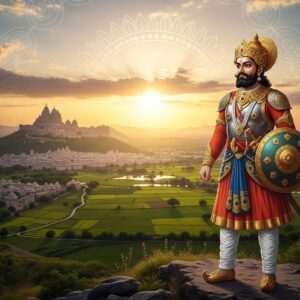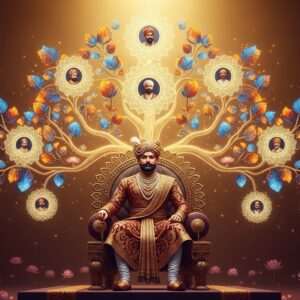


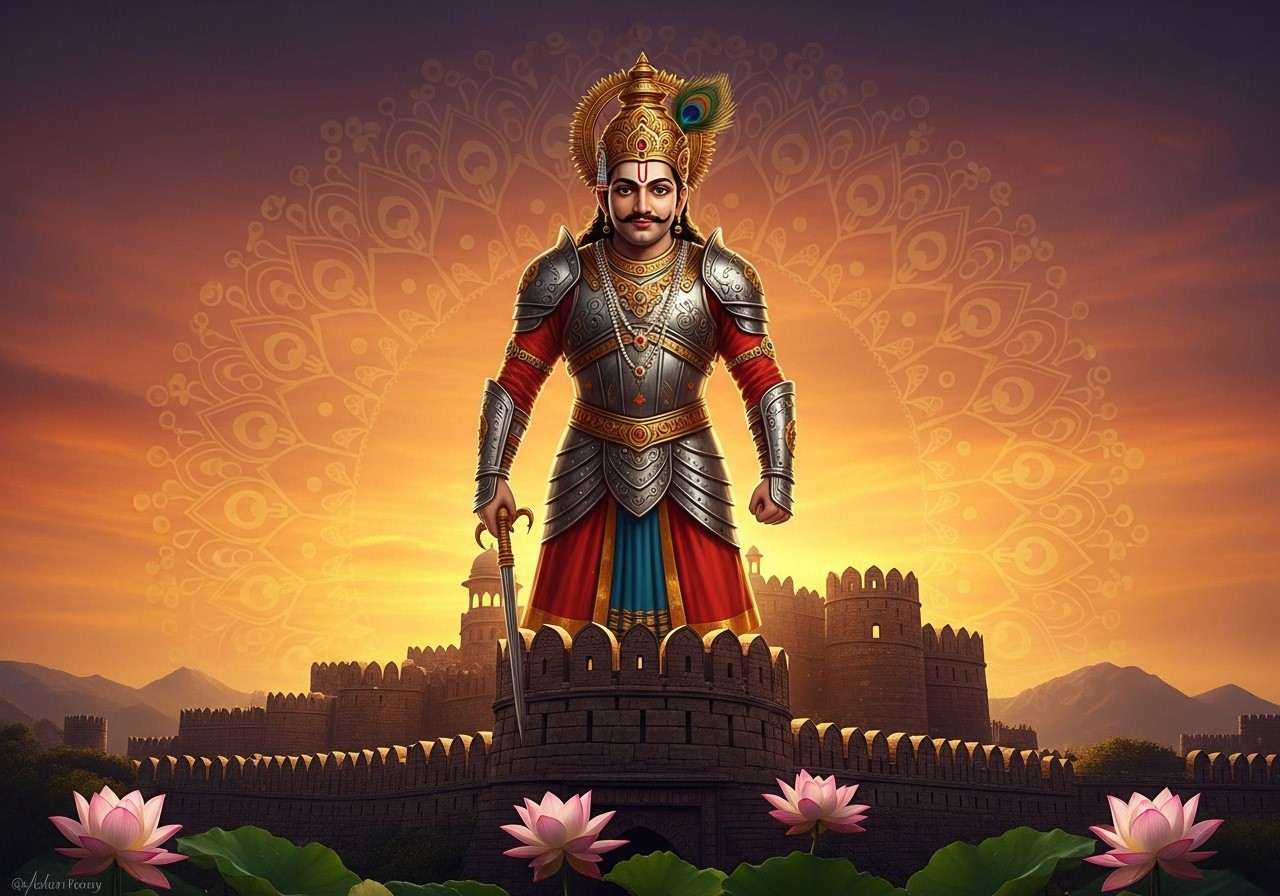
Namaskaram to all who hold our vibrant Indian heritage close to their hearts. When we light a diya in our homes or listen to the grand tales of our ancestors, we are instantly connected to a glorious past. Among the most luminous chapters of our history is the life of Kalbhoj, affectionately and reverently remembered across the nation as Bappa Rawal. As an 8th-century visionary and the architect of the Guhila dynasty, his profound influence on the spiritual and cultural landscape of Rajasthan—and indeed all of India—continues to resonate deeply within us today.
The Dawn of a New Era in Mewar
The establishment of the Mewar kingdom was not merely a political victory; it was a defining moment for the preservation of our Sanatan values. By founding Mewar in 728 CE, this legendary Rajput ruler sowed the seeds of a dynasty that would stand tall for centuries, eventually blessing our motherland with unparalleled heroes like Maharana Pratap. His strategic brilliance shone brightest when he captured the formidable and highly strategic fortress of Chittor from the Mori rulers between 734 and 745 CE. This decisive victory cemented the enduring strength of his kingdom and instilled a profound sense of security among his people.
Unmatched Military Valor and Strategic Brilliance
The protection of our sacred lands and cultural identity was paramount to the rulers of that era. His military achievements went far beyond mere territorial expansion; they were essential for the survival of our profound spiritual heritage.
- Defending the Motherland from Foreign Invasions: He is highly celebrated for acting as an impenetrable shield for India’s northwest frontier during the turbulent 8th century. By actively forming a powerful confederacy with the Pratihar King Nagabhata I, the valiant Bhils, and the Nagas, he completely routed the advancing Arab forces. It is recorded that he relentlessly chased the invading army of Mohammad bin Qasim all the way to Ghazni, successfully safeguarding the spiritual, social, and cultural fabric of our civilization.
- Establishing Long-Term Security Measures: True leadership lies not just in winning battles, but in securing the future for generations to come. To effectively deter any future external threats, he thoughtfully established robust guard posts every 100 kilometers along the borders. These vital checkpoints were manned by fiercely loyal and courageous Rajput chiefs who dedicated their lives to protecting the realm.
Tracing the Glorious Lineage: The Successors
The weight of a mighty kingdom requires equally capable shoulders to carry it forward. The successors of the Mewar founder inherited a vast empire and the heavy responsibility of protecting their dharma and their people amidst constant external pressures.
- The Eventful Reign of Khuman I: Taking the royal mantle from his father, Khuman I proved to be a formidable and ambitious warrior in his own right. In 755 CE, he successfully defeated King Kukuteshwar at Chittor, proudly continuing the family’s legacy of martial excellence. Although he boldly measured swords with the reigning ruler of Malwa, the tides of time saw him eventually face a setback against the Rashtrakuta King Govind III, which temporarily led to the loss of both Chittor and Dhanopa to the Rashtrakutas.
- Epigraphic Mysteries and Historical Interpretations: Our ancient texts and temple inscriptions often weave incredibly complex and rich narratives, leading historians to present varying theories about royal successions. The highly revered 1460 CE Kumbhalgarh inscription positions Bappa as the direct successor of Nāga and predecessor of Aparājita, leading some esteemed scholars to believe that his popular name was actually an affectionate epithet for King Shiladitya. Meanwhile, the detailed Atpur and Kadmal inscriptions thoughtfully suggest that the Guhila ruler Mahendra was directly succeeded by Kalabhoja.
A Legacy Etched in Stone and Spirit
While his prowess on the battlefield was legendary, his contributions to the spiritual and cultural enrichment of our society were equally magnificent. The Guhila dynasty became the ultimate patron of arts, temple architecture, and traditional Vedic learning.
- The Divine Abode of Shri Eklingji: As a deeply devout patron of Shaivism, he orchestrated the construction of the breathtaking Eklingji temple near Udaipur around 734 CE. This monumental act beautifully established a sacred tradition of royal worship, where the king ruled merely as a humble servant (Diwan) of Lord Shiva, a noble practice faithfully upheld by all subsequent rulers of Mewar.
- Cultural Patronage and Spiritual Asceticism: Beyond constructing numerous temples and impregnable forts, he actively promoted the flourishing of Sanskrit literature and classical Indian music. Demonstrating the ultimate detachment taught in our scriptures, he gracefully abdicated his throne around 753 CE. Dedicating his remaining years entirely to a peaceful spiritual retreat, his final resting place (Samadhi) near Kailashpuri is still honored today with a beautiful temple built to celebrate his extraordinary ascetic journey.
His enduring influence even crosses modern borders; it is widely believed that the prominent city of Rawalpindi in Pakistan bears his name, reflecting the massive geographical footprint of his reign.
Bringing the Traditions of Mewar to Your Home with Poojn
The great monarchs of our past dedicated their entire lives to protecting our Dharma, ensuring that the sacred fires in our ancient temples were never extinguished. Today, it is our humble yet vital duty to keep those spiritual flames burning bright within the comforting walls of our own homes. Poojn is deeply committed to helping you honor this timeless legacy by providing premium, authentic cultural goods for your daily spiritual needs.
- Authentic and Sacred Puja Essentials: We profoundly understand the pure devotion and emotion you pour into your daily prayers and family rituals. That is precisely why our online store offers a comprehensive and deeply respected collection of cultural products that allow you to perform your rituals with absolute purity. Every single item is carefully sourced from trusted traditional artisans to meticulously maintain the sanctity required for your prayers.
- The Comfort of Seamless Online Shopping: Balancing a fast-paced modern lifestyle with our deeply rooted traditional values can sometimes feel challenging, but we are here to make it wonderfully effortless. You can peacefully browse and order premium ritual goods from the comforting warmth of your living room, relying entirely on our intuitive website to deliver divine blessings straight to your doorstep.
Please remember that while we are passionate about enriching your spiritual practices at home, we exclusively sell cultural goods through our trusted online store; we do not offer travel packages, guidance services, or VIP darshan bookings for temples. If you ever need compassionate guidance in selecting the right samagri for your home shrine, our warm customer support family is always available. Feel free to respectfully contact us at 03369029784 or reach out via WhatsApp at 9476142738. We are always joyous to assist you in your beautiful spiritual journey.
Take a meaningful step closer to your glorious roots and explore our extensive traditional collection today. Visit https://www.poojn.in to bring home the purity, peace, and devotion that our great ancestors fought so valiantly to protect.
Reflections on a Timeless Era
The captivating story of the Mewar founder is a brilliant tapestry woven with threads of unmatched courage, profound wisdom, and an unwavering commitment to preserving our sacred heritage. His extraordinary legacy, dutifully carried forward by his brave successors, continues to beautifully inspire generations of Indians to embrace their cultural identity with immense pride. As we reflect upon his remarkable life and spiritual journey, we are powerfully reminded of the rich, enduring traditions that continue to shape our present and gracefully guide our future.
Curious Minds Often Wonder About the Guhila Dynasty
Who was the illustrious founder of the Mewar kingdom?
He was a towering 8th-century legendary monarch, originally known as Kalbhoj, who laid the unshakeable foundation of the Mewar Dynasty in present-day Rajasthan. His respected name has become universally synonymous with unwavering bravery, visionary leadership, and the fierce protection of our sacred Hindu culture.
Who carried the immense responsibility of the kingdom after his reign?
The heavy duty of protecting the vast kingdom fell to his capable royal heirs. His valiant son, Khuman I, is most notably recognized for taking the throne, expanding the territory’s influence, and successfully defending the realm against rival kings during his eventful rule.
Why is the historical impact of this great ruler so deeply revered today?
His historical impact is deeply revered because he successfully defended the Indian subcontinent from massive foreign invasions while simultaneously establishing a kingdom that preserved our spiritual, architectural, and cultural heritage for countless generations.
How did his descendants continue to shape the cultural fabric of India?
His proud descendants, notably belonging to the revered Sisodia Rajput clan, continued to shape India by fiercely maintaining their independence. They actively promoted classical art, majestic temple architecture, and vibrant regional festivals that form the vibrant soul of Rajasthan today.
What were his most significant spiritual and architectural contributions?
Among his most celebrated spiritual contributions is the construction of the magnificent Eklingji temple in 734 CE. By dedicating the entire kingdom to Lord Shiva and ruling merely as His humble servant, he established a profound tradition of royal devotion that beautifully intertwines governance with deep spiritual humility.