


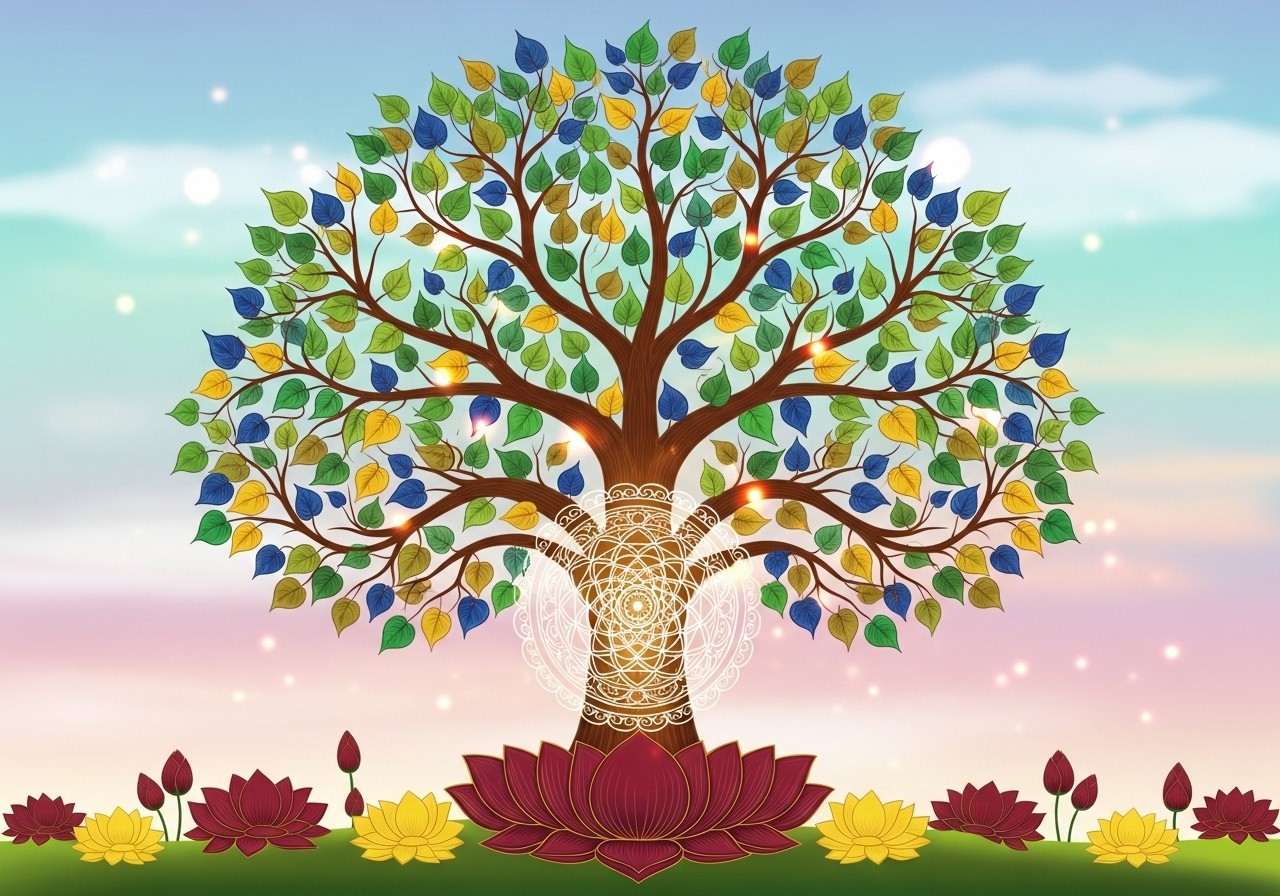
In the rich tapestry of our Indian heritage, nature and spirituality are beautifully intertwined. The magnificent tree under which Siddhartha Gautama found his ultimate truth, scientifically recognized as Ficus religiosa, is so much more than a botanical wonder. It stands as a profound emblem of inner peace, divine wisdom, and the beautiful journey of spiritual awakening. Whether you recognize it by its heart-shaped leaves gracefully fluttering in the wind or by its powerful presence near our beloved temples, this sacred fig continues to guide countless souls across different cultures and traditions.
The Sacred Fig in Our Regional Languages
As you travel across the diverse landscapes of our country, the reverence for this divine plant remains a beautiful constant, even as its name adapts to the sweet melodies of regional tongues. It is a living testament to how a single symbol of peace can unite us all.
The Essence in Hindi
In our Hindi-speaking households, this magnificent plant is lovingly honored as ‘बोधि वृक्ष’ (Bodhi Vriksha). This profound name perfectly captures its essence, blending the concept of supreme knowledge with the grounding presence of nature. It holds an incredibly special place in our local folklore and everyday religious customs, constantly reminding us to seek light in our daily lives.
The Reverence in Tamil
Down south in the culturally vibrant state of Tamil Nadu, devotees respectfully refer to it as ‘போதிவிருக்ஷம்’ (Podhivirksham) or ‘போதித் மரம்’ (Bodhith Maram). You will often find these ancient, majestic trees gracing the peaceful courtyards of our traditional temples. They stand as silent guardians of wisdom, deeply celebrated during regional festivals that beautifully weave together Hindu and Buddhist philosophies.
The Devotion in Telugu
For our Telugu-speaking communities, the tree is cherished as ‘బోధి చెట్టు’ (Bodhi Chettu). It forms an integral part of their spiritual and historical landscape, frequently finding mention in ancient texts and regional art. Generational stories passed down by elders often feature this tree as a pillar of knowledge and a shelter for weary spiritual seekers.
Global Resonance: Names Across the World
The universal message of peace and enlightenment has transcended our national borders, touching the hearts of millions globally. The original term comes from our ancient Indian languages, beautifully signifying “awakening.” Let us explore how this reverence translates across the world:
- Sanskrit and Pali: Known simply and powerfully as ‘Bodhi’, this ancient term directly translates to awakening in both languages. It forms the very spiritual and linguistic root from which countless other cultural names for this sacred fig are derived, holding a profound vibrational resonance in chanting and ancient scriptures.
- Sinhala: In neighboring Sri Lanka, devoted practitioners lovingly call it the ‘Bo’ tree, a gentle and respectful derivation from the original Sanskrit word. The famous Jaya Sri Maha Bodhi in Anuradhapura serves as a breathtaking historical testament to this, grown directly from a precious cutting of the original tree.
- Chinese (Mandarin): As ancient wisdom traveled along the Silk Road, the term transformed into 菩提樹 or 菩提树 (pútíshù) in Chinese culture. Even today, it remains a highly respected and powerful emblem of deep meditation, representing the lifelong pursuit of achieving true spiritual clarity.
- Korean: In the serene temples of Korea, the name elegantly evolves to 보리수(菩提樹) (borisu), capturing the gentle essence of the awakening journey. Korean monastic traditions often honor this botanical marvel, seamlessly integrating its powerful symbolism into their peaceful, meditative landscapes.
- Marathi: Closer to home in Maharashtra, local devotees respectfully refer to it as बोधिवृक्ष (bodhivŕkṣa), wonderfully blending ancient linguistic roots with everyday, heartfelt devotion. It proudly holds a prominent place in local spiritual discourses, traditional storytelling, and vibrant community prayers.
- Burmese: Known locally as ဗောဓိညောင်ပင် (bau:dhi.nyaungpang) or ဗောဓိညောင် (bau:dhi.nyaung), the tree is deeply woven into the rich and vibrant Buddhist heritage of Myanmar. Devout pilgrims frequently gather around these sacred trunks to offer water and heartfelt prayers, especially during auspicious full moon days.
- Finnish and Spanish: Even in distant, cooler lands, the reverence continues to thrive, known affectionately as ‘bodhipuu’ or ‘valaistuksen puu’ in Finland, and ‘árbol de bodhi’ in Spain. This beautiful reality shows how the universal message of peace and inner light transcends geographical boundaries and resonates globally with all of humanity.
- Shan: The devout Shan people refer to it as ၺွင်ႇပေႃးထီႉ (nyàung páu thḭ̂i), wonderfully illustrating the deep penetration of ancient traditions in Southeast Asia. The majestic tree continues to be a central, unifying figure in community gatherings and sacred spiritual ceremonies within the region.
Bringing the Sacred Essence into Your Home
In an Indian home, the altar or puja room is the heart of the household. While we may not all have the privilege to sit quietly under the original branches in Bodh Gaya, bringing that divine, calming vibration into our daily lives is entirely possible and highly encouraged. Nurturing your spiritual well-being is a beautiful practice, and surrounding yourself with the right cultural elements makes all the difference.
At Poojn.in, we deeply understand the love and devotion that goes into your daily rituals. We are proud to offer an authentic selection of cultural goods designed to elevate your spiritual practices right from the comfort of your home. You can enrich your daily prayers with genuine ritual items, such as beautifully crafted Bodhi seed malas, which are specifically available on our online store. By incorporating these sacred elements into your home shrine, you naturally bridge the gap between our rich ancestral traditions and modern convenience.
We invite you to visit https://www.poojn.in/puja-essentials to explore our extensive collection of high-quality cultural goods. Whether you are looking for sacred accessories or daily samagri, we have everything you need to maintain the sanctity of your rituals. For any guidance or friendly assistance with your online shopping, please feel free to call us at 03369029784 or drop us a warm message on WhatsApp at 9476142738. Embrace the convenience of having your trusted traditional items delivered safely to your doorstep.
Embracing Timeless Wisdom
In a world where our age-old traditions meet the fast pace of modernity, this revered tree stands as a gentle reminder of our shared, magnificent heritage. It softly invites you to connect with its profound spiritual essence, encouraging you to embrace its timeless teachings of compassion and inner tranquility in your daily life. As you mindfully shop for your sacred ritual items online, let this powerful symbolism inspire you to honor our beloved traditions with joy and devotion. May this divine wisdom light the beautiful way on your personal journey, nurturing your soul and enriching your everyday cultural experience.
Frequently Asked Questions
How is the tree of awakening addressed in Hindi?
In Hindi-speaking households across the country, this sacred plant is lovingly known as “बोधि वृक्ष” (Bodhi Vriksha). This beautiful name perfectly captures its pure essence, blending the concept of supreme knowledge with the comforting, grounding presence of nature.
What do Tamil speakers call this sacred fig?
In the rich and ancient linguistic tradition of Tamil Nadu, it is respectfully referred to as “போதிவிருக்ஷம்” (Podhivirksham) or “போதித் மரம்” (Bodhith Maram). You will often find these magnificent, shady trees gracing the spiritual courtyards of ancient temples across the entire state.
How is the plant referred to in Telugu culture?
Our Telugu-speaking communities cherish and protect it under the beautiful name “బోధి చెట్టు” (Bodhi Chettu). It forms an incredibly integral part of their spiritual landscape, frequently finding respectful mention in historical folklore and stunning regional stone art.
Why does this specific plant hold such deep cultural significance?
It is universally revered and celebrated as the exact sacred spot where Siddhartha Gautama found his ultimate truth and transformed into the Buddha. Beyond a mere historical footprint, it acts as an enduring, powerful symbol of inner peace, divine wisdom, and the beautiful journey of spiritual awakening that we all strive for.
Are there specific home rituals associated with this symbol of peace?
Absolutely, our devotion takes many beautiful and personal forms. People deeply rooted in tradition often light earthen diyas, offer fresh fragrant flowers, and sit for quiet, reflective meditation under its heart-shaped leaves to invite immense divine blessings into their modern lives.
Does the name remain identical across all global languages?
While the physical Ficus religiosa remains exactly the same botanical marvel, its title beautifully adapts to regional tongues. From classical Hindi to gentle Sinhala, the diverse names wonderfully reflect our shared human heritage, securely wrapped in beautifully distinct linguistic identities.
Can one easily locate this revered plant within India?
Yes, deeply and permanently rooted in our holy soil, the most famous descendant of the original tree thrives beautifully in Bodh Gaya. Additionally, you will find countless sacred figs lovingly planted near local temples, in bustling village squares, and in peaceful ashrams across our entire country.
Are there everyday common names used for this botanical marvel?
In our daily, bustling Indian life, you will frequently hear it called the Peepal tree or the sacred fig. Regardless of the regional or casual name used, the deep-seated respect and unwavering devotion it commands from all of us remains wonderfully constant.