


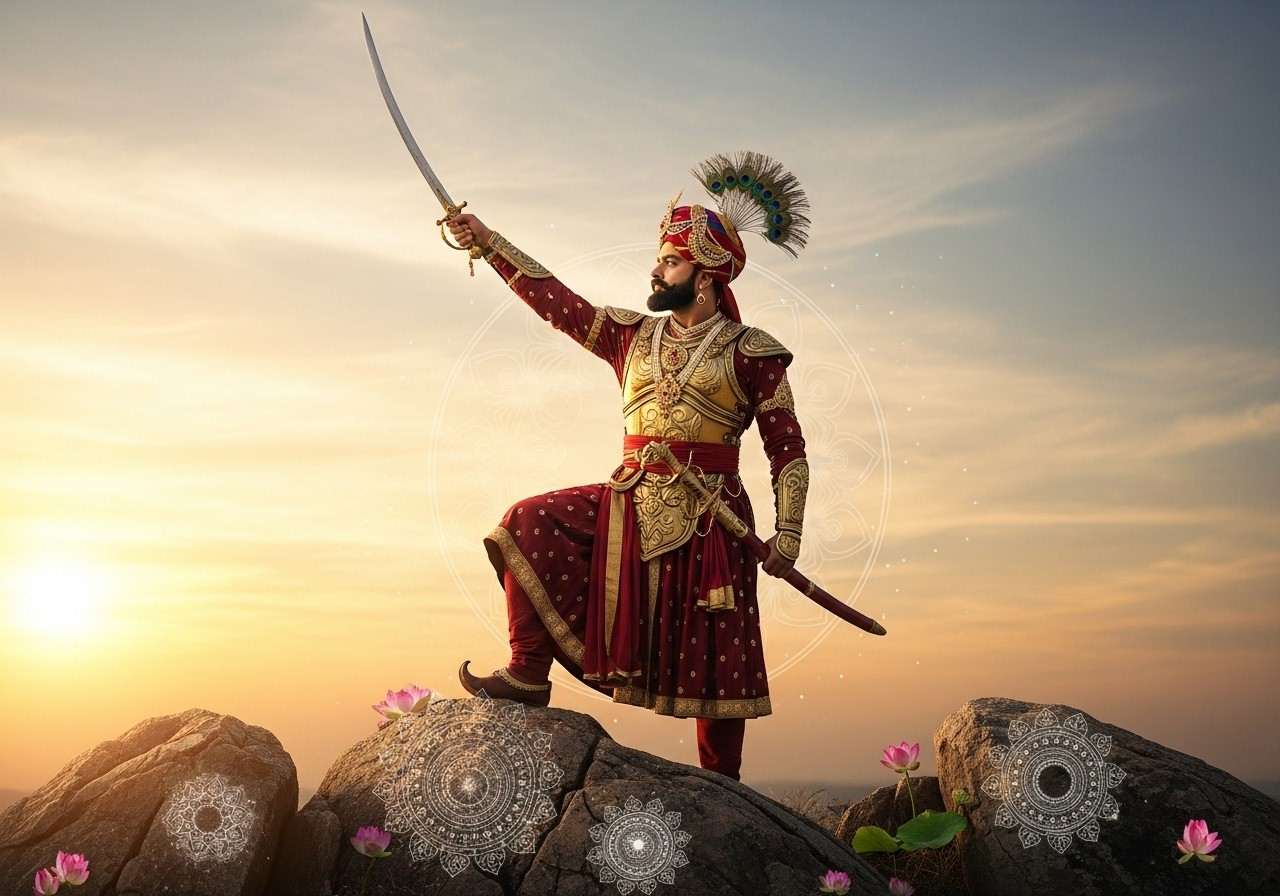
The sacred soil of India has given birth to countless brave souls, but few have left a legacy as enduring as the founder of the Mewar Dynasty. Bappa Rawal remains a towering figure in our cultural history, celebrated for his unmatched valor, strategic brilliance, and deep spiritual devotion. For families who hold our ancient heritage close to their hearts, understanding the life of this revered warrior king is like taking a journey back to the very roots of Rajput pride and resilience.
The Formative Years: Overcoming Adversity in Early Life
Every great story often begins with profound challenges, and the tale of this legendary leader is no different. Born as Kalbhoj around 712-713 AD in Anandapura, Rajasthan, his early childhood was marked by sudden tragedy and displacement. Historical records suggest that his father, Nagaditya, along with several other male relatives, tragically lost their lives during a fierce conflict with the Bhils of Idar. To protect the young prince, he was raised in complete secrecy by a devoted Brahmin woman in the serene village of Nagda.
During these hidden years, his destiny was slowly being forged in the quiet hills. Interestingly, the very Bhil tribe from the surrounding regions became a vital support system for the young boy and his mother, imparting essential survival skills and rigorous battle tactics. This early exposure to guerrilla warfare and grounding in grassroots survival undoubtedly shaped the resilient, fearless king he was destined to become.
A Glorious Ascension: Capturing Chittor and Defending the Motherland
True leadership always shines through when the motherland calls for protection. At the remarkably young age of 21, in the year 734 AD, Bappa Rawal achieved the extraordinary feat of capturing the formidable Chittor fort by overthrowing its ruler, Maan Mori. This monumental victory did not just bring him land; it laid the unshakeable foundation for the glorious Mewar dynasty. Showing profound independence, he chose not to adopt the lineage name of the past seven generations, carving out a fresh, powerful identity for his descendants.
His military genius extended far beyond the borders of Chittor. During the historic Battle of Rajasthan in the 8th century, he united neighboring kingdoms like Ajmer and Jaisalmer to fiercely protect our cultural heritage from foreign invasions. With indomitable courage, he famously defeated and chased the Arab invader Bin Qasim, forcefully driving his army back to the western banks of the mighty Sindhu river.
The Divine Connection: Spiritual Devotion and Cultural Impact
While his sword protected the land, his soul was entirely surrendered to the divine. Bappa Rawal’s life beautifully balanced royal duties with a profound spiritual awakening, primarily guided by his devotion to Lord Shiva. Tradition states that he received the divine blessing of kingship from the revered sage Harit Rishi, who formally initiated the young warrior into the Shaivite order.
This unwavering faith was physically manifested when he commissioned the magnificent Eklingji temple, a spiritual beacon that stands tall even today. To symbolize his deep reverence and authority, he even introduced a special gold coin bearing the sacred emblem of a Shivling. After governing a vast, prosperous empire for nearly two decades, he took the ultimate spiritual path—abdicating his powerful throne in favor of his son to spend his remaining days in divine contemplation.
Folklore and the Human Side of the King
Beyond the serious historical accounts, local folklore paints a highly colorful and deeply human picture of the great ruler. Legends lovingly passed down through generations suggest he was a man of immense vitality, supposedly marrying numerous women and fathering over a hundred children. One particularly famous rural tale playfully recounts how he organized mock “marriages” with several village girls, a harmless prank that eventually led him to retreat into the hills to avoid the playful wrath of the locals. These stories add a beautiful layer of warmth and approachability to a king who is otherwise remembered purely for his stern military might.
Honoring Our Traditions with Poojn.in
When we immerse ourselves in the inspiring stories of figures like Bappa Rawal, we naturally feel a deep urge to connect with our spiritual and cultural roots. Upholding the divine practices that our ancestors fought so hard to protect brings immense peace and prosperity to our modern households. Poojn.in is deeply committed to helping you bring these sacred traditions into your everyday life with utmost authenticity.
- Premium Ritual Essentials: Our online store carefully curates pure, high-quality traditional pooja samagri that is absolutely vital for your daily prayers and festive rituals. By utilizing completely genuine and pure ingredients in your daily worship, you elevate your home’s spiritual aura while profoundly respecting the devotional practices passed down by ancient kings and sages.
- Sacred Home Decor: We offer an exquisitely crafted collection of spiritual idols and statues representing our revered deities and historical icons. Bringing these magnificent, handcrafted murtis into your living space not only beautifies your home but also serves as a constant, gentle reminder of the courage, leadership, and unwavering faith demonstrated by the great founders of our civilization.
- Literature on Heritage: Because understanding our glorious past is the key to preserving it for tomorrow, we provide deeply insightful books on Indian heritage and history. Reading these thoughtfully selected texts will allow you and your children to fully grasp the profound sacrifices, spiritual journeys, and socio-cultural impacts of monumental leaders who shaped our incredible nation.
To seamlessly bring the purity of Indian traditions into your home, you can easily explore our wide range of authentic cultural goods directly on our website. For any personalized assistance with your cultural needs, please feel free to reach out to our dedicated support team at 03369029784 or simply drop us a message on WhatsApp at 9476142738.
Common Curiosities About the Origins of Mewar’s Protector
Many history enthusiasts naturally wonder about the true identity of this great leader. While popular folklore lovingly remembers him as Bappa Rawal, his actual birth name was Kalbhoj, a title firmly documented in ancient Mewari texts.
The timeline of his arrival in this world is another area of great interest. Historical consensus places his birth right around the early 8th century, specifically between 712 and 713 AD, a critical period when India was facing significant external threats.
When discussing his lineage, there is often some confusion regarding his parentage. It is widely accepted by modern historians that his father was Nagaditya, a noble ruler of the Guhil Rajput dynasty whose tragic passing shifted the course of young Kalbhoj’s entire life.
His elevation to the status of a monumental hero is deeply tied to his actions on the battlefield. He is universally celebrated as a savior for uniting fragmented local kingdoms, recapturing the sacred Chittor fort, and successfully repelling early foreign invasions that threatened the cultural fabric of Rajasthan.
The stories surrounding his life are not just historical footnotes; they carry immense cultural weight. The legends of his bravery, coupled with his deep devotion to Lord Eklingji, serve as a timeless symbol of Dharma—teaching us that true power lies in using one’s strength to protect the innocent and uphold righteousness.
His contributions went far beyond mere territorial expansion. By establishing the powerful Mewar kingdom, he created a resilient political and cultural stronghold that would continue to proudly resist foreign domination for centuries to come.
Today, the memory of this remarkable king is kept vibrantly alive across India. He is affectionately honored through timeless oral traditions, vibrant local festivals, and beautifully preserved monuments that remind every generation of the immense pride and unyielding spirit of the Rajputana legacy.