

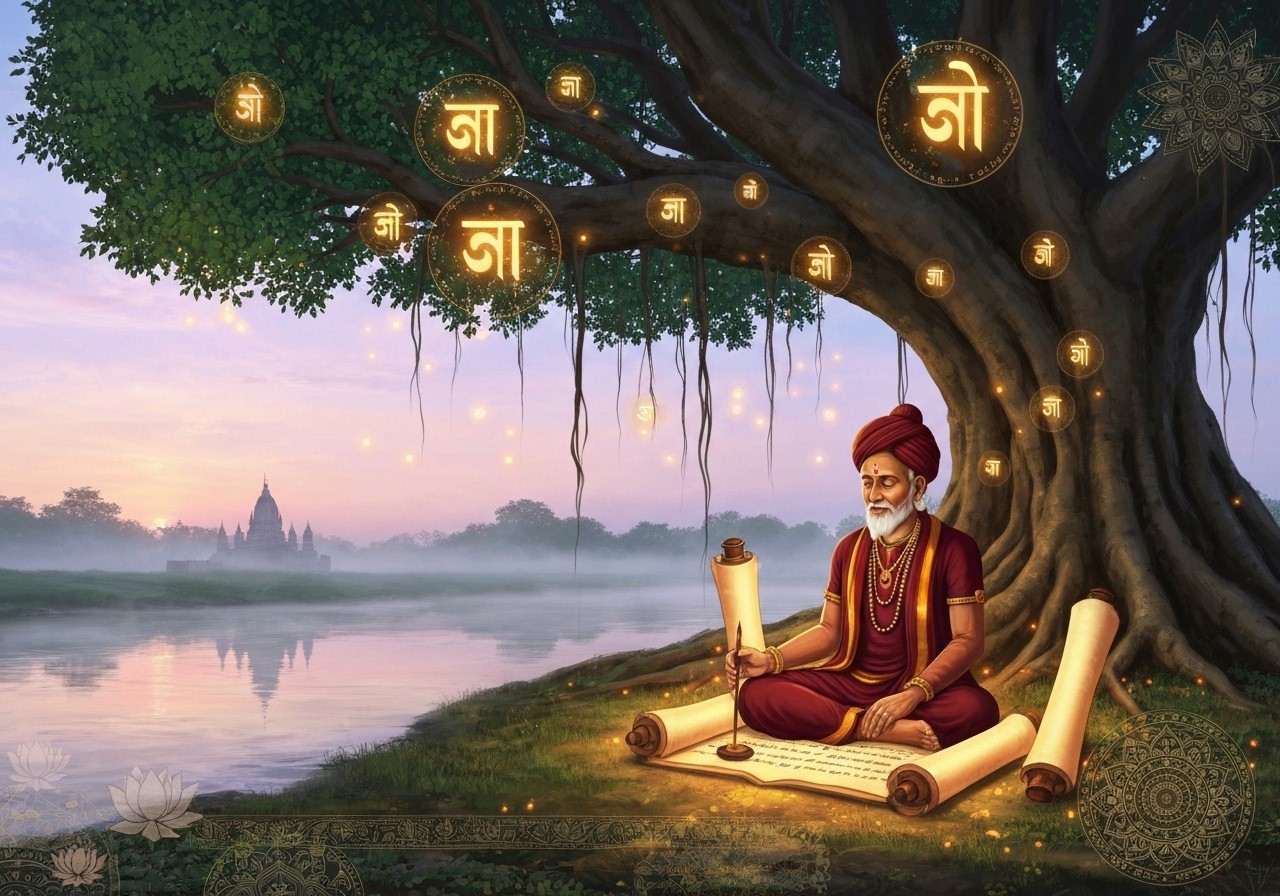
The Bengali alphabet is much more than a mere collection of letters; it is the very heartbeat of our rich cultural tapestry. For generations, its elegant and divine curves have carried the weight of our history, bringing the profound wisdom of our ancestors into our modern homes. Uncovering the history of this beautiful writing system provides deep meaning for those of us who cherish our traditional values and seek to pass on our vibrant heritage to the next generation.
The Ancient Foundations: From Brahmi to Early Bengal
The remarkable story of our beloved script begins thousands of years ago with the ancient Brahmi script, which is revered as one of the oldest and most prominent writing systems in ancient India. While some scholars gently suggest that Brahmi might have local ties to the Indus Valley civilization, it is undoubtedly the proud ancestor of our modern letters. The script we cherish today blossomed from the Northern class of Brahmi, which gracefully divided into Eastern and Western branches over the centuries.
When looking for the earliest physical evidence of this divine journey, historians turn to the Mahasthan Brahmi inscription. Widely considered the most ancient written artifact found in Bengal, this remarkable piece dates back to the late Mauryan period. It beautifully showcases a highly evolved structure compared to Asokan edicts, proving that the roots of our regional identity were sophisticated even in those early days.
The Pala Era and the Birth of Proto-Bangla
As time flowed into the 8th century AD during the glorious Pala dynasty, our script underwent a magnificent transformation. The eastern regions were deeply touched by the Nagari writing style of Northern India, giving birth to what linguistic scholars lovingly call Proto-Nagari.
Our ancestors seamlessly blended this with the local ‘Kutila’ style, gradually evolving the characters into Proto-Bangla. This beautiful transitional script found its way into countless copper plate inscriptions, serving as an enduring record of our heritage throughout the late 9th and entire 10th centuries. By the time the 11th and 12th centuries arrived, these transitional forms had blossomed into the complete, recognizable shapes of the modern Bangla alphabet we hold dear today.
Refining the Letters: Standardization and the Printing Press
The journey of our script took another momentous turn during the colonial period. The introduction of the first printing types in 1778 played an instrumental role in solidifying the visual shapes of our letters, causing older, archaic forms to gently fade into history over the following century.
However, the true refinement of our spelling and grammar was nurtured closer to home by our own intellectuals. The revered University of Calcutta initiated vital spelling reforms in 1936. These thoughtful standardization efforts continued to guide the language throughout the 20th century and into the early 21st century. This ensured our sacred script could gracefully adapt to modern technological advancements while completely retaining its authentic, traditional soul.
Honoring Our Written Heritage with Authentic Cultural Goods
Exploring the divine history of our regional languages naturally awakens a desire to surround ourselves with the physical elements of our glorious culture. At our store, we deeply understand that yearning to connect with your roots through authentic, meticulously sourced traditional items.
- Sacred Texts and Literature: We offer a thoughtfully curated selection of spiritual books and authentic manuscripts that celebrate our linguistic heritage. Reading these texts not only deepens your knowledge but also brings a profound sense of peace and divine connection to your daily spiritual practice.
- Traditional Writing Accessories: Experience the tactile joy of holding traditional writing materials, just as our revered ancestors did. These beautifully crafted items allow you to physically connect with the history of our script, making them perfect additions to your home study, office, or personal prayer room.
- Cultural Masterpieces: Surround your family with authentic artifacts that reflect the artistic brilliance of Bengal. Many of these divine pieces subtly incorporate traditional motifs and script, serving as daily reminders of the timeless legacy and spiritual unity we belong to.
We warmly invite you to bring these culturally rich treasures into your sacred home space. You can conveniently explore our authentic collection by visiting https://www.poojn.in to shop online with complete peace of mind. Should you need personalized guidance in selecting the perfect authentic item for your home, our dedicated team is always ready to assist you at 03369029784, or for a quick and friendly chat, simply reach out to us via WhatsApp at 9476142738.
Common Curiosities About Our Beloved Script
Many of us wonder about the specific individuals behind our alphabet, often asking who exactly invented the Bengali script. The beautiful truth is that no single individual created our alphabet; rather, it is a magnificent collective inheritance that organically evolved from the ancient Brahmi script over many centuries, shaped by the spiritual and cultural exchanges of our ancestors.
When tracing the origins of these elegant letters, people naturally want to know where they come from. They proudly originate from the eastern regions of medieval India, blossoming from the Eastern variety of the Brahmi script while gracefully absorbing elements from deeply spiritual languages like Pali and Sanskrit.
It is quite natural to inquire about the age of this timeless writing system. Our script is well over a thousand years old. Its ancient foundations were laid during the time of Brahmi, taking its distinct modern shape around the 11th and 12th centuries, carrying countless generations of prayers, poetry, and wisdom.
Those exploring the beauty of our linguistics often ask about the unique characteristics of our letters. Unlike many other Indic scripts, ours is celebrated for its distinctive rounded letters and the unifying horizontal line (the matra) that rests gracefully atop the characters, visually binding our words together in a continuous flow of devotion and artistic expression.
Understanding why this script holds such monumental importance is absolutely essential, especially for our younger generations. It is the very soul of our expression, spoken and written by millions who use it not just for daily communication, but to preserve our sacred rituals, pass down literature, and protect our irreplaceable cultural identity.
Embracing and Preserving Our Timeless Tradition
The breathtaking evolution of our regional writing system is far more than an academic timeline; it is a testament to the resilience, faith, and devotion of our people. These sacred letters serve as an eternal bridge, carrying the profound wisdom, rich folklore, and spiritual values of the past directly into our modern, everyday lives.
By cherishing and understanding this incredible history, we beautifully honor the countless generations who fiercely protected our heritage. Let us continue to embrace our traditional identity with immense pride and reverence, ensuring that the elegant curves of our alphabet remain a living, breathing part of our homes, our rituals, and our hearts for centuries to come.