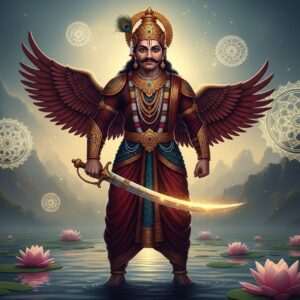


For us in India, our history is much more than just a collection of dates and old records; it is the very heartbeat of our civilization. One such shining beacon of our glorious past is the legendary founder of the Mewar dynasty, widely celebrated as Kalbhoj. His immense contributions to the cultural and political landscape of medieval India have cemented his place as a highly revered protector of our dharma. By understanding his extraordinary lineage and his deep-rooted connections to other iconic rulers, we can truly appreciate the spiritual and historical significance of his life. This journey into our rich past reveals not just documented facts, but the deep resilience and divine devotion that characterize our heritage.
The Divine Ancestry and Guhila Roots
The ancestral roots of this great Rajput king are steeped in valor and divine grace, tracing all the way back to Surya, the Sun God. Historical records and oral traditions highlight that his lineage descends directly from Guhil (also known as Guhaditya) around 569 CE. According to the revered 15th-century text, Ekalinga Mahatmya, he was the ninth proud descendant of Guhadatta, the founding father of the Guhila dynasty.
This noble family played a crucial role in establishing early governance in Rajasthan. His father, Nagaditya, was a brave soul who tragically lost his life fighting the Bhils of Idar. Such an environment of constant struggle and sacrifice shaped the warrior spirit within the young prince, setting the ultimate stage for his monumental rise to power.
The Rise to Power: Establishing the Mewar Kingdom
Stepping into his destiny in the 8th century, Mewar’s first major ruler showcased unmatched military brilliance and an unbreakable commitment to his motherland. In 728 CE, he successfully established the mighty Mewar Kingdom, a defining moment that altered the course of Indian history. He is eternally celebrated as a fierce unifier and a dedicated protector of Hindu culture, especially for defending our sacred lands against foreign Arab invasions.
Beyond his martial achievements, his spiritual devotion was equally profound. He is credited with the construction of the sacred Eklingji temple, dedicating his entire kingdom to the presiding deity. This beautiful tradition of ruling as a humble servant of the divine continues to inspire millions of devout Indians even today.
A Powerful Lineage: Family and Descendants
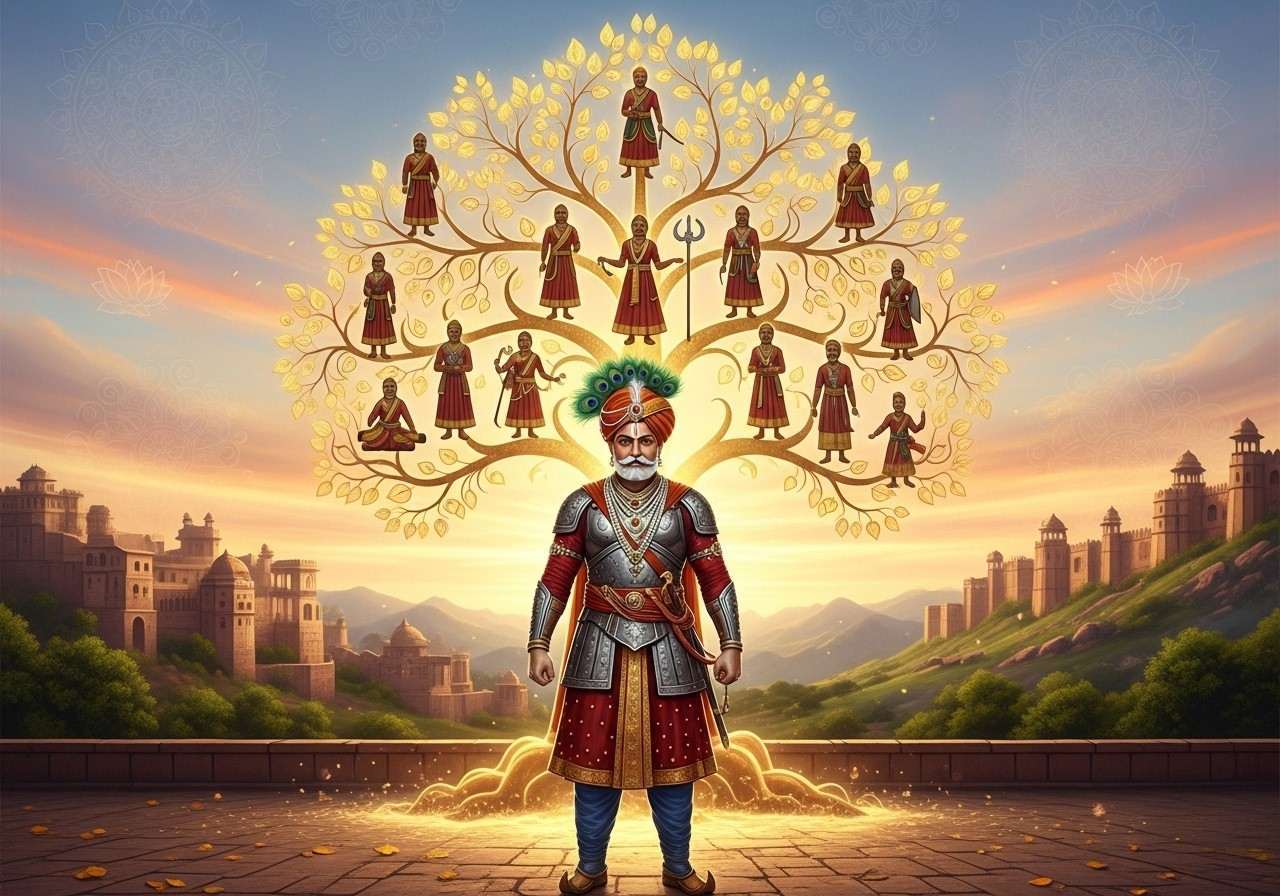
The family tree of this iconic leader is filled with remarkable successors who fiercely guarded the sovereignty of their homeland. His legacy was seamlessly carried forward by his successor, Khuman I, who is widely believed to be his courageous son. Proving his inherited valor, Khuman I achieved a massive victory over King Kukuteshwar in 755 CE at the fortress of Chittor.
As generations passed, the sociopolitical landscape of Rajasthan evolved. During the pivotal reign of Ranasimha, also known as Karna, the Guhila dynasty branched into two distinct streams: the senior Rawal branch of Chittor and the junior Rana branch of Sisoda. It is from this very lineage that the illustrious Sisodia Rajput dynasty emerged, leaving a permanent mark on India’s historical identity and showcasing the absolute importance of preserving familial ties.
The Sacred Bond with Maharana Pratap
The bloodline of Mewar’s founding father flows directly into another beloved son of India: the great Maharana Pratap. Sharing this powerful genealogical link, Maharana Pratap embodied the exact same values, fighting tooth and nail against foreign domination to protect his people’s honor. This shared ancestral legacy is a matter of immense pride for the Rajput community, perfectly representing centuries of unyielding strength and resilience. Their deeply connected history continues to serve as a cultural cornerstone, reminding us of the sacrifices made to protect our sacred way of life.
Honoring Our Traditions with Poojn.in
The cultural legacy of these great warriors lives on through our everyday rituals, our grand festivals, and the spiritual practices we uphold in our homes. Their stories remind us of the immense value of cultural identity and traditional worship. At Poojn.in, India’s most trusted cultural goods store, we are deeply committed to helping you preserve these very traditions.
If you wish to honor the glorious heritage of our ancestors, Poojn.in offers a wide, authentic range of spiritual items to elevate your daily prayers. We specialize strictly in delivering genuine cultural goods right to your doorstep, bringing convenience to your spiritual journey without compromising on purity.
- Complete Pooja Kits: Our comprehensive pooja kits contain all the essential, handpicked items required for performing authentic rituals at home. These thoughtfully assembled packages guarantee that you have everything necessary for a deeply traditional and spiritually fulfilling experience without ever having to step out. Explore our collection at Poojn.in Pooja Kits.
- Aromatic Incense Sticks: Transform your daily prayers and elevate the spiritual ambiance of your living space with our premium, chemical-free incense sticks. Available in a variety of soothing natural fragrances, they are ideal for maintaining a serene and meditative environment during your moments of devotion. Find them at Poojn.in Incense.
- Exquisite Brass Idols: Reconnect with the glorious heritage of our ancestors by bringing home beautifully handcrafted brass idols of revered deities. These timeless pieces not only serve as the perfect focal point for your daily worship but also add an element of traditional elegance to your home decor. Discover the craftsmanship at Poojn.in Brass Idols.
Shopping for your spiritual needs has never been this simple and reliable. We pride ourselves purely on providing high-quality items for your home shrines. For any assistance in choosing the right cultural goods, feel free to contact us at 03369029784 or via WhatsApp at 9476142738.
An Eternal Source of Cultural Pride
The life story of Mewar’s first major sovereign is a beautiful testament to the power of pure devotion, courageous leadership, and unapologetic cultural pride. By laying the foundation of a kingdom rooted in dharma, he set a timeless example of what it means to protect one’s heritage. As we remember his extraordinary life and his magnificent descendants, we find a beautiful bridge connecting our glorious past to our vibrant present. Let his legacy inspire us to keep our roots strong, our traditions alive, and our faith unwavering in an ever-changing world.
Curious Insights into the Royal Ancestry
Wondering who this great founder of Mewar was? He was a legendary ruler and a fierce protector of dharma, widely known as Kalbhoj. He is celebrated across the country for establishing the Mewar kingdom in 728 CE and dedicating it to the divine.
Curious about the origins of his family tree? His illustrious lineage begins with Surya, the Sun God, and traces through Guhil in 569 CE. The family tree includes remarkable descendants who shaped the history, architecture, and spiritual culture of Rajasthan.
Looking for the connection between him and Maharana Pratap? He is the direct ancestor of Maharana Pratap. This uninterrupted lineage birthed several generations of brave hearts, eventually leading to Maharana Pratap, one of India’s most revered freedom fighters.
Want to know who succeeded him on the throne? His legacy was taken forward by his successor, Khuman I, who bravely defended the kingdom and famously defeated King Kukuteshwar at Chittor in 755 CE.
Thinking about why his historical presence matters so much today? He is deeply important because he laid the unbreakable foundation of Mewar, creating a formidable stronghold against foreign invasions that flourished culturally and spiritually under his bloodline.
Interested in the mystical tales associated with his life? Many beautiful legends surround his early days, especially his profound encounters with holy sages who blessed him with invincible strength and wisdom to reclaim and protect his motherland.
Pondering how his leadership influenced the local culture? He shaped the regional culture by permanently weaving spirituality with governance. By building the Eklingji temple and ruling merely as a custodian of the deity, he embedded a deep sense of humility and traditional pride that Mewar upholds to this very day.